Duhok Excavations Reveal Life Across Bronze Age Transition
Foreign and Kurdish archaeologists have found about 300 sites in Duhok province, with Gre Gumbas revealing five settlement layers, an antiquities official said.
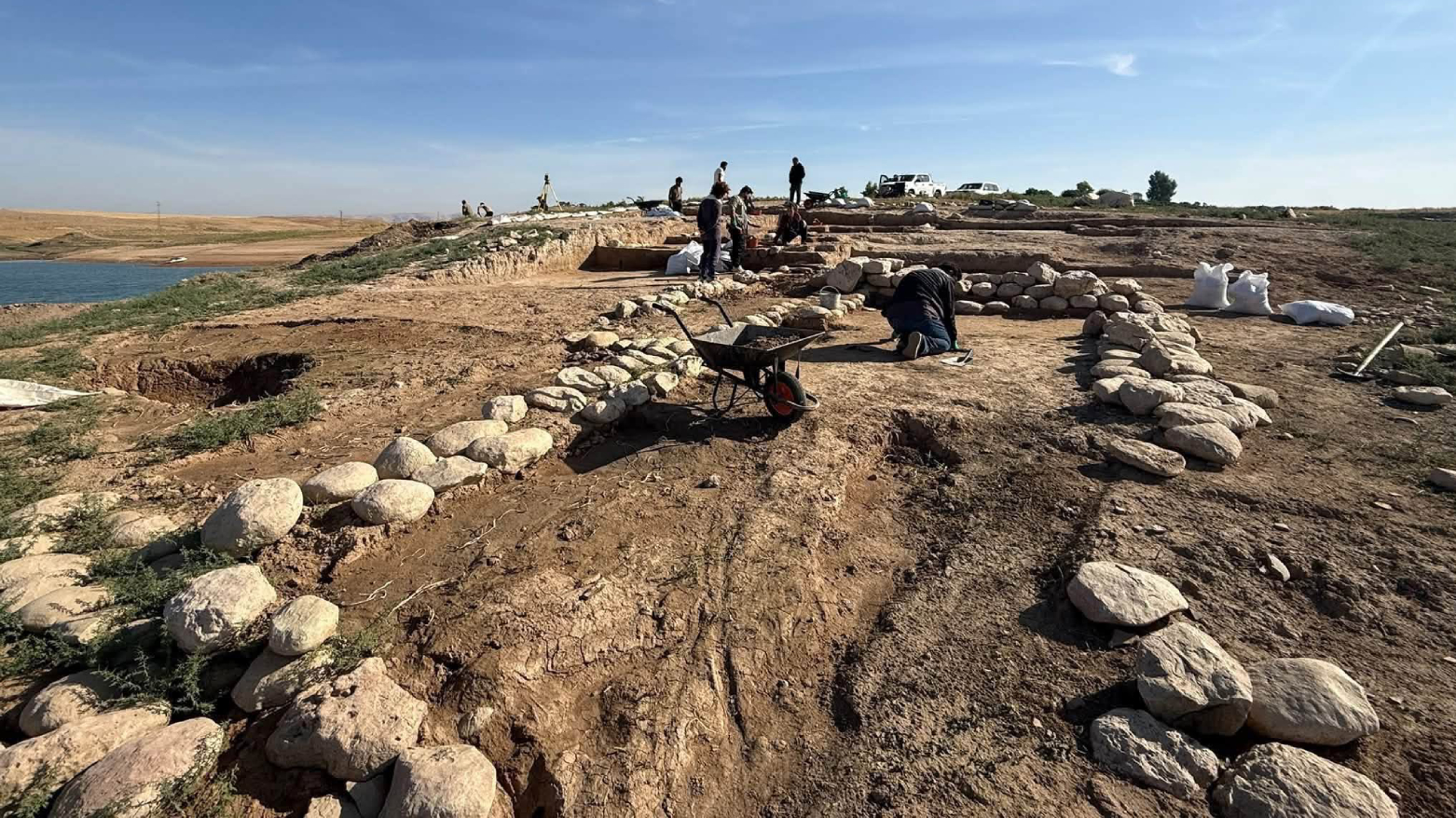
ERBIL (Kurdistan24) - Foreign archaeologists, working with Kurdish archaeologists in Duhok province, have discovered about 300 archaeological sites and carried out excavations and surveys there, a Kurdistan Region antiquities official said on Wednesday.
Jamal Jamil, director of archaeological affairs at the Kurdistan Region’s General Directorate of Antiquities and Heritage, told Kurdistan24 that the foreign teams have been excavating and surveying for nearly three years in the area between the Mosul Dam lake and the town of Simele. Jamil, who holds a doctorate in archaeological conservation, said the work uncovered five distinct layers of settlement, which together represent an important transitional period in human history.

An archaeological team from Italy’s University of Palermo, working with the Duhok Directorate of Antiquities and Heritage, is conducting the excavations in the area.
Jamil said the site of Gre Gumbas is among the most important locations to yield new results.
The latest finds there show that life continued at the site during the transition between the Late Chalcolithic and Early Bronze Age periods, which Jamil dated to the late fourth millennium BC and early third millennium BC.
The newly uncovered layers contain the remains of mud-brick buildings, storage areas, and ovens. Other remains, such as special seals, point to administrative activity.

The foreign archaeologists have reached important remains and evidence showing how the area’s ancient societies organized and ran their farming systems, storage, administration, and daily life, he said.
Jamil added that nearly 50 foreign archaeological teams have worked in the Kurdistan Region in the past. Because of the war situation between the US and Iran, he said, some of them have halted their work and returned to their home countries.
In recent months, he said, the General Directorate of Antiquities and Heritage has extended excavation and survey permits for five foreign universities.
