Baghdad Students Struggle to Count to Ten in Kurdish
Kurdistan24 correspondents found sharp contrasts in Kurdish education across Iraq, from Baghdad students struggling with basic Kurdish to shortages and flag disputes elsewhere.
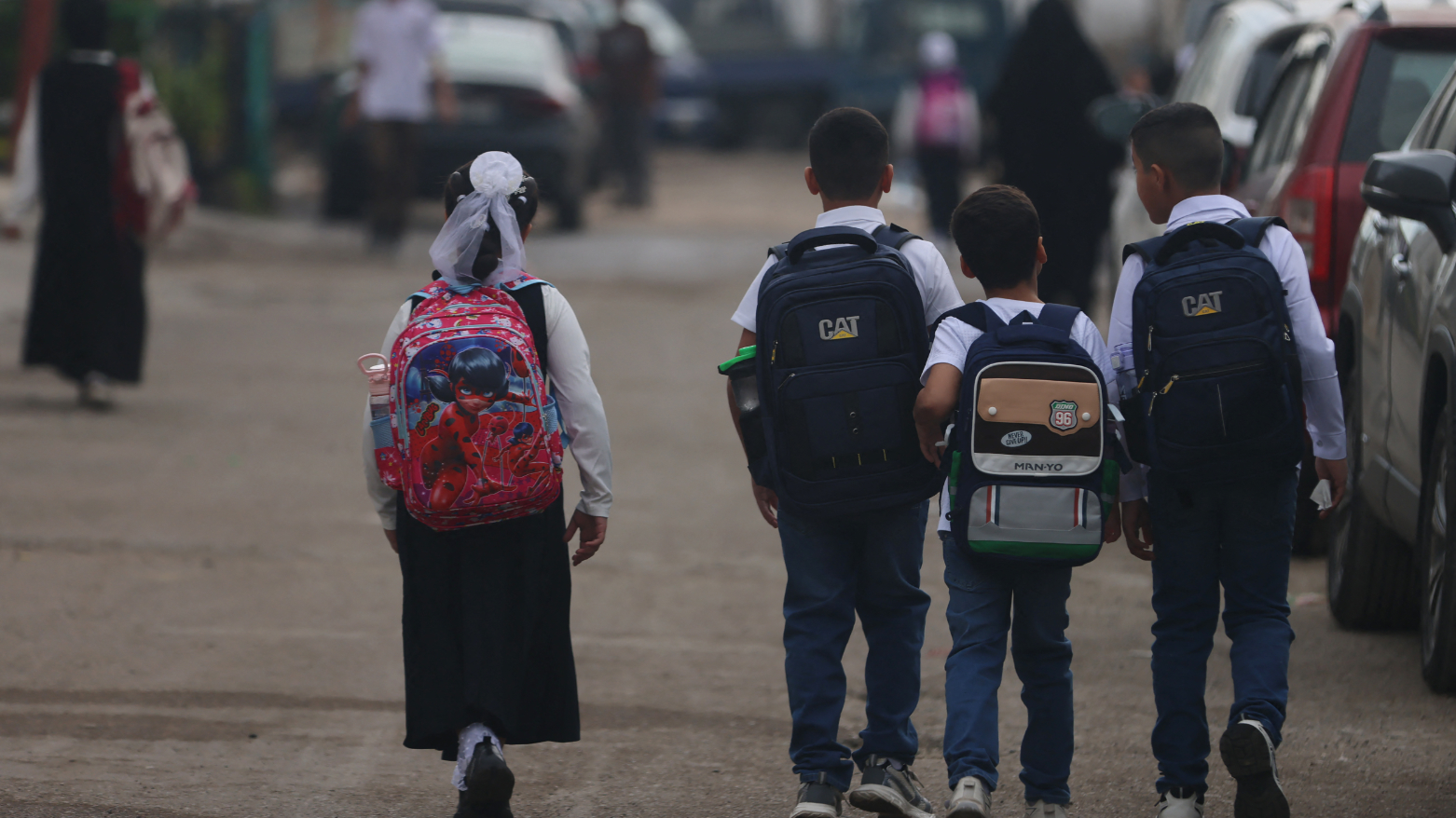
ERBIL (Kurdistan24) - "One, two, three" should be among the easier tests on the first day of school. In Baghdad on Sunday, however, asking Iraqi students to continue all the way to ten in Kurdish proved considerably more ambitious.
Kurdistan24 correspondent Dilan Barzan visited a school in the Iraqi capital as the 2026–2027 academic year began, testing students on basic Kurdish numbers and finding that many could not count correctly from one to ten.
One student managed "yek, du, sê, chwar, pênj" before the sequence began drifting. Another confidently identified five as two. Seven became eight. Nine caused further trouble. A few students came closer, but none of the encounters suggested that basic Kurdish numeracy had become firmly established.
At one point, a student explained that what Kurdish he knew had not come from school.
"We weren't taught it," he told Barzan, saying he had instead learned words from neighbors.
The exchange was humorous on the surface, but the point behind it was less so.
Barzan noted that Kurdish is included in Iraq's education system and should be taught as a core subject across the country. He specifically pointed to its place in grades 10 and 11, while arguing that marginalization of the subject has left students unable to perform even the elementary task of counting to ten.
Kurdish has constitutional recognition in Iraq, yet Barzan's impromptu classroom exercise suggested that formal recognition and practical proficiency can be two very different things.
The problem was not the students themselves. Several tried enthusiastically, correcting one another and offering answers with considerable confidence, even when the answers were wrong. The more awkward question was what they had actually been taught.
That was only one picture from the opening of the new school year.
Farther northwest in Sinjar, Kurdistan24 correspondent Dermaan Baadri found a different problem: students may have classrooms, but in some cases the classrooms, textbooks and staffing needed for a functioning school remain far from adequate.
Families told Kurdistan24 that the education sector in Sinjar continues to suffer from years of neglect and from the consequences of the ISIS war and subsequent conflicts.
As student numbers increase in villages and communities, families say the number of available schools has failed to keep pace.
Schools also face shortages of basic supplies and teaching staff.
One Kurdish school official told Baadri that students had been attending classes since Sept. 20, yet their textbooks had still not arrived.
According to the official, education authorities attributed the delay to security procedures and approvals.
He appealed to both the local administration and the Kurdistan Regional Government to find a way to deliver the books before students fall further behind.
The physical pressure on schools is equally severe.
The same official said he had been managing the village school in three shifts for six years, with limited space and insufficient staff.
"Truly, it is very difficult," he said, describing a system trying to accommodate students despite shortages of teachers, facilities and resources.
Sinjar also operates two parallel education systems: Arabic-language schooling administered through the local official structure and Kurdish-language education connected to the Kurdistan Region.
Baadri said years of conflict have left students among the main victims of the area's instability.
If Baghdad's problem was a Kurdish lesson that appeared not to have traveled very far beyond the curriculum, Sinjar's was more basic: sometimes the textbook itself has yet to arrive.
Then came Khurmatu, where the first-day issue was neither counting nor classroom furniture, but a flag.
Kurdistan24 correspondent Soran Kamaran spoke with Tara Jalal, a Kurdish member of the Salahaddin Provincial Council, who said Kurdish schools had not been permitted to raise the Kurdistan flag at the opening of the academic year.
"We are not allowed to raise it," Jalal said.
She said the restriction came from the local administration in Khurmatu and prevented Kurdish schools from beginning the academic year under the Kurdistan flag.
Her remarks followed a separate statement from Khurmatu Mayor Zulfiqar Haider, who said institutions under federal authority should display only the Iraqi flag.
Haider argued that Kurds, Arabs and Turkmen should unite under Iraq's national flag.
Jalal described the restriction as a cause for concern, while saying Kurdish representatives would continue looking toward the future with pride.
The situation contrasted sharply with Kirkuk, where Kurdish-language schools opened Sunday with students raising the Kurdistan flag.
More than 104,000 students are enrolled in 562 Kurdish schools and kindergartens there, supported by about 8,200 teachers and employees.
Kirkuk's Director of Kurdish Education, Kamaran Ali, has also reported growing demand for Kurdish-language schooling.
He said 2,250 students had transferred from Arabic-language to Kurdish-language education over the past two years, 1,200 last year and another 1,050 so far this year.
He linked that movement to strong examination results, including Kurdish students taking leading positions at both Kirkuk and Iraq-wide levels.
The contrast is difficult to miss.
In Kirkuk, families are moving children into Kurdish schools. In Khurmatu, Kurdish educators dispute whether they may raise the Kurdistan flag. In Sinjar, some Kurdish students are still waiting for textbooks. And in Baghdad, reaching ten in Kurdish can become an unexpectedly complicated assignment.
Across Iraq, around 12 million students returned to school on Sunday.
For Kurdish education, however, the first day revealed more than new uniforms, school bells and crowded classrooms.
It showed an education system operating under markedly different conditions from one place to another, flourishing in some areas, struggling for basic resources in others, and elsewhere still confronting questions over language, identity and official recognition.
For the students Barzan met in Baghdad, the immediate challenge was simpler.
For now, getting from yek to deh without losing a number along the way would be a reasonable place to start.