Kurdish Teacher Inspires Students to Learn Kurdish in Southern Iraq
Isra Jabar Zagam, who has taught Kurdish in the Rumaitha district for the past four years, told Kurdistan24 that her teaching methods have generated considerable enthusiasm among 10th- and 11th-grade students in both the scientific and literary streams.
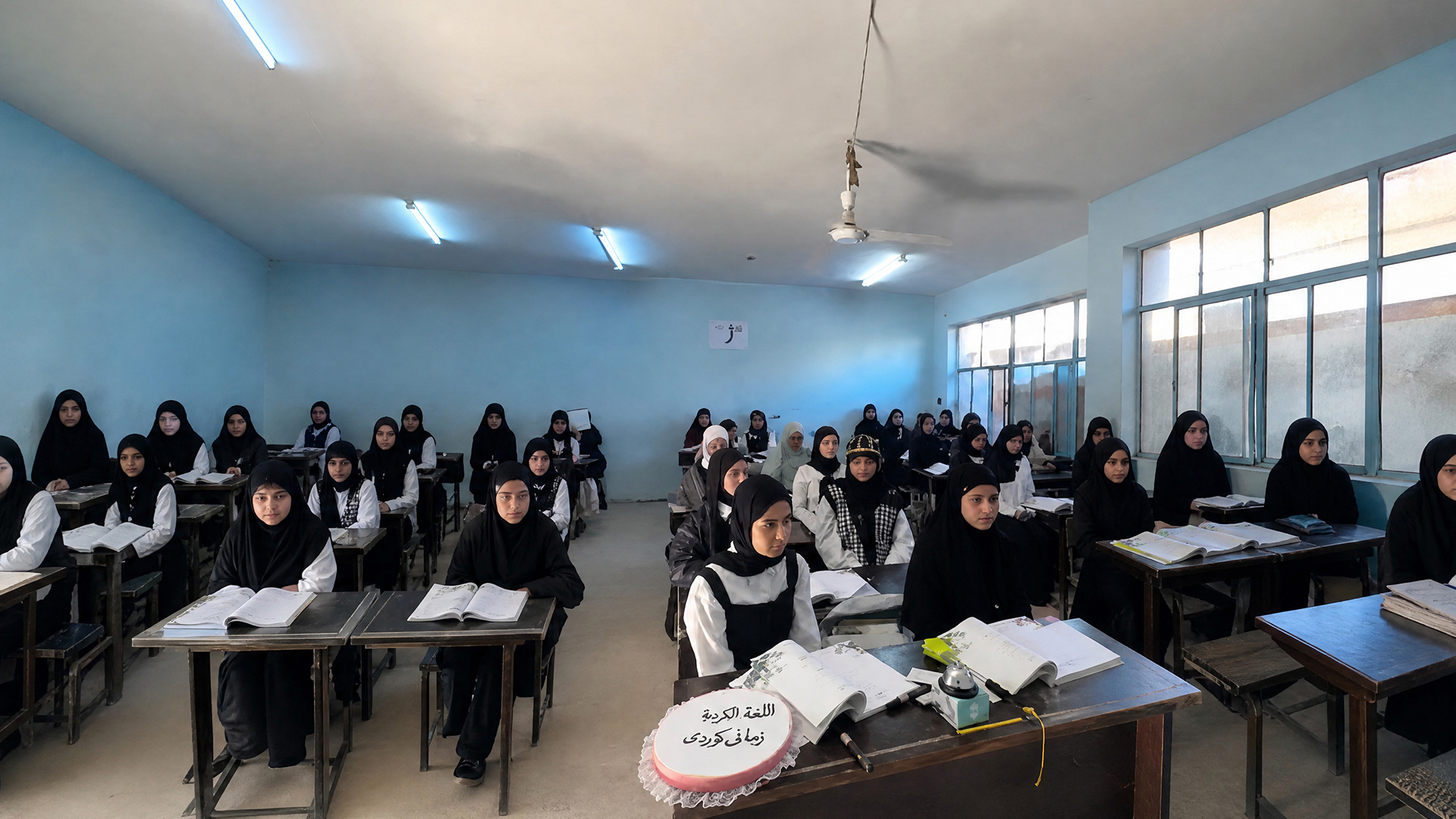
ERBIL (Kurdistan24) — A Kurdish language teacher in southern Iraq's Muthanna province has adopted an unconventional approach to teaching the language, using Kurdish folk materials, cultural displays, and theatrical performances to make lessons more engaging and encourage students to explore Kurdish heritage.
Isra Jabar Zagam, who has taught Kurdish in the Rumaitha district for the past four years, told Kurdistan24 that her teaching methods have generated considerable enthusiasm among 10th- and 11th-grade students in both the scientific and literary streams.
Despite following the officially approved curriculum and regular school timetable, Zagam has introduced creative techniques that distinguish her lessons from conventional classroom teaching.
Using Kurdish Folklore in the Classroom
Zagam divides students into several groups, each named after a Kurdish letter, a method she says makes learning easier while encouraging teamwork and healthy competition.
She also incorporates materials reflecting Kurdish folklore and cultural heritage, including handicrafts, paintings, photographs, rotating displays, and other educational resources designed to create an interactive learning environment.
The teacher further uses theatrical performances and dialogues, sometimes assigning students roles representing Kurdish and Arab characters.
She said these activities aim to promote coexistence and demonstrate that ethnic and linguistic differences should bring communities closer rather than divide them.
According to Zagam, shared values such as homeland, humanity, brotherhood, and love transcend ethnic and linguistic differences.
Students Embrace Learning Kurdish
Zagam said students have responded positively to the approach, showing particular enthusiasm for learning new Kurdish vocabulary and discovering aspects of Kurdish culture and heritage.
Their active participation in classroom activities, homework, monthly and semester examinations, and final assessments has further encouraged her to continue developing her teaching methods.
From Arabic to Kurdish Teaching
Despite holding a bachelor's degree in Arabic language, Zagam changed her specialization to Kurdish four years ago, driven by her love of the language and interest in Kurdish literature, history, and cultural heritage.
She acknowledged that differences between Arabic and Kurdish, particularly in certain sounds and letters, can present challenges for learners.
However, she said she works to address these difficulties through innovative educational materials and modern teaching techniques, making Kurdish lessons more accessible and enjoyable.
Her experience highlights how creative classroom methods and cultural materials can help promote linguistic diversity and strengthen understanding between different communities in Iraq.