Trump Approves Military Firing Squad for Fort Hood Shooter
President Donald Trump has approved execution by firing squad for Nidal Hasan, convicted of killing 13 people at Fort Hood in 2009.
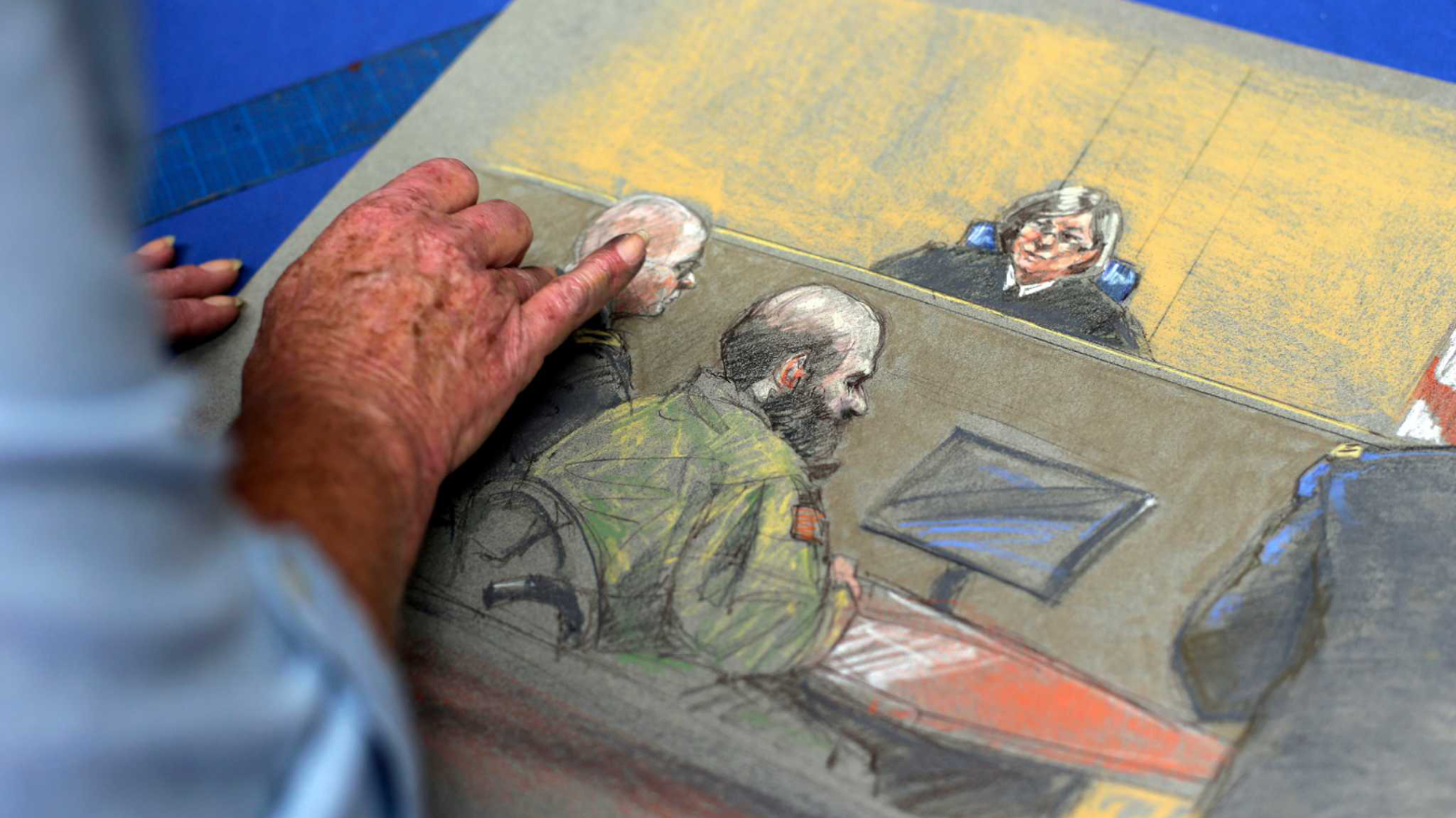
ERBIL (Kurdistan24) - U.S. President Donald Trump has approved the execution by firing squad of former Army Maj. Nidal Malik Hasan, who was sentenced to death for killing 13 people in the 2009 mass shooting at Fort Hood, Texas, the Pentagon said.
The decision moves Hasan's military death sentence closer to implementation, although further procedural steps remain and potential appeals could delay any execution for years.
War Secretary Pete Hegseth recommended that Hasan be executed by a U.S. Army firing squad, and Trump approved the recommendation, Pentagon spokesperson Sean Parnell said.
"The Secretary of the Army will set the time and place of the execution," Parnell wrote on X, adding: "Judgement day for Hasan has finally come."
The case was reported by Associated Press journalist Jonathan J. Cooper and AFP correspondent W.G. Dunlop.
Hasan, an Army psychiatrist, opened fire at a medical facility at Fort Hood on Nov. 5, 2009, where military personnel were preparing for deployments.
Thirteen people were killed and more than 30 were injured, according to AP. AFP reported that 12 of those killed and 30 of the wounded were soldiers.
Hasan shouted "Allahu akbar," Arabic for "God is great," before opening fire with a handgun.
He was eventually shot by a civilian police officer responding to the attack and was partially paralyzed.
During his military trial, Hasan made little effort to dispute responsibility for the shootings.
He represented himself, called no witnesses and gave no testimony. He told jurors that the evidence would show he was the shooter and described himself as a soldier who had "switched sides."
Hasan said the attack was intended to stop soldiers from deploying to Afghanistan and killing fellow Muslims.
AFP reported that prosecutors also presented evidence that Hasan had communicated online with Anwar al-Awlaki, an American-born radical cleric linked to Al-Qaeda who was later killed in a U.S. drone strike in Yemen.
A military jury sentenced Hasan to death in 2013.
Trump's approval, however, does not set an immediate execution date.
The Secretary of the Army must determine where and when the sentence would be carried out.
Hasan could also seek habeas corpus review in the civilian federal court system, a process that could place the execution on hold for an extended period, according to an article published earlier this year in the Army Lawyer magazine cited by AP.
Executions under the U.S. military justice system are extremely rare.
The military has not carried out a death sentence since 1961, when Army Pvt. John Bennett was hanged after being convicted of raping an 11-year-old girl.
Four men, including Hasan, are currently held on military death row at Fort Leavenworth, Kansas.
There is also precedent for a presidential approval failing to result in an execution.
President George W. Bush approved the execution of Army Spc. Ronald Gray in 2008, but a judge subsequently halted the process. Gray remains at Fort Leavenworth.
Trump's decision comes as capital punishment has again drawn attention in the United States following a failed attempt to execute Christa Pike by lethal injection in Tennessee.
The failed execution prompted Tennessee's governor to suspend further executions this year and order an independent review.
Asked whether that case would lead him to seek broader changes to capital punishment, Trump said carrying out lethal injections "shouldn't be very difficult."
Trump has previously supported a broader resumption of capital punishment at the federal level.
During his earlier administration, the federal government resumed executions after an informal moratorium and executed 13 people between 2020 and early 2021.
Hasan's case, however, falls under the separate military justice system.
If the sentence is ultimately carried out, it would mark the first U.S. military execution in 65 years and would close one of the longest-running military death penalty cases arising from an attack on an American military installation.