Khanaqin Celebrates Dates and Tradition at First Folk Festival
Khanaqin's first Date and Folk Arts Festival brought crowds to the city's corniche, showcasing hundreds of date varieties alongside Kurdish dress, local dialect and cultural traditions.
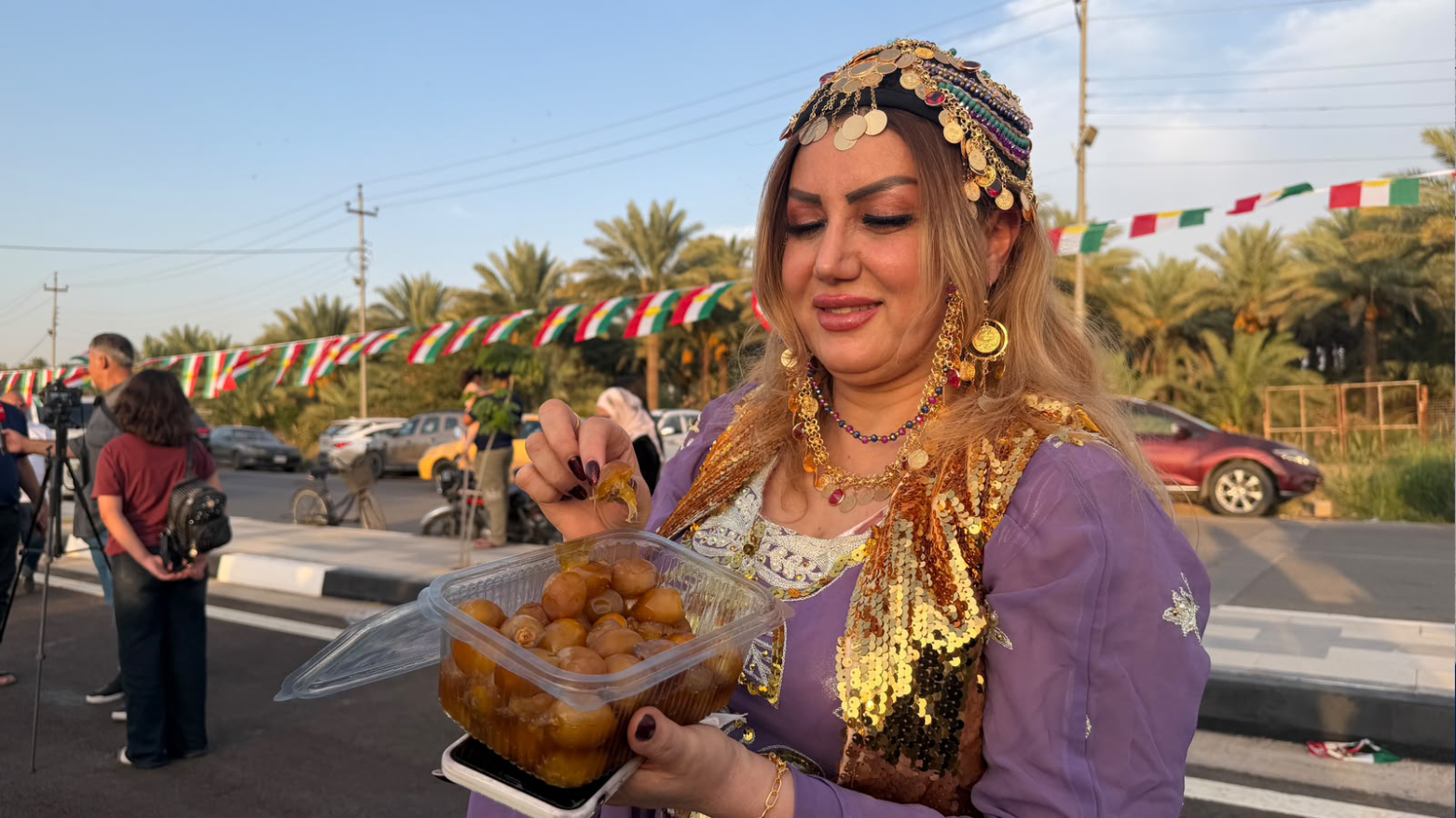
ERBIL (Kurdistan24) - Along Khanaqin's corniche on Friday, baskets and displays were filled with dates of different colors, shapes and varieties as residents gathered for the city's first Date and Folk Arts Festival, a celebration as much about identity and memory as about the fruit itself.
Kurdistan24 correspondent Harem Jaf, reporting from the festival, said hundreds of varieties from Khanaqin and other parts of Diyala province were being displayed, tasted, marketed and sold directly to visitors.
Crowds came from across the Garmian administration area and other parts of Kurdistan, filling the festival grounds while vendors presented some of the area's finest and rarer varieties.
Among those attending was Berivan, a Khanaqin resident dressed in traditional Kurdish clothing.
Before speaking about the festival, she asked Jaf whether she should answer in Sorani or in Khanaqin's local dialect.
"In Khanaqini," he replied.
For Berivan, that local voice was fitting. The festival, she explained, was about preserving something deeply connected to the city.
"Why shouldn't we have a date festival?" she said. "Dates are part of Khanaqin's traditions and culture. Khanaqin has long been known for its dates."
She described dates as one of the ways residents can preserve and promote Khanaqin's history and traditions.
To her, the association is so strong that people leaving Khanaqin to visit friends or relatives elsewhere in Kurdistan are often expected to arrive carrying dates.
"Whenever you go to another city, anywhere across the cities of Kurdistan, they ask you, 'Did you bring dates with you?'" Berivan said.
"We have to take a basket of dates with us."
She was also keen to point out that Khanaqin's dates are not all alike.
Different varieties have their own names, characteristics and prices, she said, with some considered particularly valuable and others traditionally associated with health benefits.
Around the festival, that diversity was laid out for visitors to see and taste.
Jaf said he had already sampled around 10 or 12 varieties during the day, describing some as rare and among the finest being presented.
Beyond the stalls, Berivan pointed toward the date palms lining the area.
"Look at the date palms," she said. "On both sides, everything you see is dates."
Khanaqin produces enough, she added, for residents to sell and send dates to friends and acquaintances elsewhere in Kurdistan.
That connection between the palm groves, the city and its people gave the inaugural festival much of its character.
For visitors, the event offered a chance to taste and buy varieties brought from across Diyala. For residents such as Berivan, however, the fruit carries something more personal.
In Khanaqin, dates are not simply a local product.
They are something people take with them when they leave, offer when they visit others, and now gather publicly to celebrate as part of the city's culture.