Duhok Health Teams Support Ezidi Jama Feast at Lalish
Medical teams are providing 24-hour healthcare at Lalish Temple during the Ezidi Jama Feast, treating more than 300 visitors each day under a seven-day emergency plan.
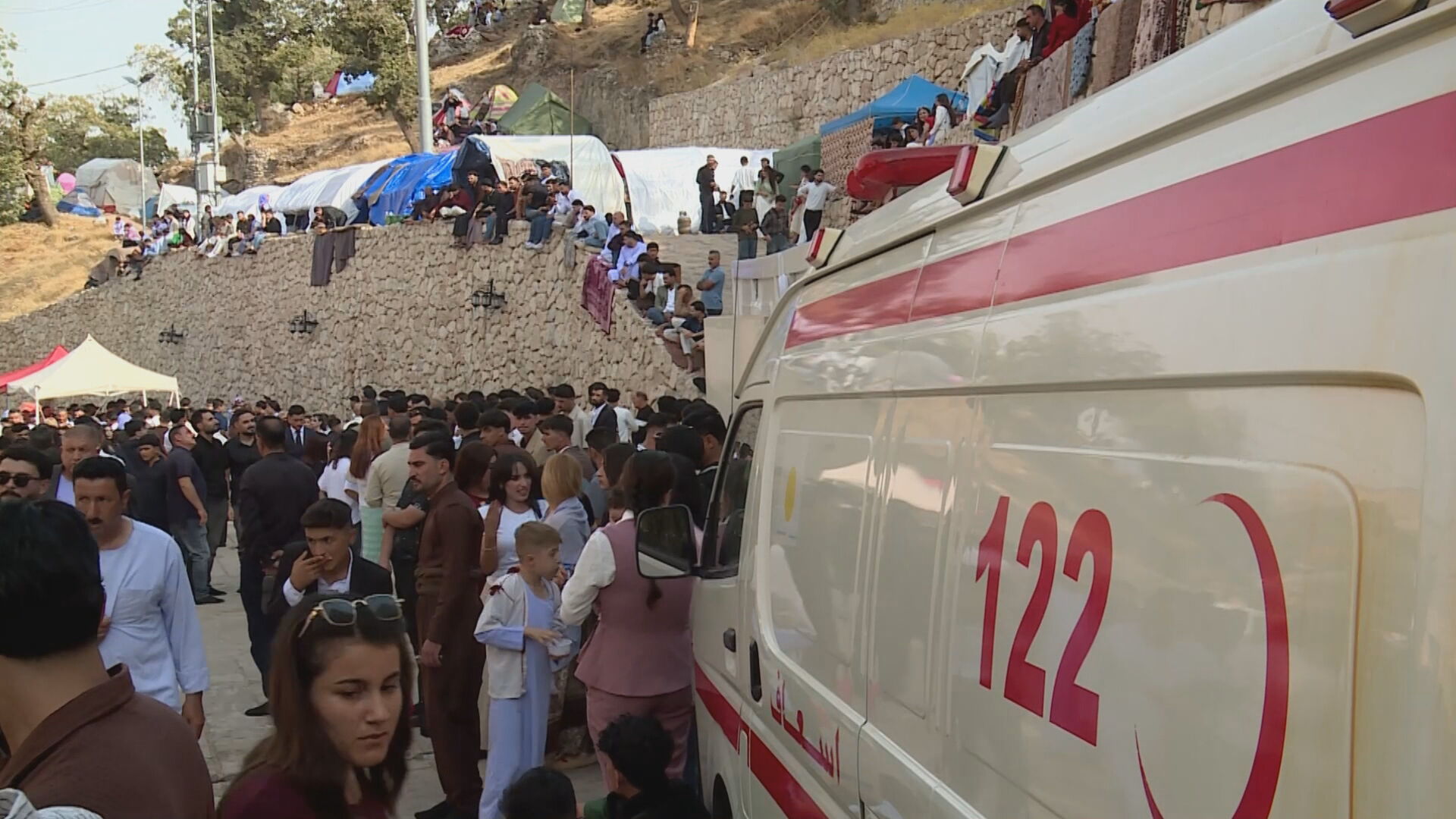
ERBIL (Kurdistan24) - Medical teams are providing round-the-clock treatment and emergency support to thousands of Ezidi visitors gathering at the sacred Lalish Temple for the annual Jama Feast, under a seven-day health plan coordinated by the Duhok General Directorate of Health and the Barzani Charity Foundation.
Health stations and medical units positioned throughout the temple complex and surrounding areas are treating more than 300 patients each day, according to officials involved in the operation.
The services include first aid, immediate medical examinations, medicines and basic treatment, while ambulances and emergency vehicles remain available around the clock for patients requiring more urgent care.
The health mobilization began on the first day of the festival and will continue until its conclusion.
Yasser Hassan, the official responsible for the field medical teams, told Kurdistan24 that close coordination between Duhok health authorities and the Barzani Charity Foundation was intended to ensure visitors could receive assistance throughout the religious gathering.

“Our duties begin from the first day of the festival and continue until the final day,” Hassan said.
He said medical personnel were treating patients immediately and providing medicines and other basic care at the field stations.
For more serious cases, ambulance crews are being kept on continuous standby.
“In the event of critical or emergency cases, ambulance teams and emergency vehicles remain on full alert to intervene and transport patients directly, 24 hours a day without interruption,” Hassan said.
The measures are particularly important because of the large numbers of worshippers and visitors arriving at Lalish during the feast.

Each year, tens of thousands of Ezidi Kurds travel to the temple from cities across the Kurdistan Region and Iraq, as well as from diaspora communities abroad, to participate in the religious ceremonies.
Kurdistan24 correspondent Maher Shingali, reporting from Lalish Temple in Duhok, said the dense crowds and heavy movement around the site have made mobile medical units and ambulances an important part of the arrangements.
The presence of healthcare teams is intended to allow medical problems to be addressed quickly while helping the ceremonies continue in a safe environment.
Ezidi religious figure Mam Shro praised the level of organization and the services being provided during the gathering.
He said support for visitors during religious occasions represented both a humanitarian and spiritual responsibility.

“The Kurdistan Regional Government always places all of its service institutions at the disposal of members of the Ezidi faith during holidays and religious occasions,” Mam Shro told Kurdistan24.
He thanked healthcare workers, security personnel, journalists and others involved in serving people attending the festival.
“This is a sacred effort and is deeply appreciated,” he said.
The medical arrangements reflect the practical challenges created by a religious gathering that draws large crowds into and around the Lalish complex over several days.
Rather than relying only on nearby hospitals or permanent healthcare facilities, the plan places treatment points closer to worshippers and keeps emergency transport available throughout the day and night.

That system allows less serious cases to be handled on site while patients requiring additional care can be transferred without delay.
The cooperation between the Duhok General Directorate of Health and the Barzani Charity Foundation is central to the operation, with both sides providing services throughout the seven-day feast.
Officials have not provided an overall estimate for the number of patients expected to receive treatment by the end of the festival, but the current rate of more than 300 patients a day underscores the scale of the medical response.
For those attending Lalish, the Jama Feast remains first and foremost a major religious and spiritual occasion.
But behind the ceremonies, prayers and large gatherings, medical staff are working continuously to manage the health needs that come with bringing tens of thousands of people together at one of the most sacred sites of the Ezidi faith.
