KRG Warns Customs Suspension Could Hurt Poultry Sector
The Kurdistan Region Agriculture Ministry says Iraq's suspension of customs duties on imported chicken, eggs and meat threatens local production and will announce its formal position Sunday.
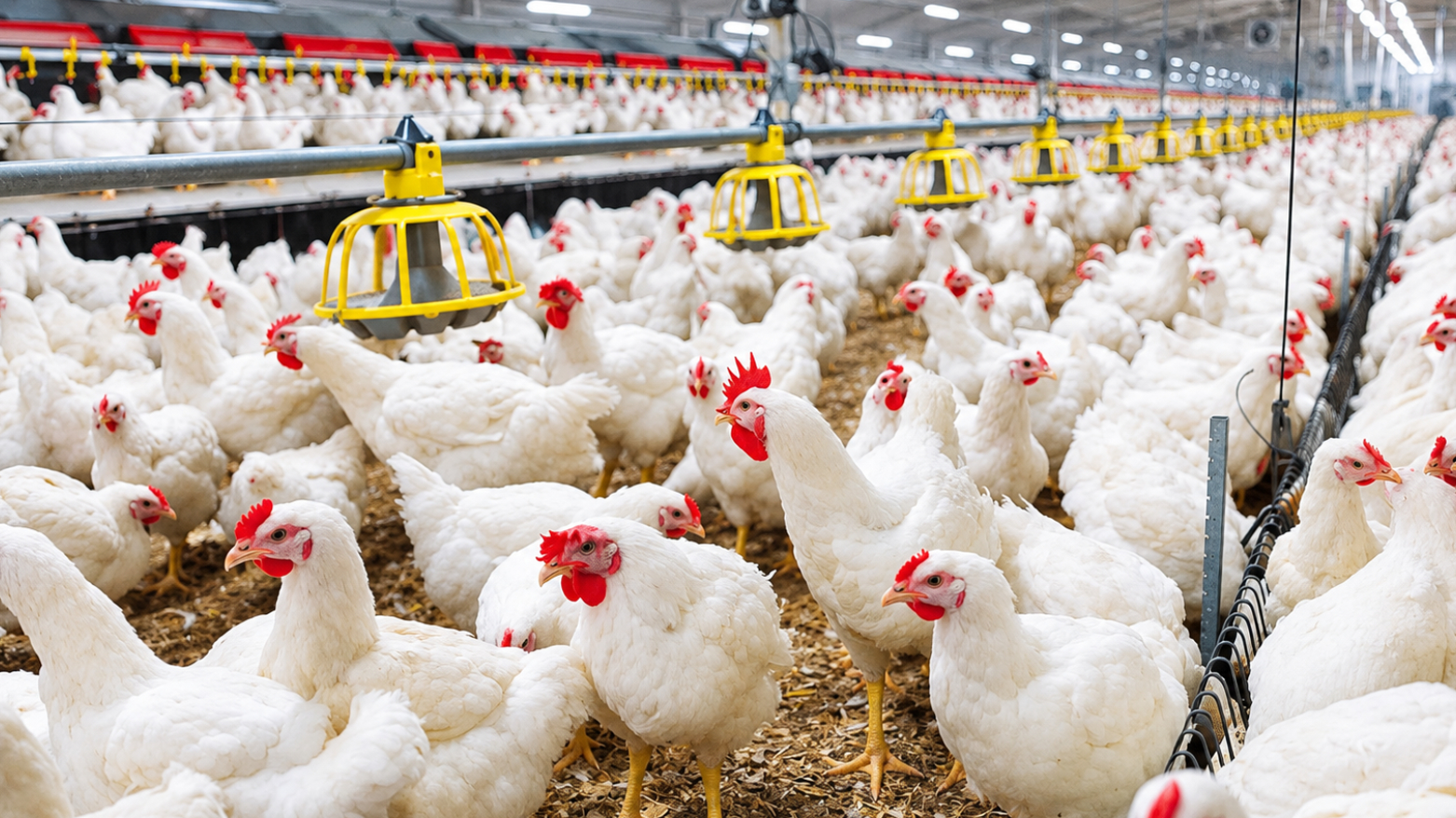
ERBIL (Kurdistan24) - The Kurdistan Regional Government's Ministry of Agriculture is preparing to announce its formal position against the federal government's decision to suspend customs duties and taxes on imported chicken, eggs and meat, warning that the measure could undermine local production at a time when the Kurdistan Region already produces more poultry and eggs than it consumes.
Qaraman Qadir, spokesperson for the Ministry of Agriculture, told Kurdistan24 on Saturday that the ministry considers Prime Minister Ali Faleh Zaidi's decision a negative step with potentially serious consequences for domestic producers.
"Tomorrow, at a press conference, we will clarify our official position on the matter," Qadir said.
He argued that the recent depreciation of the Iraqi dinar should make supporting local production more urgent, rather than encouraging a greater volume of imported food products.
With the dollar more expensive against the dinar, Qadir said policy should focus on reducing import dependence and strengthening domestic producers.
He stressed that the Kurdistan Region already produces more eggs and chicken than it requires for its own market.
The ministry is also concerned that the same approach could later be extended to other sectors, with the federal government potentially suspending taxes and customs duties on additional imported industrial inputs rather than directing greater support toward domestic production.
Prime Minister Zaidi on Oct. 8 ordered the temporary suspension of taxes and customs duties on imported eggs, chicken and meat.
The federal government said the move was intended to stabilize markets and keep essential food products available at reasonable prices following the dinar's depreciation.
The decision has nevertheless faced strong opposition from agricultural authorities and poultry producers in the Kurdistan Region.
Begard Talabani, the Kurdistan Region's Minister of Agriculture, has already written to the Iraqi prime minister and federal agriculture minister opposing the measure.
According to ministry figures, the Kurdistan Region produces more than 450,000 tons of poultry meat annually, compared with domestic demand of around 150,000 tons.
Egg production stands at approximately 4.8 billion eggs a year, while consumption inside the Region is estimated at around 1.8 billion.
The ministry argues that allowing more duty-free imports into the Iraqi market could place that surplus production under greater pressure and threaten tens of thousands of jobs linked to poultry farming and related businesses.
Nazim Abdullah, head of the Poultry Farms Association, offered two alternatives aimed at protecting the industry.
He called on the federal government to remove restrictions at checkpoints leading from the Kurdistan Region toward central and southern Iraq so that poultry products can move more freely across the country.
Abdullah said Iraq should be treated as a single food market rather than restricting the movement of locally produced poultry while facilitating imports.
He also urged authorities to remove taxes on animal feed and agricultural supplies, arguing that reducing farmers' production costs would help stabilize prices without weakening the domestic sector.
According to Abdullah, poultry producers have not substantially raised prices on their own initiative and instead face higher costs because feed and other farm inputs are partly imported and therefore affected by the weaker dinar.
Those pressures are already visible in retail markets.
Ibrahim Ismail, a chicken seller in Erbil, told Kurdistan24 on Saturday that chicken prices had been rising over several days.
One kilogram of live chicken was selling for around 2,800 dinars, up about 100 dinars from the previous day and more than 500 dinars compared with the previous week.
Prices had earlier fallen to between 2,000 and 2,250 dinars per kilogram, while wholesale prices at poultry farms had dropped below 2,000 dinars.
The market is now being pulled in two different directions.
The weaker dinar is increasing the cost of imported feed and other production inputs, placing upward pressure on poultry prices.
At the same time, the federal government's removal of customs duties and taxes on imported poultry products could eventually increase supply and push prices downward.
That tension lies at the center of the dispute between Baghdad's consumer-price policy and the Kurdistan Region's focus on protecting domestic production.
The federal government is seeking to contain inflation following the exchange-rate adjustment, which raised the official selling rate to 1,520 dinars per dollar.
The Kurdistan Region's Agriculture Ministry, however, argues that lowering import barriers could solve a short-term price problem while creating a longer-term threat to an industry that has already reached self-sufficiency.
For poultry producers, the preferred alternative is to lower the cost of feed and supplies and remove internal market barriers so that surplus production from the Kurdistan Region can reach consumers elsewhere in Iraq.
The ministry's formal position is expected to be outlined at Sunday's press conference, as debate continues over whether Baghdad's effort to protect consumers from higher prices can be balanced with the need to preserve domestic agriculture and employment.