Saudi Coalition Vows Response After Deadly Riyadh Airport Strike
An attack on Riyadh's King Khalid International Airport killed 12 people and wounded 309, prompting Saudi vows of retaliation and raising the possibility of U.S. involvement against Yemen's Houthis.
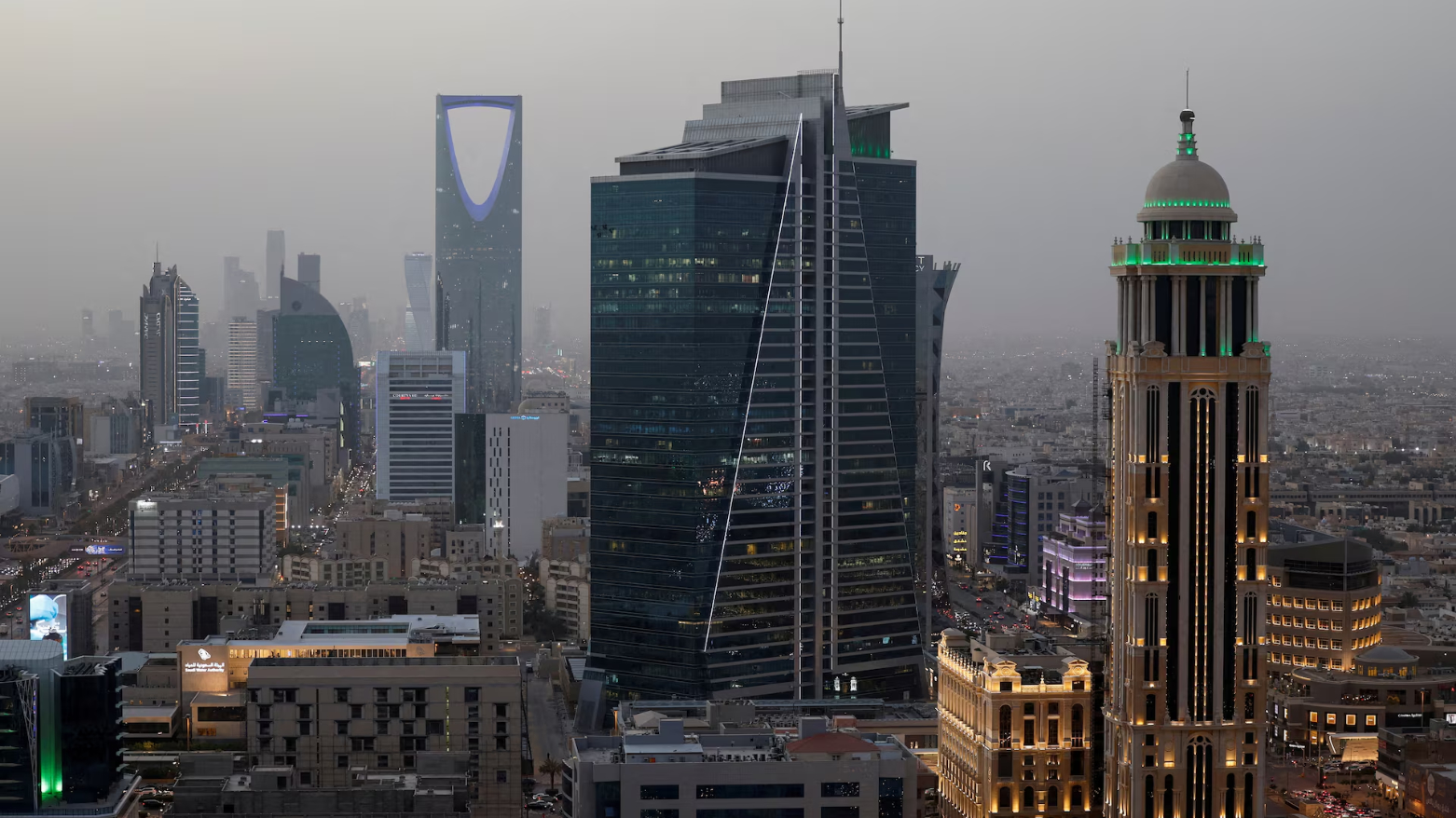
ERBIL (Kurdistan24) - Twelve people were killed and 309 others wounded in an attack on King Khalid International Airport in Riyadh, Saudi authorities said early Sunday, marking the deadliest strike on Saudi soil in more than a decade and sharply escalating the confrontation between the kingdom and Yemen's Houthis.
Saudi Arabia's General Authority of Civil Aviation said the attack took place Saturday afternoon and left some of the injured in serious or critical condition.
Those killed included four Saudi citizens, two Bangladeshi nationals, and one citizen each from the United States, Egypt, Jordan, Syria, Palestine and Sudan.
The injured were being treated at several hospitals across Riyadh.
The attack also caused significant material damage at the airport, one of Saudi Arabia's principal international transport hubs.
Operations were suspended following the strike, and the closure was later extended for another 24 hours, until 9 p.m. Sunday, according to flight-tracking information cited by The Associated Press.
AP journalists Samy Magdy and Cara Anna reported that a missile struck a complex housing terminals 3 and 4, which serve domestic flights, citing a regional official who spoke on condition of anonymity.
Video footage circulating online and analyzed by AP showed emergency vehicles gathered outside the airport after the strike.

The Saudi-led coalition fighting Yemen's Houthis blamed the Iran-backed movement for the attack.
Major General Turki bin Saleh al-Maliki, spokesperson for the coalition forces, described the strike as a “full-fledged war crime” and said the coalition would respond firmly.
Al-Maliki said targeting a civilian airport and passengers violated international humanitarian law and customary principles.
He added that any Saudi-led response would itself be conducted in accordance with international humanitarian law.
The Houthis did not immediately claim responsibility for Saturday's strike.
They had, however, claimed earlier attacks on King Khalid International Airport during the previous week, including strikes on Thursday that Saudi authorities said killed three people, including a Saudia Airlines pilot.
The Houthis had also accused Saudi Arabia of striking Sanaa International Airport in Yemen's Houthi-held capital.
Trump weighs possible U.S. involvement
Saturday's attack also raised the possibility of greater U.S. involvement in the confrontation.
Speaking shortly after the strike, U.S. President Donald Trump said Washington was considering whether to join Saudi military operations against the Houthis.
“We may. We're going to look at it,” Trump said.
He added that the United States had only recently received information about the latest attack and would make a decision quickly.
Later Saturday, Trump said he intended to speak with Saudi Crown Prince Mohammed bin Salman.
“What happened in Saudi Arabia is not acceptable,” Trump said.

Asked again whether the United States might become directly involved, he replied: “We'll find out.”
U.S. Secretary of State Marco Rubio also condemned the attack and confirmed that an American citizen was among those killed.
“These reprehensible attacks demonstrate a blatant disregard for innocent civilian life,” Rubio said. “They must stop now.”
The prospect of direct U.S. participation comes as Saudi Arabia faces growing pressure on its air defenses amid repeated missile and drone attacks.
AP reported that regional officials have said Riyadh is running low on missile interceptors and has sought air-defense assistance from France, Britain, Pakistan and Egypt.
The United States has already provided intelligence sharing, target identification and planning assistance for Saudi-led operations against the Houthis, according to officials cited by AP.
Civilian aviation increasingly affected
The latest strike has had an immediate impact on civilian aviation.
King Khalid International Airport was heavily guarded Saturday, entrances were blocked and lighting around parts of the airport complex was reduced.
Flights were diverted to other airports.
The United States, Britain, Germany, Australia and Canada were among countries warning their citizens to avoid the airport.
AFP also reported that several Western embassies were restricting staff from using the airport over the coming week.
Air India, FlyDubai, Lufthansa Group and Pakistan International Airlines have all suspended or altered services to Riyadh or other Saudi destinations for varying periods amid the deteriorating security situation.
The European Union Aviation Safety Agency has also widened its guidance concerning Saudi airspace.

It warned that Houthi missile and drone capabilities, combined with interception efforts, create additional risks for civilian aircraft, including the danger of misidentification.
The Houthis themselves have warned international airlines about operating in Saudi airspace, describing it as part of their theater of military operations.
Saudi authorities have meanwhile warned the public against filming or sharing information about missile and drone interception operations and impact sites.
The latest strike also forced Riyadh schools to move to remote learning for the coming week, according to AFP.
Health authorities activated a large-scale mobilization of doctors following the attack, while medical sources told AFP that several pilgrims traveling to Mecca were among the injured.
One passenger told AFP that they witnessed the strike inside the domestic terminal and saw injured people as passengers fled the area.
Saudi-Houthi war intensifies
The attack comes amid a rapidly escalating confrontation between Saudi Arabia and the Houthis after several years of relative calm.
Saudi Arabia intervened in Yemen's civil war in 2015 in support of the internationally recognized Yemeni government after the Houthis seized Sanaa and expanded their territorial control.
A UN-brokered truce beginning in 2022 significantly reduced cross-border hostilities for several years.
That relative calm ended in July 2026, when fighting resumed.
The Houthis said renewed hostilities followed Saudi fire on Sanaa airport as an aircraft from Iran was attempting to land.
Since then, the conflict has expanded considerably.

Saudi-backed Yemeni government forces have launched an offensive seeking to reverse Houthi territorial gains along the Red Sea coast, particularly around the strategically important Bab al-Mandab Strait.
The route is one of the world's key maritime chokepoints, linking the Red Sea with the Gulf of Aden and providing an important alternative shipping corridor to the Strait of Hormuz.
The Houthis have acknowledged fighting in the Bab al-Mandab area but claim their forces have repelled government advances.
Military sources cited by AFP, however, said Saudi-supported government troops were continuing to advance in some areas.
Independent verification of battlefield claims from either side remains difficult because of restricted access and the rapidly changing situation.
The Houthis have also increasingly targeted Saudi airports, oil infrastructure and military sites with missiles and drones.
The Saudi-led coalition has responded with large-scale strikes against Houthi-controlled territory.
The widening conflict is now moving beyond traditional battlefields in Yemen and increasingly affecting civilian airports, international aviation, energy markets and regional transport routes.
Regional escalation fears grow
Saturday's attack is the latest sign that the Saudi-Houthi confrontation could become a wider regional crisis.
AP described it as the deadliest attack in any Gulf Arab country since the beginning of the broader war involving Iran.
The conflict also places additional pressure on Saudi Arabia, a major U.S. ally and one of the world's largest oil exporters.
Despite the security crisis, the Saudi Energy Ministry continued promoting a major international energy conference scheduled to begin in Riyadh on Sunday.
Saudi Foreign Minister and his Omani counterpart also discussed the need to support diplomatic efforts aimed at reducing regional tensions, according to Saudi authorities.
Oman has frequently played a mediating role in regional conflicts.

At the same time, Saudi officials have made clear that they regard attacks on civilian infrastructure as unacceptable.
Al-Maliki said the coalition would respond decisively to the latest airport strike.
The Houthis, meanwhile, have argued that their attacks are retaliation for Saudi military operations and restrictions imposed on Houthi-held areas.
For now, the immediate focus remains on Riyadh, where hospitals are treating hundreds of wounded passengers and airport workers, flights remain disrupted and authorities are assessing the damage.
The attack has transformed King Khalid International Airport from a transport hub into one of the central fronts of a conflict that is increasingly spilling across borders.
Whether Washington decides to join Saudi military strikes could now determine how much further that confrontation expands.