Kurdish Scientist Named Among World's Top Researchers Again
Kurdish scientist Dr. Jagar Harki has been named among the world's top 2% of energy researchers for the third consecutive year in a Stanford University–Elsevier Global Ranking of Scientists.
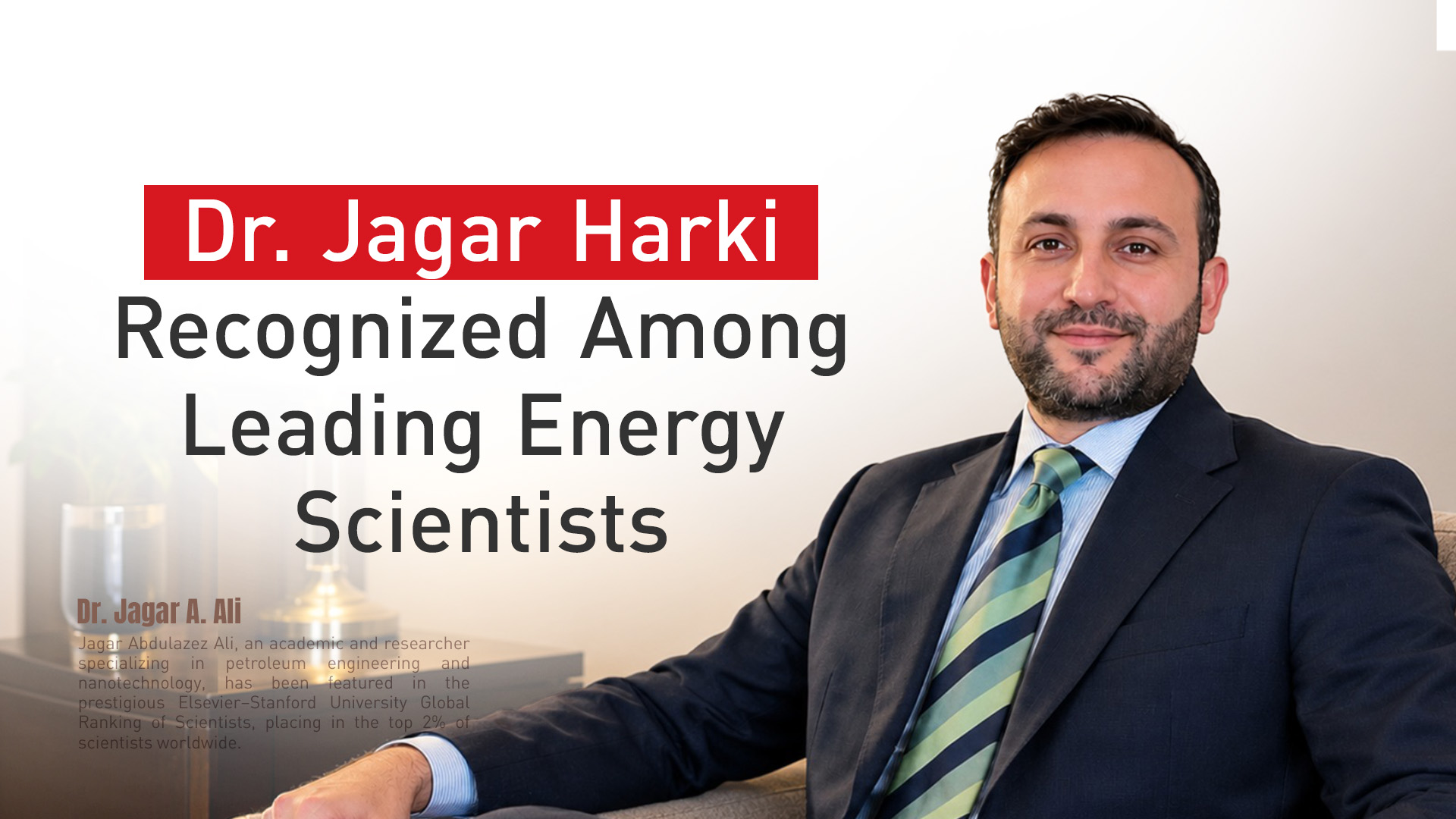
ERBIL (Kurdistan24) - Kurdish scientist and academic researcher Dr. Jagar Harki, who publishes under his academic name, Dr. Jagar A. Ali, has been named among the world's top 2% of scientists in the field of energy for the third consecutive year, according to an annual ranking prepared by Stanford University–Elsevier Global Ranking of Scientists.
Harki, who is also a member of the Kurdistan Democratic Party bloc in the Kurdistan Parliament, told Kurdistan24 that his name had appeared on the list in 2024, 2025 and 2026.
"I am proud that for 2026, and for the third consecutive year, 2024, 2025, and 2026, my name has been included among the world's top 2% of scientists in the field of energy," Harki said.
He described the recognition as the result of years of academic and scientific work rather than an isolated personal achievement.
"This is not merely a personal success," Harki said. "It is the result of years of effort, conducting 91 scientific studies, continuous learning, and a belief in the influential role of science in solving real-world problems, particularly in the fields of energy and sustainable development."
An energy specialist, Harki also expressed appreciation to the professors, colleagues and students who supported his academic work over the years.
He said the recognition carried particular meaning because his scientific career began in Kurdistan before expanding into international academic and research work.
"As someone who began my scientific journey in Kurdistan and now conducts academic and research work at the international level, this has great meaning and value for me," he said.
Harki also used the recognition to encourage young researchers in the Kurdistan Region to pursue scientific work with confidence.
He said he hoped his experience could demonstrate that researchers from Kurdistan are capable of reaching international academic levels through sustained work and scientific contribution.
"I hope this achievement will serve as an encouragement to young researchers in Kurdistan to believe in their abilities to achieve their goals and, through their scientific contributions, leave their mark at the global level," he said.
Harki added that he sees the recognition as motivation to continue rather than as the conclusion of his academic career.
"This is not the end of the journey, but rather further motivation to continue, assume greater responsibility, and serve science and society," he said.
The annual top 2% scientists list is prepared using data from the Scopus research database and is designed to assess the global impact of scientists' published work.
According to the supplied information, the ranking is intended to highlight researchers whose work has made a significant contribution to scientific development and to addressing major global challenges.
For Harki, his third consecutive appearance on the list brings together his work in energy, sustainable development and academic research, while also giving him a platform to encourage a new generation of Kurdish scientists.