Baghdad Fish Market Grinds to a Halt After HIV Remarks Spark Public Concern
Fish sellers say comments by Iraq’s environment minister have crippled business and threatened hundreds of families’ livelihoods
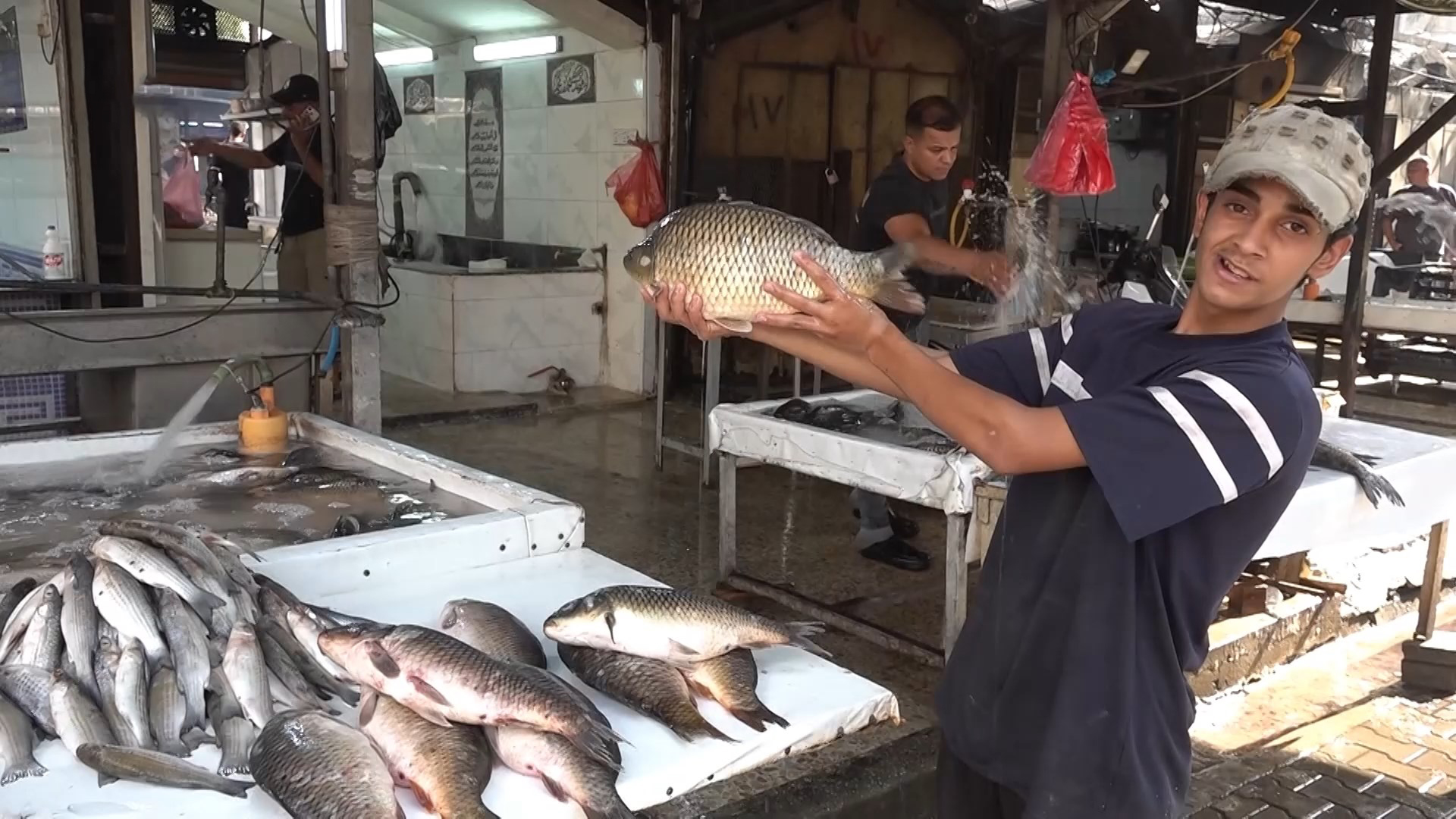
ERBIL (Kurdistan24) — Baghdad’s largest fish market has reportedly fallen silent after remarks by Iraq’s Environment Minister Sirwa Abdulwahid about river pollution and medical waste triggered public concern over fish safety, disrupting business and threatening the livelihoods of hundreds of families dependent on the trade.
Fish vendors told Kurdistan24's correspondent in baghdad Saif Ali that customers had stopped buying fish following the remarks, leaving traders without income and prompting anger over what they described as an alarm that damaged their businesses without addressing the underlying problem of environmental pollution.
The sellers said much of the fish they sell comes from dedicated fish farms and the Euphrates River, rather than the potentially contaminated waters of the Tigris River, which was at the center of the minister’s comments.
“Environment Minister, this is cutting off our livelihood. Have you left all of Iraq’s environmental problems aside and singled out fish?” Ibrahim Mousawi, a fish seller, told Kurdistan24. “Since she made those remarks, I have been sitting in a coffee shop because there is no work.”
Mousawi acknowledged that customers had the right to protect themselves if they were concerned about food safety, but said the resulting fear had brought his business to a complete standstill.
Another fish seller, Uday Ali, questioned the impact of the minister’s remarks, arguing that the concerns about pollution in the Tigris should not automatically be extended to fish sourced elsewhere.
“There may be pollution in the Tigris River, but our fish comes from the Euphrates, where there is no pollution,” Ali told Kurdistan24.
The remarks have also divided public opinion, with some residents expressing concern about eating fish while others dismissed the suggestion that fish could transmit HIV.
“There is no disease in fish, and such a thing does not exist,” Baghdad resident Mohammed Qasim told Kurdistan24, referring to commonly consumed local fish varieties and farm-raised carp.
Health Ministry Rejects HIV Transmission Claims
Iraq’s Federal Ministry of Health has rejected claims that HIV, the virus that causes AIDS, can be transmitted through fish, food, or water, emphasizing that such a transmission route is not supported by established scientific evidence.
The ministry said HIV spreads through specific routes involving certain bodily fluids and cannot be contracted by eating fish or drinking water.
The World Health Organization likewise states that HIV is not transmitted through food or water, including food handled by people living with the virus.
The scientific clarification distinguishes the risk of HIV transmission from the separate environmental and public-health concerns associated with untreated wastewater and medical waste.
The Environment Ministry has also sought to clarify the controversy, saying the minister’s warning concerned the potential dangers of hospitals discharging untreated medical waste and contaminated wastewater into the Tigris.
It rejected the interpretation that HIV could be transmitted to people through eating fish or drinking water.
Pollution Concerns Remain Despite HIV Clarification
The controversy began after Abdulwahid spoke about medical waste and blood from patients with serious illnesses allegedly being discharged by hospitals into the Tigris River without proper treatment.
Her comments included concerns about consuming fish from the river, prompting widespread discussion and anxiety among consumers.
The resulting backlash has placed the livelihoods of fish sellers and others working in the supply chain under pressure, according to vendors who spoke to Kurdistan24.
However, the clarification on HIV transmission does not eliminate the need to investigate potential water pollution. Untreated medical waste, sewage, and other contaminants can pose environmental and public-health risks, depending on their composition and the level of exposure.
Determining whether fish from particular rivers or farms are safe for consumption requires appropriate environmental monitoring, laboratory testing, and reliable information about their sources.
For Baghdad’s fish traders, the immediate concern is the collapse in customer demand and the resulting loss of income.
They say that clear, scientifically grounded public communication is essential to prevent confusion from spreading while authorities address legitimate concerns about water quality and waste management.
The episode has highlighted the intersection of environmental protection, public confidence in food safety, and the economic vulnerability of small businesses whose livelihoods depend on consumer trust.
Saif Ali, Kurdistan24’s correspondent in Baghdad, contributed to this article by gathering interviews and soundbites from local residents and Fish vendors.