Iraq PM Meets Saudi Crown Prince in Riyadh, Condemns Attack on King Khalid International Airport
Ali Faleh al-Zaidi reaffirms Baghdad’s commitment to preventing the use of Iraqi territory for attacks against Saudi Arabia and other regional countries as the two sides discuss security coordination and regional stability
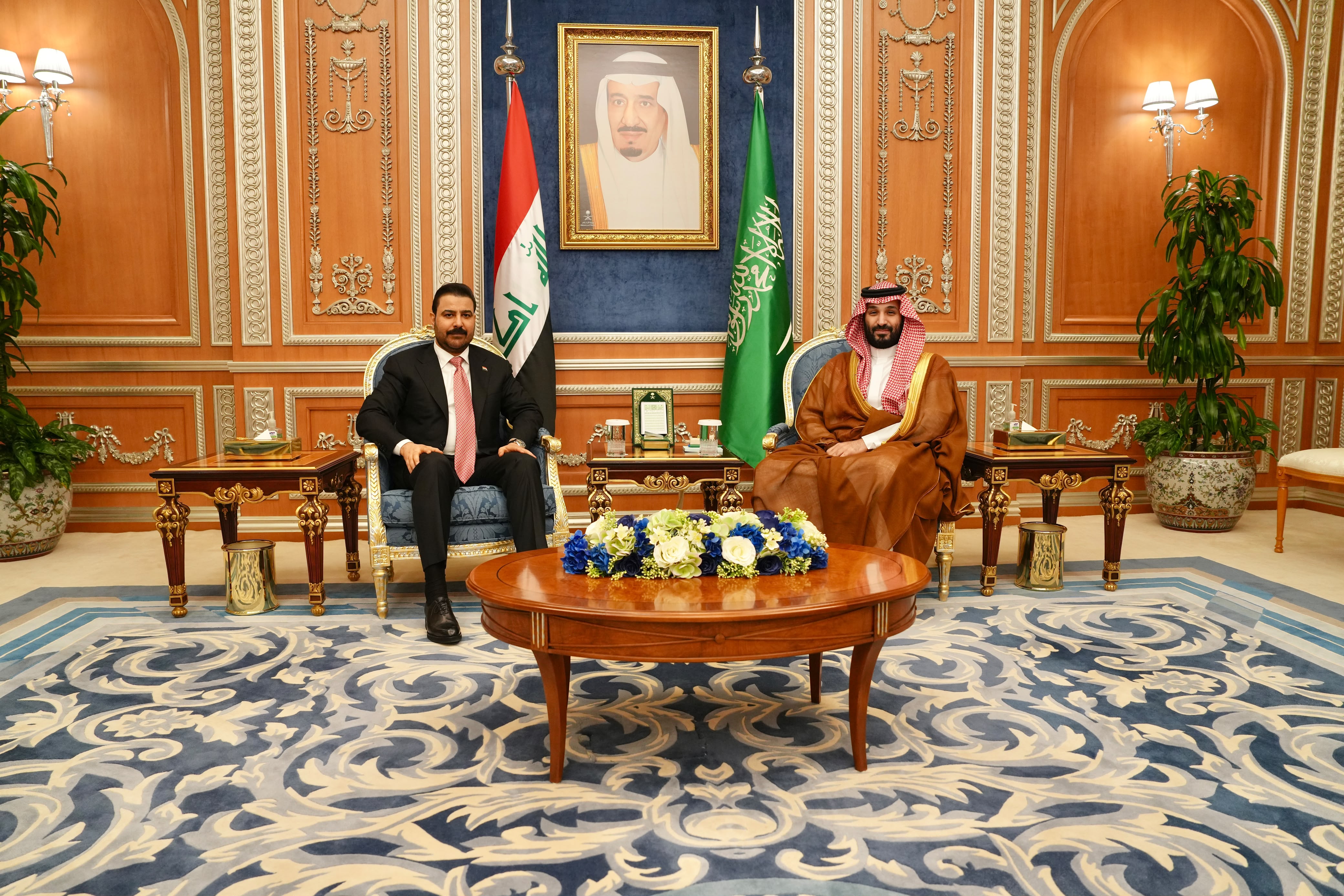
ERBIL (Kurdistan24) — Iraqi Prime Minister Ali Faleh al-Zaidi met with Saudi Crown Prince Mohammed bin Salman in Riyadh on Wednesday, condemning the attack on King Khalid International Airport and reaffirming Iraq’s commitment to preventing its territory from being used to launch attacks against Saudi Arabia or other countries in the region.
According to a statement from the Iraqi prime minister’s media office, the meeting focused on regional developments and coordination efforts aimed at strengthening security and stability across the region.
Al-Zaidi expressed the Iraqi government’s condemnation of the attack on King Khalid International Airport in Riyadh, as well as any harm inflicted on civilians and civilian infrastructure during conflicts, warning that such actions threaten regional security and stability.
He also reiterated Baghdad’s position that Iraqi territory must not be used as a launching point for attacks or other actions that threaten the security of Saudi Arabia and regional countries.
He stressed Iraq’s commitment to the principles of good neighborliness and respect for the sovereignty of Iraq and its neighboring and friendly states.
The two leaders also reviewed bilateral relations between Iraq and Saudi Arabia and discussed ways to strengthen cooperation across various sectors, particularly security coordination to address regional challenges.
Crown Prince Mohammed bin Salman expressed Saudi Arabia’s support for the Iraqi government’s efforts to promote dialogue as a means of achieving regional stability, according to the statement.
The meeting comes amid heightened regional tensions and concerns over attacks on critical infrastructure, with Baghdad emphasizing its commitment to protecting neighboring countries and preventing Iraqi territory from being used in actions that could further destabilize the region.
The meeting also comes amid heightened tensions between Baghdad and Riyadh over attacks on Saudi infrastructure that Iraqi authorities and regional reporting have linked to launches from Iraqi territory.
In September, drone attacks on Saudi oil infrastructure intensified scrutiny of the Iraqi government’s ability to prevent armed factions operating inside the country from carrying out cross-border operations.
The incidents threatened to undermine efforts to improve bilateral relations and complicated al-Zaidi’s efforts to strengthen ties with the kingdom.
The security issue also reflects a broader challenge for Baghdad: asserting state authority over armed groups while avoiding a wider confrontation that could draw Iraq deeper into regional conflicts.
In July, US and Saudi strikes targeted sites associated with Iran-backed armed groups in Iraq following attacks on Saudi energy facilities, triggering strong objections from Iraqi factions and renewed debate over the government’s ability to enforce its security decisions.
The dispute has underscored the tension between Iraq’s commitment to protecting its sovereignty and its obligation to ensure that its territory is not used to threaten neighboring states. <Link