Iraqi Political Leaders Welcome Cabinet Completion After Parliament Vote
Iraqi political leaders welcomed parliament's approval of 11 ministers and three deputy prime ministers, calling the vote an important step toward political and institutional stability.
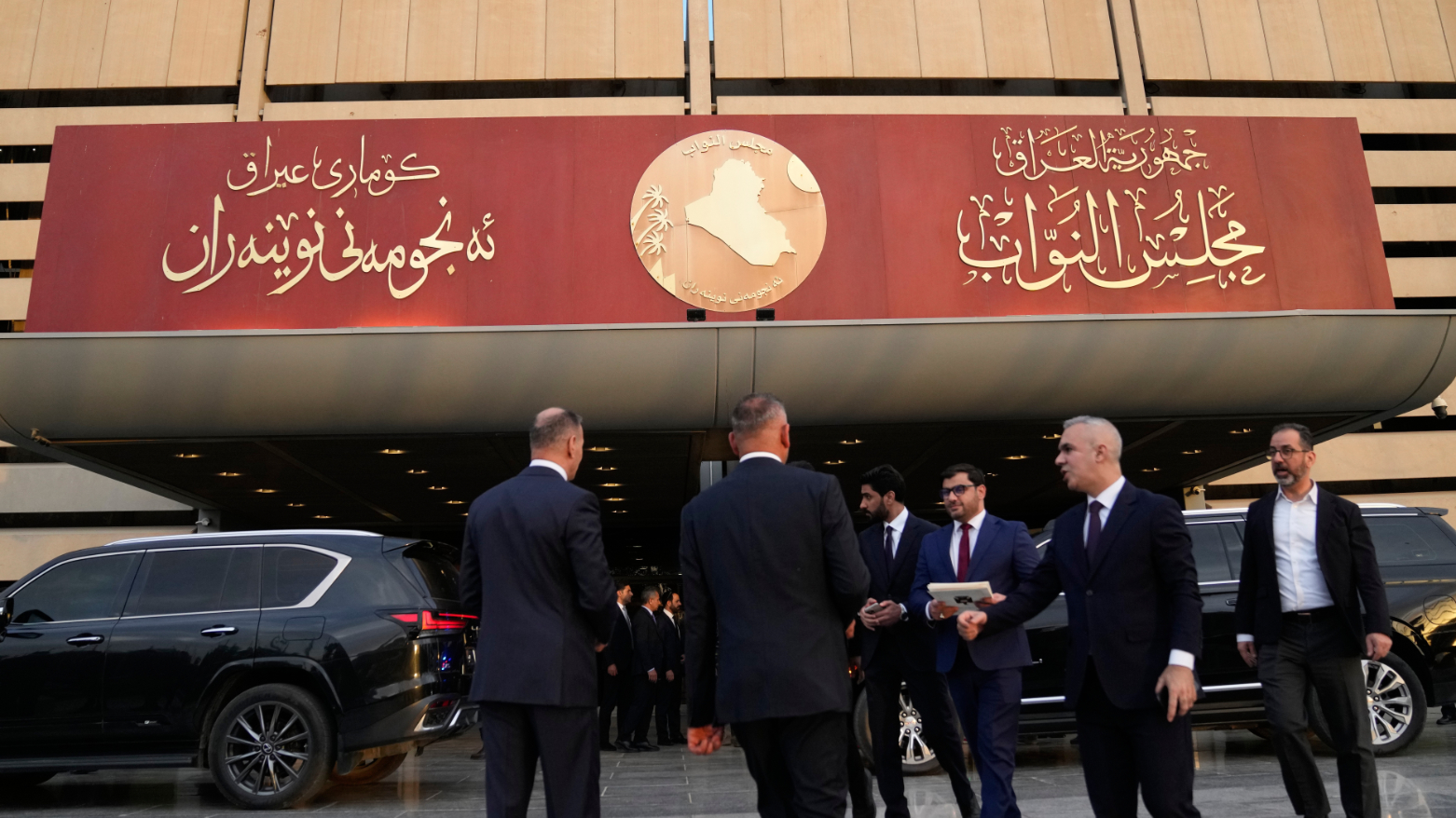
ERBIL (Kurdistan24) - Iraqi political leaders on Friday welcomed parliament's vote on the remaining ministerial positions and deputy prime ministers in Prime Minister Ali Zaidi's government, describing the step as important for political stability, institutional work and implementation of the government program.
The Coordination Framework congratulated the government on completing its formation and congratulated the deputy prime ministers and ministers who received parliament's confidence.
In a statement, the Framework said completing the cabinet represented an important step toward strengthening political stability, activating state institutions and moving forward with priorities tied to citizens' needs.
It also praised political forces and lawmakers for what it described as cooperation and understanding during the negotiations that preceded the vote.
Ammar al-Hakim, head of the National State Forces Alliance, similarly welcomed the parliamentary session.
"I congratulate the Iraqi Parliament on its vote to complete the cabinet of Prime Minister Ali Zaidi, and I congratulate the deputy prime ministers and ministers on receiving parliament's confidence," Hakim said.
He said the next phase should focus on implementation rather than political bargaining.
"We hope this step will mark a genuine beginning for the serious implementation of the government program," he added.
Hakim called for responsible fieldwork, a clear development vision and improved public services, with particular attention to poor and low-income citizens and what he described as fair distribution of opportunities and resources.
Former Prime Minister Mohammed Shia al-Sudani, head of the Reconstruction and Development Coalition, also described the vote as an important constitutional and political milestone.
"We congratulate the completion of the ministerial cabinet of the Zaidi government," Sudani said. "We view this step as an important milestone in completing the constitutional entitlements and consolidating political and institutional stability."
Sudani called for closer cooperation among Iraq's three branches of government so they can respond to political and economic challenges and meet public expectations for reform, development and services.
Khalid al-Obaidi, chairman of parliament's Security and Defense Committee, also welcomed the outcome, including the approval of newly established ministries and deputy prime minister positions.
Parliament convened at 8:50 p.m. on Thursday, Oct. 15, with 261 lawmakers present.
During the session, lawmakers granted confidence to 11 ministerial candidates and three deputy prime ministers, filling a number of vacant and newly created positions.
The three deputy prime ministers approved were Mohsen al-Mandalawi, Laith al-Khazali and Mohammed Tamim.
Among the ministers granted confidence were Rebaz Hamlan for Construction and Housing, Naif al-Shammari for Defense, Yasser al-Maliki for Interior and Qutaiba Ghazi Majid for Planning.
Parliament also approved Yasin al-Issawi for Culture, Mohammed al-Mousawi for Labor and Social Affairs, Safa al-Kinani for Youth and Sports, Ali al-Dakhil for Tourism, Mohammed Samaan as Minister of State for Component Affairs, Mohammed Sahib al-Daraji for Economy and Digital Affairs, and Haider Baha for Higher Education.
Despite political leaders referring to the cabinet as completed, parliament postponed votes on two nominations: Faris Brifkani for deputy prime minister and Rua Amer Salem for minister of migration and displaced persons.
No new date was specified for those votes.
The latest session comes five months after parliament first granted confidence to Zaidi and 14 ministers on May 14.
At that time, disagreements among political parties over ministerial posts and political shares prevented a final vote on several portfolios.
Those disputes continued through the parliamentary recess and into the following legislative period.
Thursday's vote therefore marked a major step toward closing the prolonged cabinet-formation process, although the two deferred nominations remain unresolved.
For the political leaders who welcomed the vote, the emphasis has now shifted from government formation to performance.
Their statements focused on institutional stability, implementation of the government program, public services, development and the ability of the new cabinet to respond to citizens expectations after months of negotiations over its composition.