Yasa Masood Chalki
Writer
Baghdad Admits It's Short of Cash, Kurdistan Has Paid for It for Years
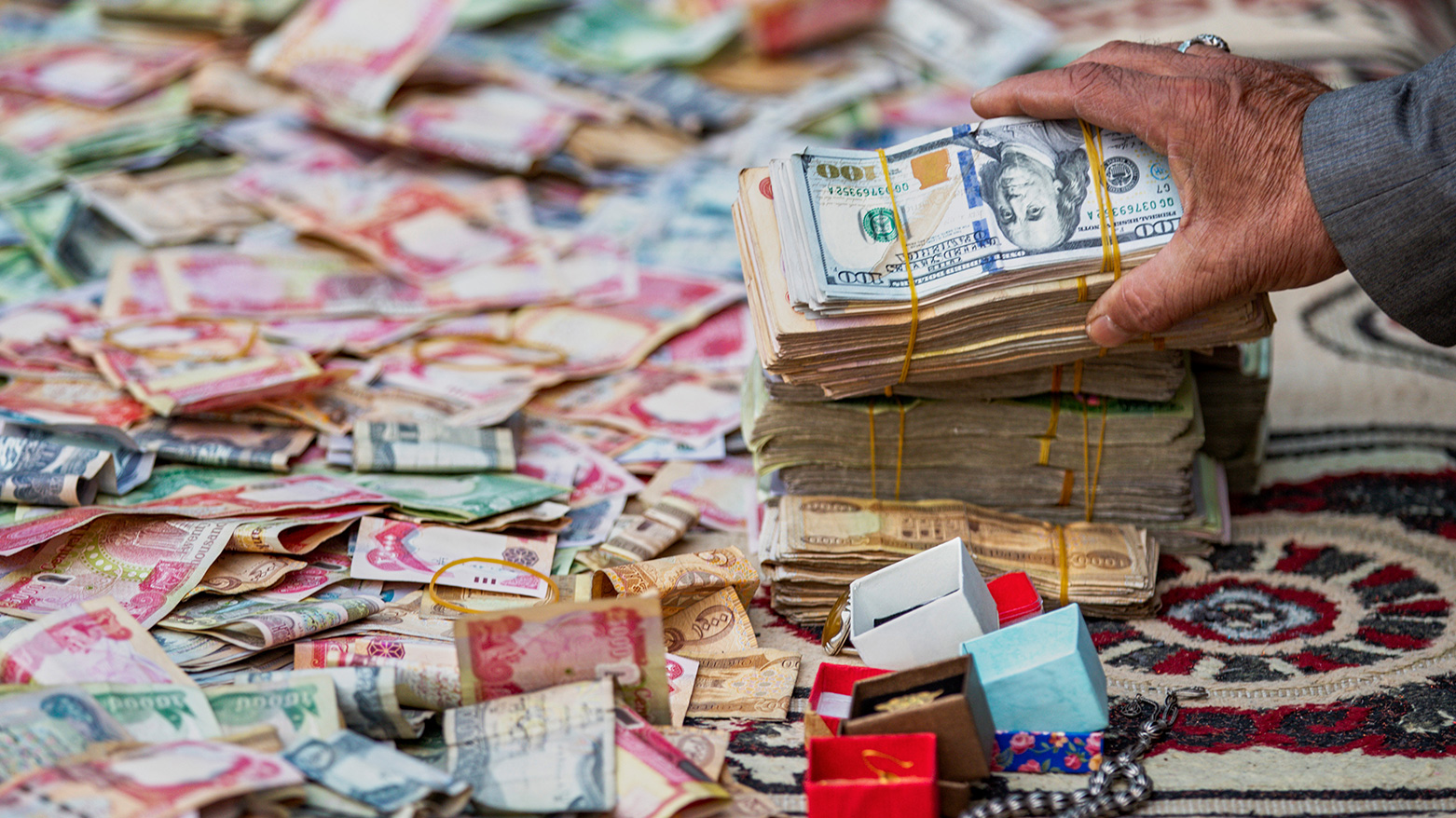
On 6 October 2026, Iraq's Council of Ministers raised the official exchange rate of the US dollar from 1,320 to 1,520 Iraqi Dinars. Prime Minister Ali al Zaidi later explained to parliament that his government had only three options before it: compulsory savings, paying salaries once every 45 days, or more loans.
In plain language, this admission means that Iraq's treasury cannot cover its expenditure. It is the same reality the Kurdistan Regional Government (KRG) has said for years, and the same reality Baghdad always denied or treated as a political pretext.
The admission comes as the draft 2027 budget law cuts the Kurdistan Region's share to 12.38 trillion dinars, compared with 16.498 trillion dinars in each of the past three years. At the same time, according to the KRG Ministry of Finance, more than 48 trillion dinars of the Region's share went unsent between 2019 and 2025. What is happening today, then, is not a sudden crisis. It is a protracted federal deficit that the people of Kurdistan paid for over many years, before Baghdad itself acknowledged it.
For more than a decade, every time the salaries of the Region's employees were delayed or cut, Baghdad placed the blame on the Region. One time it was the oil dispute, another time domestic revenue, and another the payroll lists, not to mention excuses such as (the finance minister is travelling, it is Thursday, the working week is over and there was no time to complete the procedures). In response, Kurdish parties said that Iraq's own pocket was empty and that the first place it cut from was the Kurdistan Region. At the time, this was treated as a political pretext. Today, as Iraq's prime minister speaks of compulsory savings and salaries every 45 days, it becomes clear that the argument was economic, not political.
Iraq's fiscal crisis is not new, and the numbers prove it clearly. In 2020, the collapse in oil prices and the coronavirus pandemic left Iraq unable to pass a budget, and parliament was forced to pass a borrowing law simply to pay salaries for the last two months of the year. In the same year, the dollar was raised from 1,182 to 1,450 dinars. The 2021 budget was prepared with a projected deficit of around 71 trillion dinars, and the 2023 budget, described as the largest in Iraq's history, stood at 198.9 trillion dinars with a deficit of more than 64 trillion. Over seven years, Iraq's budgets totalled 1,155 trillion dinars, yet not a single year ended without a deficit.
2026 brought the crisis to its peak. In the first five months, the state deficit rose fifteenfold to 12.95 trillion dinars, and within seven months the gap between revenue and spending passed 29 trillion dinars. Iraq needs about 8 trillion dinars every month for salaries, and the country's public debt, by the prime minister's own account, has exceeded 208 trillion dinars. The Central Bank's cash dollar reserves fell at one point this summer to 84 million dollars, and although more than 101 trillion dinars are in circulation, banks faced a shortage of cash. Today, 100 dollars sell for about 164,000 dinars on the open market, against an official rate of 152,000. This is the condition of a state that has lived for years on debt and reserves, not on revenue. These indicators are consistent with what rentier state theory says about the structural and fiscal risks facing countries that depend excessively on oil revenue.
For the Kurdistan Region, the story begins in early 2014, when the KRG's budget was cut. The Region's entitlement that year was 18.28 trillion dinars, but Baghdad sent only four instalments totalling 2.28 trillion. That means 16 trillion dinars were not sent that year. This was precisely the year the Region was confronting ISIS on a front a thousand kilometres long while sheltering nearly two million displaced people.
In 2015 the picture did not change. In the first five months of that year, the Region's entitlement was 6.173 trillion dinars, but only 2.265 trillion was sent and about 3.9 trillion dinars stayed in Baghdad. During the same period, the KRG Ministry of Finance announced that the Peshmerga's dues since 2007 had reached 11.5 trillion dinars, none of which had been sent, even though the Peshmerga are a constitutional part of Iraq's defence system. In the years that followed, up to 2018, the Region remained without a budget share and was forced to pay salaries from its own revenue and through compulsory savings.
From 2019 onwards, precise figures are available. That year Baghdad sent only 5.32 trillion dinars to the Region. In 2020 only 2.19 trillion was sent, and the Region paid just eight salaries across the whole year. In 2021 the amount fell to 1.2 trillion, and in 2022 to only 400 billion dinars. According to calculations based on KRG Ministry of Finance figures, the total withheld from the Region's share in these four years is about 14.7 trillion dinars. Another notable point is that Baghdad recorded most of what it sent between 2019 and 2023 as loans, not as entitlements.
The budget law of 2023, covering three years, raised hopes that this situation would end. Yet in 2023 the Region's entitlement was 16.498 trillion dinars and only 4.7 trillion was sent, meaning 11.8 trillion dinars were withheld, and three months of that year's salaries remain unpaid to this day. In 2024 the Region's entitlement was 20.91 trillion dinars and 10.03 trillion was sent, meaning about 10.9 trillion dinars were withheld. What did arrive covered only ten months of salaries. In 2025, of the same entitlement, only 9.6 trillion was sent, meaning about 11.3 trillion dinars were withheld, and once again only 10 of 12 salaries were funded.
Taken together, of 58.3 trillion dinars over these three years, only 24.3 trillion reached the Region, about 41 percent. Of the 12.5 trillion dinars allocated by law for investment in the Region, not a single dinar was sent.
In 2026, the Region handed over 443 billion dinars in non oil revenue to the federal treasury in the first five months. In return, Baghdad sent only salary funds and withheld 100 billion dinars owed to retirees. At the same time, the Iraqi Ministry of Finance admitted that it faced a cash shortage in funding the salaries of the Region's employees.
If we add these numbers up, what is documented in official figures alone for 2014, 2015 and 2019 to 2025 exceeds 68 trillion dinars, without counting the dues of the Peshmerga and retirees or the years 2016 to 2018.
Iraq's social protection network covers around 1.7 million families. Kurdistan Region Prime Minister Masrour Barzani in an interview with Asharq TV on July 27, 2025 revealed that more than 7 million people received federal social-welfare payments, of whom only 72,000 were from the Kurdistan Region. The share of the Region's citizens in this network is only about one percent, while the Region makes up more than 14 percent of Iraq's population. More striking still, the small amount of welfare that Baghdad sends to the Kurdistan Region’s citizens is deducted from the Region's budget share, rather than from the federal budget as it is for other parts of Iraq.
The same inequality appears in salaries. The Peshmerga, constitutionally part of Iraq's defence system, are not paid on par with soldiers of the Iraqi army. The Region's employees and retirees do not receive the same grades, allowances and salary increases as their counterparts in Iraq. In 2025 Baghdad froze all transfers, salary increases and hiring for the Region. A citizen of the Kurdistan Region pays taxes and customs duties like a citizen of Basra or Baghdad, but in return does not receive the same salary or the same support.
The central point is that Iraq is short of cash. This shortage lies behind the decision to change the dollar rate, and the same shortage is the reason for the financial siege imposed on the Region for years. When a state does not have enough money, it cuts first from the most distant party, and for Baghdad that party has often been the Kurdistan Region.
This is not the first time the dollar rate has exposed this reality. When the dollar was raised at the end of 2020, the Region paid only eight salaries in that very year. In February this year, an official at the Central Bank of Iraq said that linking a change in the dollar rate to the budget deficit was wrong, yet once the deficit passed 29 trillion dinars in seven months, the decision was taken.
This does not mean that the current Iraqi government created the crisis. Zaidi noted that Iraq's economy is under heavy pressure because of the regional conflict and the closure of the Strait of Hormuz. Yet what Baghdad is doing today reveals the scale of a fiscal crisis that has built up over years. The question is this: if the shortage is now spoken of openly, why did the Kurdistan Region oublic employees alone bear a large share of its cost for so many years?
If the draft 2027 budget law is passed in its current form, it would increase the financial pressure on the Region. According to the figures in the draft, the Region's share is 12.67 percent, while according to the latest census the Region's population is above 14 percent. Of a total of 217 trillion dinars, 12.38 trillion is allocated to the Region. Of 100,000 new posts across Iraq, none is allocated to the Region, and the Region's requests to make 59,000 contract employees permanent and to add 24,000 new posts have been rejected. Salaries of the Peshmerga and the Region's employees are still not equalised with those of their counterparts in Iraq, and no investment budget has been set aside for the Region.
Against all these cuts, the draft places heavy obligations on the Region, including handing over all customs revenue to the Iraqi government, handing over its taxes and domestic revenue, delivering 400,000 barrels of oil a day to SOMO, and repaying the debts of the Trade Bank of Iraq (TBI).
The Iraqi prime minister's admission of a cash shortage is an important acknowledgement of the fiscal crisis, but this acknowledgement does not end with the dollar rate. If Baghdad accepts today that it lacks sufficient funds, it must also accept that the KRG had been warning of the same problem for years. It must also accept that the tens of trillions of dinars that remain in Baghdad are not a political figure, but the unpaid salaries of teachers, Peshmerga and retirees, the support owed to poor families, and the ability of public institutions to meet their obligations to citizens.
If the fiscal deficit is a fact that Baghdad acknowledges today, the question is no longer whether the crisis exists, but why the Kurdistan Region and its citizens have carried an unequal share of its burden, and why the financial disputes between the two sides have not been resolved on a clear basis of the constitution, the law and fairness in the distribution of resources and obligations.
The views expressed in this article are those of the author and do not necessarily reflect the views of Kurdistan24.