Iran's New Defense Minister Vows to Expand Military Capabilities
Iran's parliament approved Mehrdad Akhlaghi as defense minister in a 237-15 vote as he outlined plans for missiles, drones, air defense and military production.
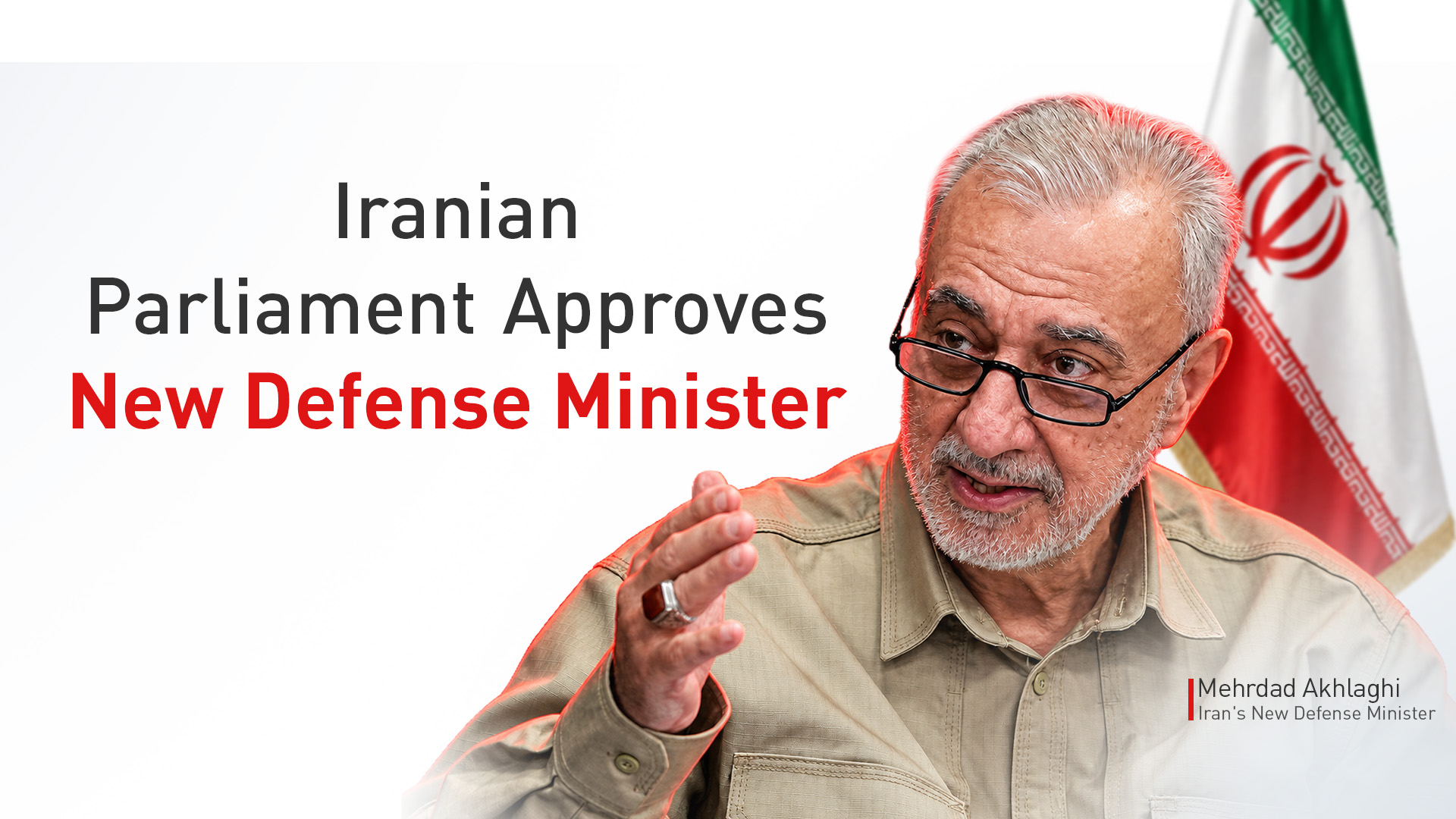
ERBIL (Kurdistan24) - Iran's parliament approved Mehrdad Akhlaghi Ketabchi as Minister of Defense and Armed Forces Logistics on Sunday, giving the veteran defense-industry official responsibility for the ministry as Tehran seeks to strengthen missile, air-defense, drone and other military capabilities amid continuing regional conflict.
Iran's state-run IRNA reported that Akhlaghi received 237 votes in favor and 15 against, with 277 lawmakers present during the session.
President Masoud Pezeshkian had nominated Akhlaghi on Oct. 5. Born in Rasht in 1958-59, he has spent decades within Iran's defense establishment, including as head of the Shahid Bakri Industries Group and managing director of the Aerospace Industries Organization.
Speaking by video link before Sunday's confidence vote, Pezeshkian urged lawmakers to support the nominee, arguing that a decisive vote would demonstrate unity among the government, parliament and Iranian public on national defense.
According to Fars News Agency, Pezeshkian highlighted Akhlaghi's 42 years of experience in the Defense Ministry and described him as knowledgeable about the country's defense structure.
The president also noted that Akhlaghi is under U.S. sanctions.
Pezeshkian said Iran intended to continue developing its defense capabilities while maintaining that Tehran did not seek to attack other countries.
"Our defense is not only our missiles; our defense is our people, and our defense is the unity and cohesion we have in the country," he said.
Akhlaghi, outlining his program to parliament before the vote, placed increased military production and preparedness among his immediate priorities.
He warned that any renewed U.S. military action against Iran would receive what he described as a "surprising and extensive" response, while saying the consequences of such an escalation would fall on Washington and its allies.
The new minister characterized contemporary warfare as extending beyond conventional military operations to include sanctions, cyberattacks, supply-chain disruption, information warfare and restrictions on access to technology.
His plans include greater production of missiles, drones and air-defense systems, as well as continued work on military satellites, naval capabilities, electronic warfare, radar and emerging technologies.
Akhlaghi said Iran would seek improvements in missile accuracy, range and destructive capability and would give increased attention to air defense.
He also outlined extensive drone research, including long-range, combat, reconnaissance, stealth and counter-drone systems.
Military space capabilities are another priority. Akhlaghi said Iran intended to manufacture and launch its own military satellites, while work on a heavy fighter aircraft would proceed through ground testing before a planned first flight next year.
At the industrial level, Akhlaghi said the Defense Ministry intends to rely increasingly on production outside its own facilities.
He said the ministry is targeting 75% outsourcing during the Iranian year 1405, rising above 85% in the following year, although highly classified products would continue to be manufactured in secure Defense Ministry facilities.
He presented research as equally important, if not more important, than production and said universities, knowledge-based companies and other national capabilities would be used to develop defense technologies.
Akhlaghi also pledged to strengthen what Iranian officials call the "Resistance Front," describing support for allied regional groups as one of his priorities.
Beyond weapons development, he addressed the livelihoods of military personnel and retirees.
Akhlaghi said $300 million was being spent to stabilize the prices of basic commodities for armed forces families and outlined plans addressing housing, insurance and retention of specialized personnel.
Pezeshkian similarly said his government would support efforts to improve housing and living conditions for military and security personnel.
The new minister also promised scrutiny of roughly 100 economic companies in which the Defense Ministry holds interests, saying management arrangements should be reconsidered where the ministry owns only minority stakes and that financial integrity would be a priority.
Akhlaghi said his program was divided into six-month and 22-month phases, reflecting what he described as the need for immediate military readiness as well as medium-term restructuring and modernization.
He also said Iranian armed forces had recently been placed on heightened readiness and maintained that Iran was prepared for further conflict, while declining to discuss operational plans concerning the Strait of Hormuz on national-security grounds.
Sunday's vote formally ends the interim period in the Defense Ministry and gives Akhlaghi parliamentary authority to pursue a program centered on higher production, technological development, military preparedness and support for Iran's armed forces and regional allies.