Protesters Set Tourism Office Ablaze in Lyon at Cost-of-Living Rallies
Protesters marched in Paris and set fire to a tourism office in Lyon on Saturday during nationwide cost-of-living demonstrations.
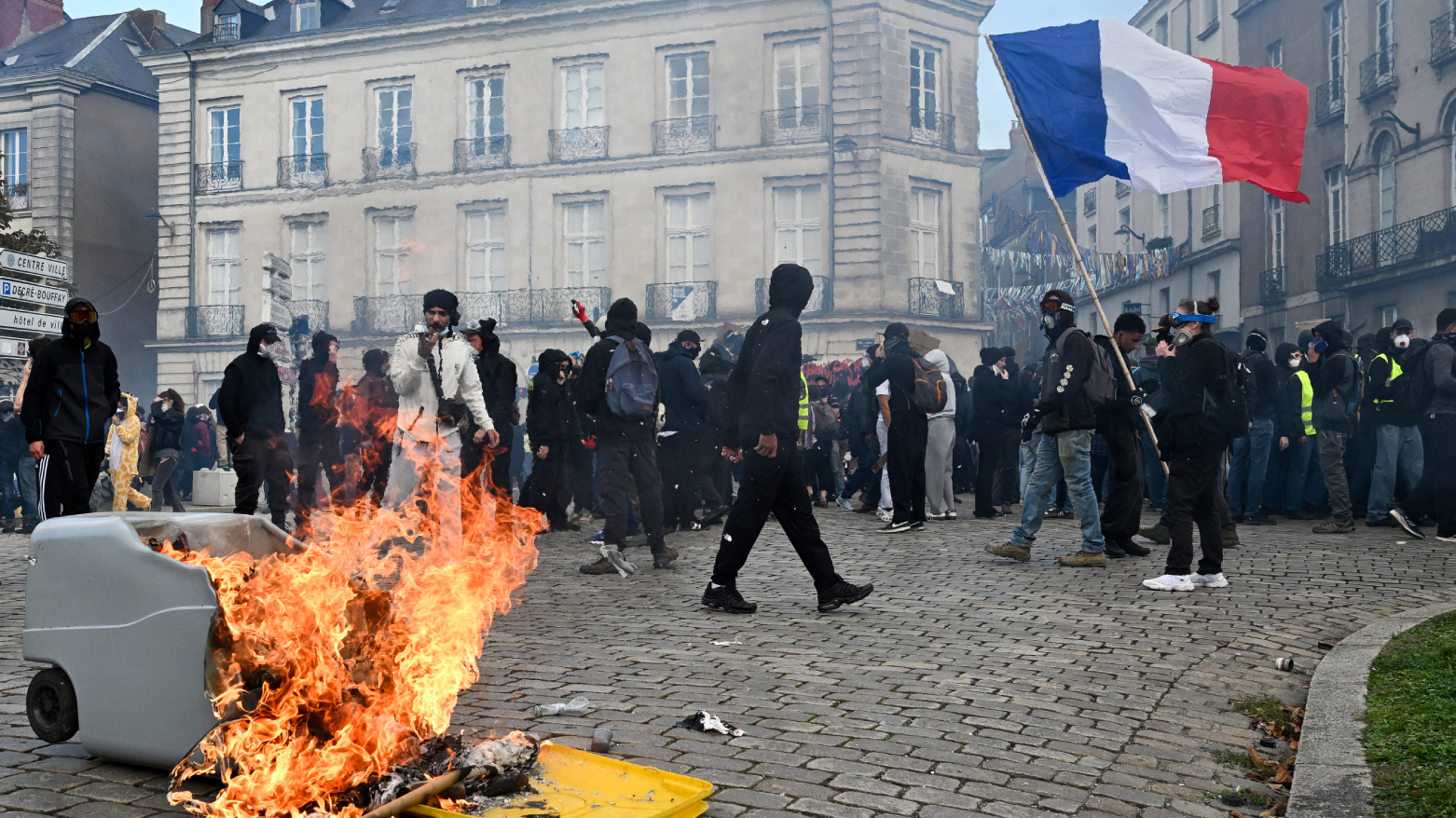
ERBIL (Kurdistan24) - Protesters in France took to the streets on Saturday as part of nationwide demonstrations against the rising cost of living. The main march in Paris began on schedule despite clashes with security forces, while in the city of Lyon, demonstrators set fire to a tourism office, according to AFP reporters.
The Paris march started shortly after 2 p.m. local time, AFP reporters said. Participants include members of the “Yellow Vests” movement, high school and university students, and climate activists, along with people from other sectors.
The march is due to head to Place de Clichy in the north of the city along a route approved by the police. Police banned gatherings elsewhere, particularly around official buildings such as the Élysée Palace, the presidential residence, and the Hôtel de Matignon, the prime minister’s office, as well as the Champs-Élysées avenue.

In Lyon, an AFP reporter saw protesters set fire to a tourism office on the sidelines of the demonstrations. The attack took place in a central square where groups of hooded youths were throwing projectiles and firework mortars at police officers.
Police responded with tear gas, dispersal grenades, and a water cannon, the reporter said.
The Saturday demonstrations followed a protest movement that began in high schools. Students demonstrating in Paris on Tuesday, Oct. 13, accused the French government of failing to provide adequate funding for education and other public services, as the movement continued to draw university students and wider support.

Protesters said shortages of teachers, equipment, and funding had fueled frustration among students. One male protester said the dissatisfaction extended beyond education to spending on hospitals, local authorities, and other public services.
“It’s widespread frustration, because we have budget cuts and public services being axed: hospitals, education, town halls,” he said.
He argued that taxpayers were not seeing enough public benefit from the money collected by the state, claiming that large companies and investors were benefiting while public institutions struggled. He said high school students were particularly frustrated by inadequate equipment, teacher shortages, overcrowded classrooms, and problems with school infrastructure, and that high school blockades over the previous two weeks had now been joined by university students.
Another demonstrator, Chloé, said a lack of funding was affecting students in different schools, including institutions outside central Paris. “We are here for our rights,” she said. She hoped the scale of the demonstrations would encourage authorities to act and listen more closely to students’ demands.

Chloé also criticized what she saw as an excessive media focus on confrontations during the protests. “They are only showing the violence and the scenes,” she said. “Behind this kind of violence there are words, really important words, that we just want to be heard here.”
The protests have spread across France since late September, with students at hundreds of lycées, secondary schools generally attended by pupils aged 15 to 18, blocking entrances to demand better classroom conditions. AFP reported that thousands joined demonstrations in Paris and other French cities on Tuesday, among them university students, teachers, and union representatives. The far-left France Unbowed party supported the demonstrations. AFP journalist Marc Burleigh, with AFP bureaux, reported marches in cities including Nantes, Lyon, Lens, Strasbourg, Bordeaux, and Marseille.
Students cited absent teachers, deteriorating school buildings, overcrowded schedules, and classroom conditions among their principal complaints. The French government announced that about 3,000 substitute teachers would be deployed to the 114 high schools considered most affected by staffing shortages. Student organizations argued that the measure was insufficient, and the national students’ union called for a much larger financial commitment to secondary education.

President Emmanuel Macron urged restraint on Monday, saying the issues raised by students required “time, consultations, discussion, and respect.”
The protests have also generated controversy over policing. Students and rights groups accused police of using disproportionate force during some demonstrations, while police officers and school employees were also injured during unrest. Authorities opened internal investigations into allegations of police brutality.
France’s Education Ministry said 214 schools, mostly high schools, were closed on Tuesday, while the university student union l’Union Etudiante said a large majority of universities had closed in support of the movement. Not everyone backed the school blockades: some parents and students criticized them for preventing those who do not support the protests from attending classes.
