France Admits Policing Failures After Weekend of Violent Unrest
French Interior Minister Laurent Nunez says police lost control in some cities during weekend unrest, prompting an offered resignation rejected by Macron.
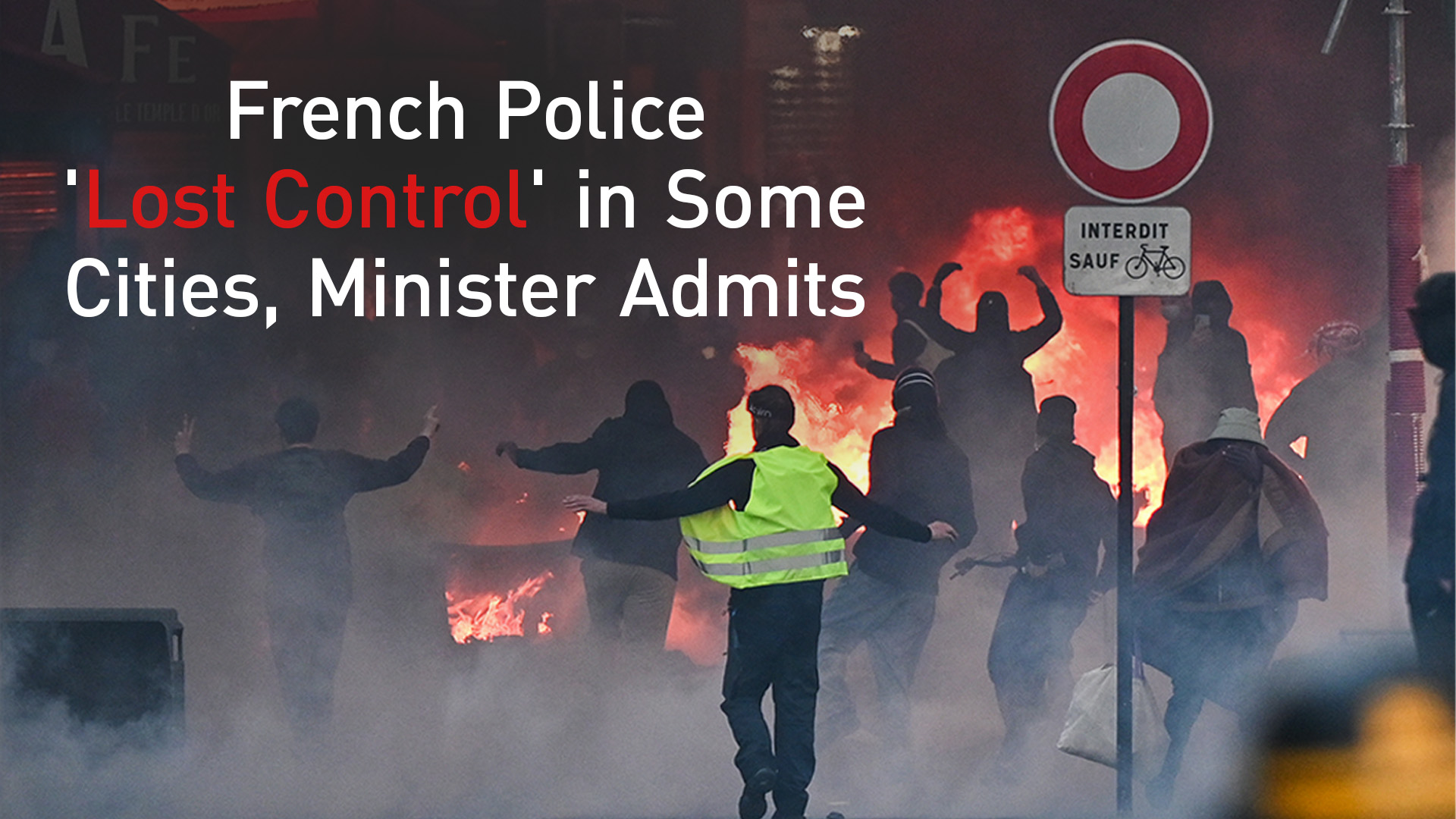
ERBIL (Kurdistan24) - French Interior Minister Laurent Nunez acknowledged Monday that police "lost control" in some cities during the weekend's violent unrest and offered his resignation, as President Emmanuel Macron admitted failures in intelligence and preparation but asked him to remain in office.
Nunez said there had been a "lack of anticipation" ahead of the disturbances and that he felt personally responsible for what happened as demonstrations over living costs and public services descended into looting, arson and clashes in several cities.
He told reporters that he had tendered his resignation to Macron, but the president refused to accept it.

The Élysée Palace said Macron recognized "failures in anticipation and intelligence" surrounding the unrest but considered continuity in the leadership of France's security forces necessary as authorities deal with the aftermath.
Macron instructed Nunez to establish what went wrong in planning and intelligence gathering and to introduce new operational methods for handling further disorder.
The admission followed one of France's most violent weekends in years.
According to the Interior Ministry, nearly 2,400 people were arrested during Saturday's unrest and almost 1,000 police officers and gendarmes were injured, seven of them seriously.
Hundreds of thousands of people had initially taken to the streets over the rising cost of living, school conditions and wider concerns about public services. French authorities estimated participation at about 550,000, while organizers put the figure at around 800,000.

Much of the demonstrations remained peaceful, but violence erupted on their margins as masked groups attacked police, set vehicles and buildings on fire and looted businesses.
AFP journalists Juliette Vilrobe and Emmanuel Peuchot, with reporters across France, documented attacks on municipal buildings and shops in several cities.
In Limoges, the 19th-century city hall was largely destroyed by fire after people broke into the building. A tourism office was set ablaze in Lyon, while public buildings and businesses were damaged in Paris, Marseille and other cities.
Macron addressed the country on Sunday, condemning what he called "unbridled" violence while drawing a distinction between demonstrators with legitimate grievances and those responsible for destruction and looting.

He said authorities would take a hard line against violent groups and allowed local officials to prohibit certain gatherings if necessary, though he stopped short of measures such as a nationwide state of emergency or curfew.
Fresh tensions continued in Paris on Sunday when hundreds gathered at Place de la République following calls circulated on social media.
Police used tear gas and stun grenades as bottles and stones were thrown at officers. Authorities reported more than 100 arrests in the capital that day, while several stores around the square were looted.
The government has largely blamed radical far-left groups and criminals for exploiting the demonstrations.

Macron accused what he described as "insurrectionist elements" from the radical left, joined by people engaged in criminal activity, of turning protests into widespread disorder.
The Associated Press, in reporting by Sylvie Corbet and Alexander Turnbull, noted that French authorities had not linked immigrants to the rioting, despite interventions from U.S. President Donald Trump and Vice President J.D. Vance blaming immigration for the unrest.
Trump said France had been damaged by immigration and called on the country to close its borders, while Vance argued that European governments had failed to consider assimilation and compatibility when accepting migrants.

French officials have instead described the violence as involving extremist political groups and criminals operating around demonstrations rooted largely in economic and social grievances.
Those grievances had been developing for weeks.
The protest movement initially gained momentum among high school students demanding better funding, more teachers and improved classroom conditions before widening to include university students, trade unions, Yellow Vest activists and people protesting against living costs and deteriorating public services.
Kurdistan24 correspondent Sangar Akrayi, reporting from Paris earlier in the protests, spoke to students who complained of teacher shortages, inadequate equipment, overcrowding and reductions in public spending.

France is also facing scrutiny over the police response.
A 17-year-old boy lost a hand in Saint-Etienne after an incident involving a crowd-control grenade, while prosecutors in Mulhouse opened an investigation after a 17-year-old girl lost an eye.
Police tactics had already been under examination during the preceding student protests, with allegations of disproportionate force and internal investigations into some incidents.
Political pressure on Macron's government has intensified ahead of France's 2027 presidential election.
National Rally presidential candidate Marine Le Pen said the unrest showed the government was exhausted and unable to maintain control.

Far-left leader Jean-Luc Mélenchon, who supported the broader protest movement, also criticized the government but told supporters that looting and destruction had no place in the demonstrations.
Macron, who cannot seek another term, said the country should resolve its political differences through the coming election rather than through street violence.
For his government, the immediate task is now both operational and political: restoring order while determining how security agencies failed to anticipate the scale of the violence.
By refusing Nunez's resignation, Macron has left that responsibility with the same minister who acknowledged Monday that in parts of France, police had lost control.