Rubio: Iran's Islamic Regime is the Number one Driver of Instability in The Middle East
In a wide-ranging exclusive interview, Rubio says Iran destroyed its own conventional shield, lost its navy and air force, can no longer protect a nuclear weapons programme, and that 13 to 14 million barrels of oil are now flowing through Hormuz daily as the US maintains a Strait
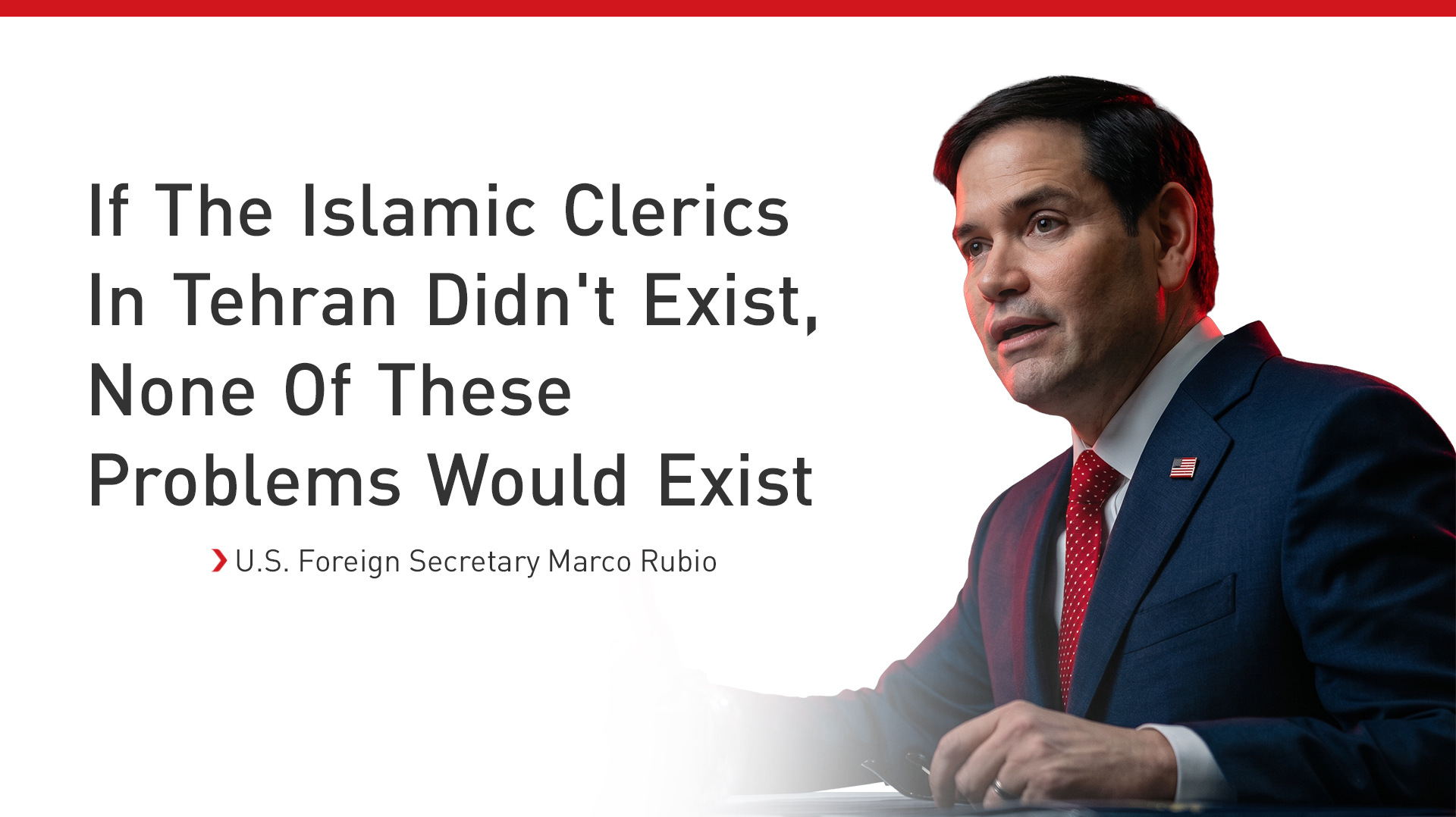
ERBIL (Kurdistan 24) - US Secretary of State Marco Rubio told Breitbart News in an exclusive long-form interview that Iran's Islamic regime is the number one driver of instability, war, and conflict in the Middle East and the number one obstacle to peace in the region, and that the Palestinian issue would be easier to deal with if Iran's radical clerics did not exist, in one of the most comprehensive American official assessments of the Iran conflict's strategic rationale and current status since the war began.
"I think what President Trump has exposed is that the number one driver of instability and war and conflict and the number one obstacle to peace in the Middle East is the Islamic regime in Tehran," Rubio said. "If there was no Islamic clerics, these radical Shia clerics in Iran, if they didn't exist, if that wasn't there, none of these problems would exist. You may still have a Palestinian issue. I would argue that issue would be easier to deal with if Iran didn't exist."
Why The War Started
Rubio provided his most detailed public explanation yet of the strategic rationale behind the decision to go to war with Iran.
Iran wanted to build a conventional shield of tens and tens of thousands of missiles and drones,
he said.
"Once they got to that point, they would be able to say to the world, 'Guys, we're now going to build a nuclear weapon, and there's nothing you can do about it because we have so many drones and so many missiles that we will destroy the entire region, so you can't touch us. We are immune.'"
He said President Trump was not going to allow Iran to build a nuclear weapon hiding behind that conventional weapons shield and acted to dismantle it. "He destroyed their navy, he destroyed their air force, he destroyed their factories that make the missiles," Rubio said. "They don't have an air force. They don't have a navy, and they've lost a lot of air defenses as well. Large portions of their country are deeply vulnerable to future strikes if necessary. So he's achieved that objective. They can no longer hide behind a conventional shield to build a nuclear weapon."
The Strait Of Hormuz: Current Status
Rubio provided a detailed update on Hormuz. "On average, over the last 10 days, about 13 to 14 million barrels of oil are going through the Strait of Hormuz out to the global market per day. Some days it's actually equivalent to what it was pre-conflict," he said. "The US military is involved in escorting and defending these ships from these strikes. Iran is still shooting at these, but by and large we've been able to get that flow going."
He described the current posture as a Strait of Hormuz defense combined with economic strangulation. "The only country in the world that cannot get a single barrel of oil through the Strait of Hormuz is Iran. They're the only ones, and we're inflicting tremendous sanctions. Every dollar you deny them in sanctions is one dollar they don't have for Hezbollah, one dollar they don't have for Hamas, one dollar they don't have for the terrorist militias inside of Iraq, and one dollar they don't have for their own military or their own nuclear ambitions."
Iran As The Root Of Middle East Instability
Rubio systematically listed every major Middle East flashpoint and traced each one back to Tehran. On Lebanon: Hezbollah is 100 percent an agent of Iran. On Iraq: Shia militias are sponsored by Iran and can launch missiles against Saudi Arabia and Israel from Iraqi territory. On Yemen: Iran is the number one sponsor of the Houthis. On direct attacks: Iran is the only country in the region that has launched direct attacks, not just proxy attacks, against Saudi Arabia, the UAE, Bahrain, Kuwait, and Jordan.
"If you look at all of the things that are going on in that region and all the flashpoints that exist there, they all track back to the Islamic Republic of Iran," Rubio said. "Correctly identifying who it is that's driving instability and war in the Middle East is important in order to solve it."
The Acropolis Address And Western Civilization
Rubio also discussed his address at the Acropolis in Athens earlier this month, in which he described Americans as the heirs of Western civilization from ancient Greeks and Romans. "We are the heirs. We inherited from Greece and from Rome, and ultimately through Europe, many of the values that today underpin our country," he said.
The only culture and the only civilization in the world today who seems apologetic about its history and its achievements is the West, and it's having a dramatic impact on foreign policy.
He said many European leaders privately agree with this view but fear being criticized by their political left, media, and academia for embracing it. "I sense more receptivity, and I think what you're really going to start seeing is that play out in elections as more and more leaders are willing to say these things and then get elected," he said.
On Ukraine
Rubio described the Ukraine conflict as fundamentally being about 11 percent of the Donetsk region that Russia has not yet captured, which Ukraine describes as its last defensible line before a straight path to Kyiv. He said the United States remains willing and prepared to play a mediating role if the opportunity presents itself but that the dynamics are deeply entrenched. He justified the Russian diesel sanctions waiver as being in the American national interest given global diesel supply needs, saying the decision was made not because it is good for Russia or bad for Ukraine but because it is good for America.
Greece And Energy
Rubio discussed his visit to Greece in detail, saying Greece is uniquely positioned geographically and politically to serve as an energy transit corridor and production hub for Europe and the Middle East, connecting pipelines north into Europe and south into Israel and the broader Middle East. He praised Greece as one of only a few NATO members to increase defense spending independently of American pressure and said the bilateral relationship will remain strong despite the resignation of Ambassador Kimberly Guilfoyle.