Rubio In Tashkent: Ending Russia-Ukraine War Is Trump's Priority.
Speaking in Uzbekistan, Rubio says neither Russia nor Ukraine can secure a clear victory, describes the sanctions suspension as a test of diplomacy, and denies Zelensky’s claim that Washington paused intelligence sharing with Kyiv.
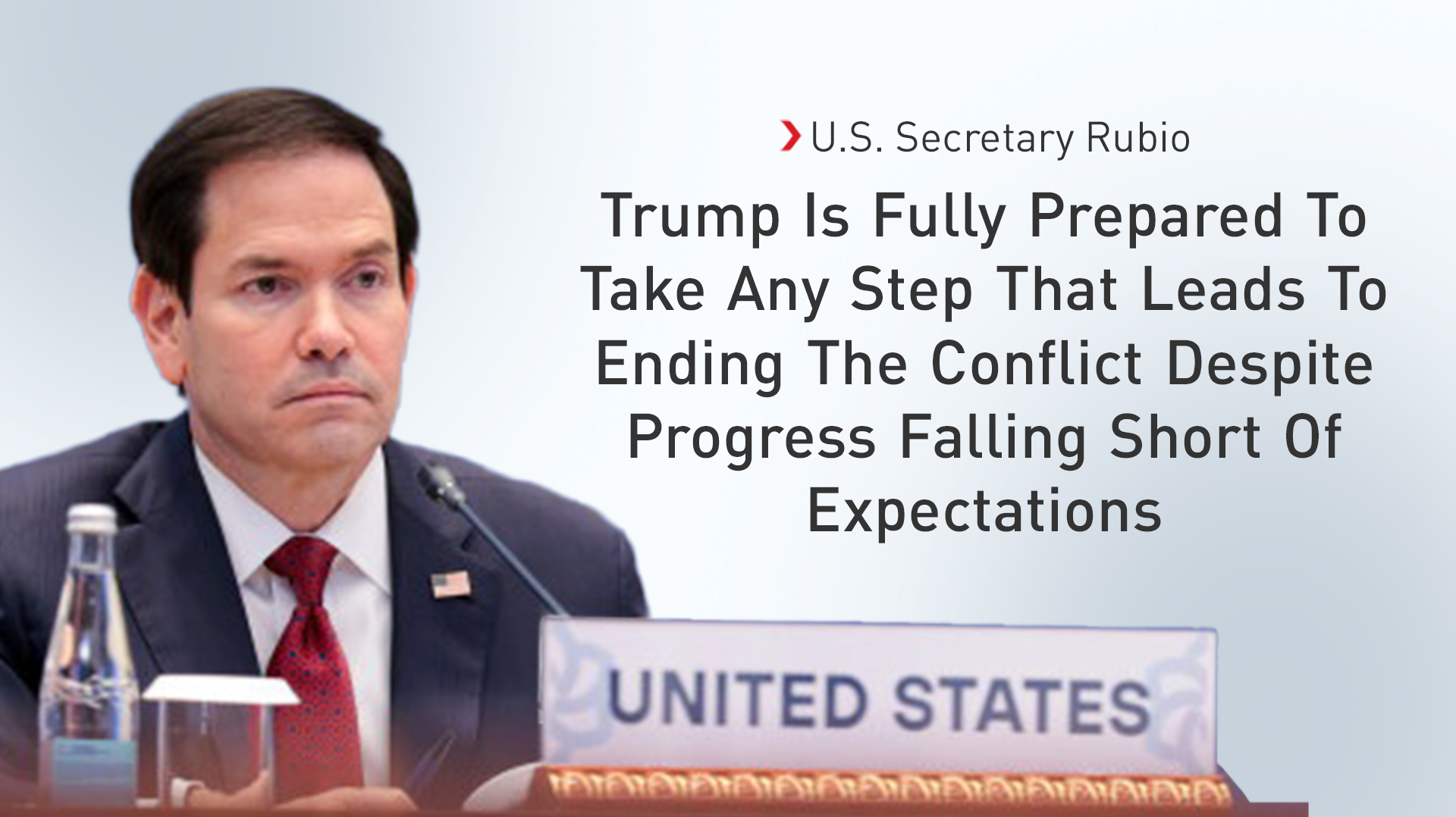
ERBIL (Kurdistan 24) - US Secretary of State Marco Rubio told reporters during his visit to Tashkent, Uzbekistan, on Monday that ending the war between Russia and Ukraine is among President Donald Trump's priorities, that Washington will continue seeking every opportunity to facilitate a conclusion to the conflict, and that neither side can achieve a decisive victory given the enormous losses both have suffered, making the path forward one that requires patient and sustained diplomacy.
"In nearly two years, America has tried multiple times to help stop the war," Rubio told reporters in Tashkent. "Donald Trump is fully prepared to take any step that leads to ending the conflict, despite progress so far having fallen short of expectations."
The Sanctions Suspension Explained
Asked about the recent suspension of some of the sanctions on Moscow, specifically the Russia sanctions waiver Trump signed last Friday under the Graham Act, Rubio explained that the decision was intended as a test to determine whether continued discussions with both Kyiv and Moscow can produce positive results and prevent another year of destruction from the war.
The framing of the Graham Act waiver as a diplomatic test rather than a policy concession to Russia is significant, as it aligns the sanctions suspension within a negotiating strategy rather than presenting it as a reward for Moscow. It also implies that if the test fails to produce movement toward a settlement, the sanctions could be reimposed.
The Conflict's Complexity
Rubio described the war between Russia and Ukraine as complex and difficult, in a way that neither side can achieve a decisive and definitive victory given that both have suffered enormous losses. He said diplomacy therefore requires patience and continued effort. He stressed that the ultimate measure will be whether an agreement can be reached and whether both sides are prepared to make compromises and show flexibility in order to end the war.
Rejecting Zelensky's Intelligence Claim
In a separate element of his Tashkent remarks, Rubio rejected recent statements by Ukrainian President Volodymyr Zelensky that Washington had temporarily suspended intelligence sharing with Kyiv, emphasizing that this claim is far from the truth.
Zelensky's claim, made in recent days, suggested that the throttling of Ukraine's military Starlink communications system and other reported US actions reflected a deliberate pattern of reducing American support to Ukraine while simultaneously easing pressure on Russia. Rubio's direct rejection of the intelligence suspension claim is the clearest American denial yet of the narrative that Washington is systematically withdrawing support from Kyiv even as it eases sanctions on Moscow.
The Tashkent remarks come as Rubio is in Central Asia following his visit to Athens and his Breitbart News interview in which he described the Ukraine conflict as fundamentally being about 11 percent of the Donetsk region and said Washington remains willing and prepared to play a mediating role. His visit to Uzbekistan, a Central Asian nation that has maintained economic relations with both Russia and the West throughout the conflict, places American diplomacy in a region with direct geographic and economic ties to the Russia-Ukraine file.