Zaidi Says Weapons Will Be Solely In State Hands By June 30
Iraqi PM Ali al-Zaidi says armed groups will hand weapons to the state by June 30, Iraq will not join regional wars, and outlines oil, tax and corruption plans.
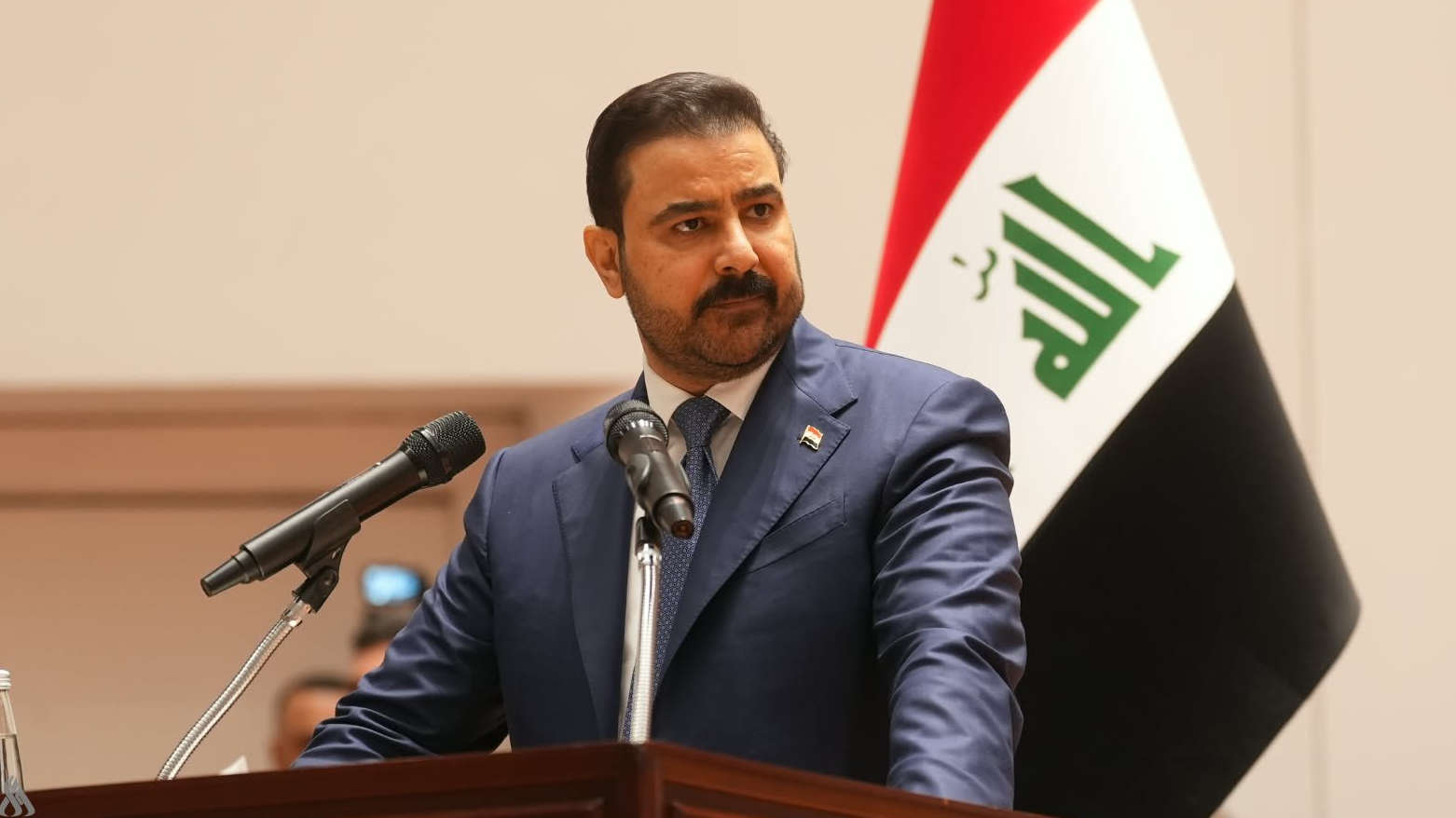
ERBIL (Kurdistan24) - Iraqi Prime Minister Ali al-Zaidi said on Friday that armed groups will hand their weapons over to the state by June 30 and that weapons must be only in the hands of the state. He added that Iraq will not take part in the wars and tensions in the region and will instead serve as a bridge for overcoming them.
“Iraq is a state that has groups, not groups that own the state,” Zaidi said.
He said the government has achieved good success in the process. According to Zaidi, the file on weapons has been completed with three groups, and talks are under way to settle it with four other groups. He stressed that after June 30, no weapons will remain outside the framework of the state, and described state control of weapons as a final decision with no going back. He said Iraq will soon be free of armed groups, with weapons held only by the security forces.
Zaidi also said his government has succeeded in keeping Iraq away from an international isolation that was only days away. He said the country faced the threat of a siege and of embassies leaving, but that the risks had been overcome.
Zaidi said the end of the presence of foreign forces means the end of the justifications that were given for carrying weapons. He confirmed that no American or other foreign soldier remains in Iraq, even under the label of adviser.
He also spoke of an understanding and agreement on the withdrawal of Turkish forces and the handover of the Bashiqa military base to the Iraqi army. Domestically, he said there is an agreement with Sinjar Resistance Units (YBS) forces to hand over Mount Sinjar (Shingal) and integrate their members into the Popular Mobilization Forces (PMF).
On the regional situation, Zaidi said the crisis in the region must be ended through agreement. He stressed that Iraq will not take part in any war and will remain a point of contact between the parties.
On neighboring countries, he said closing Iraq’s borders with Iran would serve the interest of neither country, because it would amount to imposing an economic siege on themselves. He added that the government’s policy is for Iraq to have a special relationship with the Gulf states.
Regarding his visit to Saudi Arabia, Zaidi said it had been scheduled in advance and carried a positive message to the kingdom. Talks with the crown prince covered regional security and the future of relations, he said, and the government is working to build a special relationship with Saudi Arabia and to develop ties with the Gulf states.
Zaidi said: “Even if we have not put an end to corruption, we have succeeded in weakening it within five months.” He said corruption had become a system and a culture for some people, so confronting it and those involved is the foundation of building the state. He said the government has faced pressure but the fight against corruption continues, with more campaigns ahead.
On the oil sector, Zaidi said one million barrels of oil used to be sold to the Ministry of Oil at a very low price of only 5,000 dinars per barrel, which opened the door to corruption. He said a review and revaluation of the oil supplied for domestic use has returned about 20 trillion dinars a year to the public treasury. The change is expected to bring in about 80 trillion dinars in revenue for the country over four years, he said. He added that a number of people involved in corruption in Oil Ministry contracts have been sent to prison and that the contracts are under scrutiny.
On oil exports, he said they are fluctuating between halting and resuming because of regional conditions. Work is under way on a pipeline network so that Iraq does not become a captive of the Strait of Hormuz. He said the government is trying to reactivate international routes and diversify export outlets, because the Strait of Hormuz crisis deprived Iraq of the benefit of higher oil prices. He also said there is a plan to raise Iraq’s oil production to 10 million barrels a day by 2032.
Zaidi said an invitation is expected to be sent to Recep Tayyip Erdogan to lay the foundation stone of the Development Road after the budget is approved. He said the road will become Iraq’s third river and that work on it will begin immediately after the budget is approved.
He said the government’s goal is to raise non-oil revenues to 30 percent during the cabinet’s term, noting that they have already risen from 6 to 8 percent to about 19 percent. Next year will be a year of economic reform, and citizens will see the results, he said.
The prime minister said the government gave up part of its tax and customs revenues so that basic goods can enter the country at lower prices. The exemptions cover fruit, vegetables, most food items, and medicines, and solar energy equipment and systems are also exempt from taxes. He said the government acts in the interest of citizens and wants to ease the economic burden on them.
On cutting expenses, Zaidi said his four deputies receive no salary and no new staff were hired for them. He said he has asked them to make field visits to provinces, ministries, and departments to learn the public’s needs. He said the work of 72 advisers has been ended, the four deputy prime minister posts were filled at no extra cost, and the three new ministries added no extra financial burden to the budget.