Trump Says He Has No Information About Iran Strike This Weekend
Donald Trump said he had no information about a possible U.S. strike on Iran this weekend, despite envoy Tom Barrack saying military action could occur.
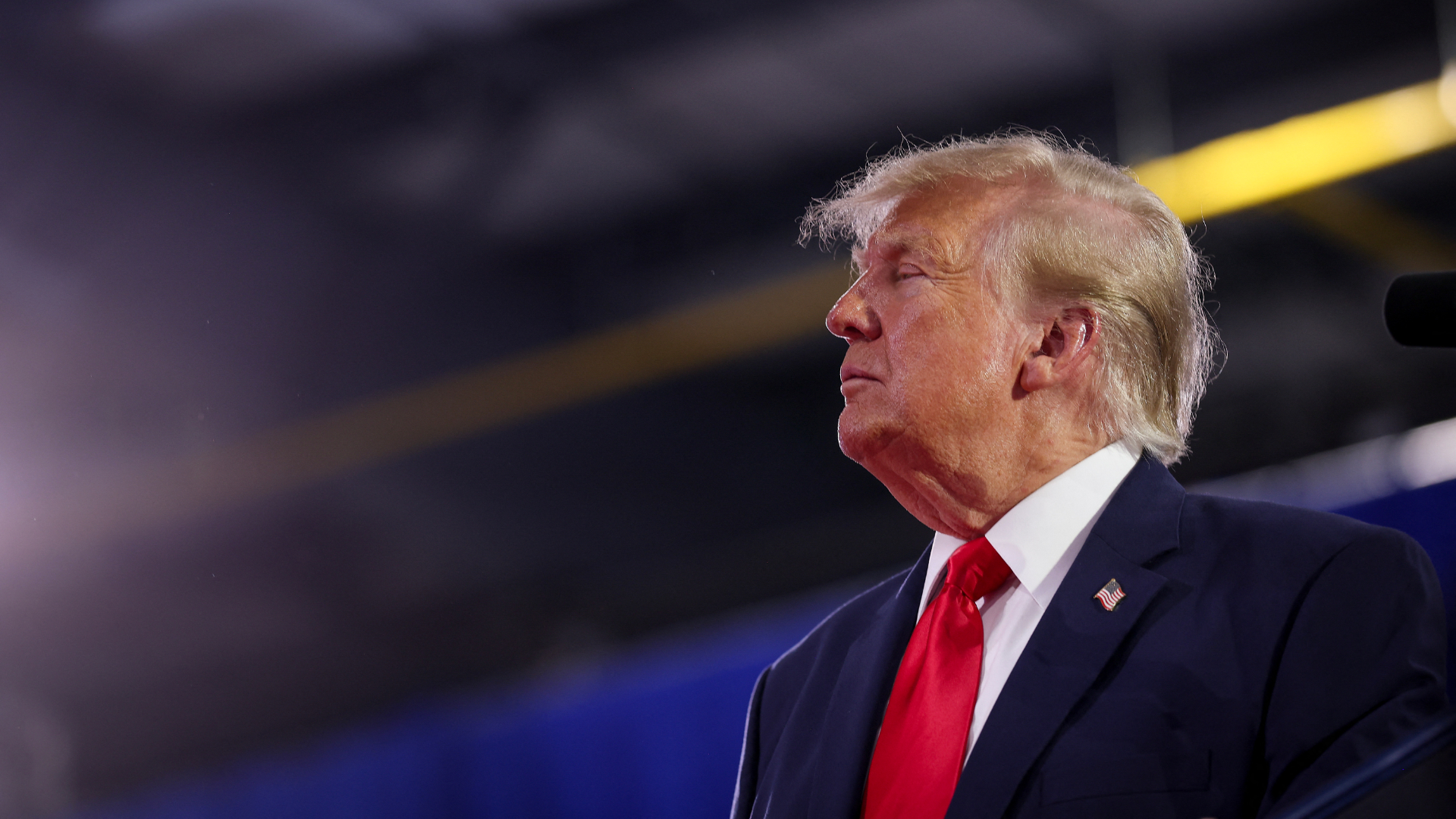
ERBIL (Kurdistan24) - U.S. President Donald Trump said Friday he had no information about a possible military strike on Iran this weekend, appearing to distance himself from remarks by U.S. envoy Tom Barrack while separately suggesting Washington could conduct another military operation against Tehran.
Asked by a reporter about Barrack's statement that an attack could "absolutely" take place this weekend, Trump reacted with apparent surprise.
"That was my ambassador to Türkiye? He's a pretty powerful man, I guess," Trump said. "Well, if that's the case, I don't know anything about it."
The exchange came hours after Barrack, U.S. ambassador to Türkiye and special envoy to Iraq and Syria, told online commentator Mario Nawfal that military action remained possible within days.
"Could there be a strike this weekend? Absolutely," Barrack said.
He also stressed, however, that Washington remained open to an agreement with Tehran.
"The president is very clear. He's open and available and accessible to a deal," Barrack said, adding that U.S. officials had been engaged with the issue for months.
Trump's own comments later Friday kept military action on the table without giving a timetable.
Speaking at a rally in Florida, he said: "We may do another little Epic Fury," referring to the U.S. military campaign against Iran.
He did not elaborate on the scope, timing or conditions for such an operation.
The remarks come as the conflict approaches its eighth month and Washington continues to send mixed signals over whether its next move will be military or diplomatic.
Trump said on Oct. 22 that the United States was not currently negotiating with Iran and suggested that a development in the conflict was likely soon, with many expecting it after the Nov. 3 U.S. midterm elections.
Earlier this month, he had explicitly said Washington would not attack Iran before those elections.
Barrack's suggestion that strikes could begin this weekend therefore introduced uncertainty over the administration's immediate intentions.
His comments also differed somewhat from Trump's recent description of diplomacy as stalled. Barrack said Washington had been "at the table for months and months and months," while Trump said Thursday that negotiations were not taking place.
Barrack framed the dispute as one in which a negotiated settlement remained possible, including questions surrounding nuclear enrichment, sanctions relief, frozen assets and an end to military confrontation.
He said the United States was not seeking regime change in Iran.
"The United States, the president of the United States has said he's not interested in regime change," Barrack said, adding that Washington instead wanted a broader rebalancing that would remove threats and reduce regional tensions.
That position differs from recent rhetoric from Israeli Prime Minister Benjamin Netanyahu.
In an interview with The Jerusalem Post, conducted by Zvika Klein and Amichai Stein, Netanyahu argued that Iran's current leadership remained a continuing strategic threat and suggested that further action could be required.
Netanyahu has also warned Tehran against launching missiles, drones or other attacks ahead of Israel's Oct. 27 parliamentary election.
He said any Iranian attempt to interfere in the vote would bring an Israeli response of a scale Tehran could not anticipate.
Netanyahu has made Iran central to his campaign for another term, arguing that his government has weakened Tehran's nuclear and missile capabilities but that those gains could be temporary if Iran is allowed to rebuild.
His assessments and allegations about Iran were presented as part of his political argument and were not independently substantiated in the interview.
Trump, meanwhile, has left open both confrontation and negotiation.
His reference to another "Epic Fury" suggests the military option remains available, but his dismissal of Barrack's weekend timetable provided no confirmation that an immediate strike has been authorized.
The ambiguity follows months of shifting military and diplomatic signals.
Trump has previously indicated that military action could resume after the Nov. 3 elections while also arguing that an agreement with Tehran remains possible.
Iranian officials, for their part, have expressed skepticism about Washington's willingness to honor any future agreement and have warned against renewed attacks.
The immediate question after Barrack's remarks was whether the administration had changed its previously stated timeline.
Trump's response did not indicate that it had.
Instead, he denied knowing of any weekend operation while hours later reminding Tehran that Washington still retains the option of further military action.
For now, the administration's public position leaves both paths open: renewed strikes if confrontation continues, or an agreement if Washington and Tehran can overcome months of deadlock.