Israel Votes In Most Consequential Election In Country's History As Netanyahu Seeks Re-Election
Polls suggest Netanyahu's coalition and the opposition led by former military chief Gadi Eisenkot, whose son was killed in the Gaza war, are roughly tied, with coalition building likely to take weeks or months after voting closes at 10 p.m.
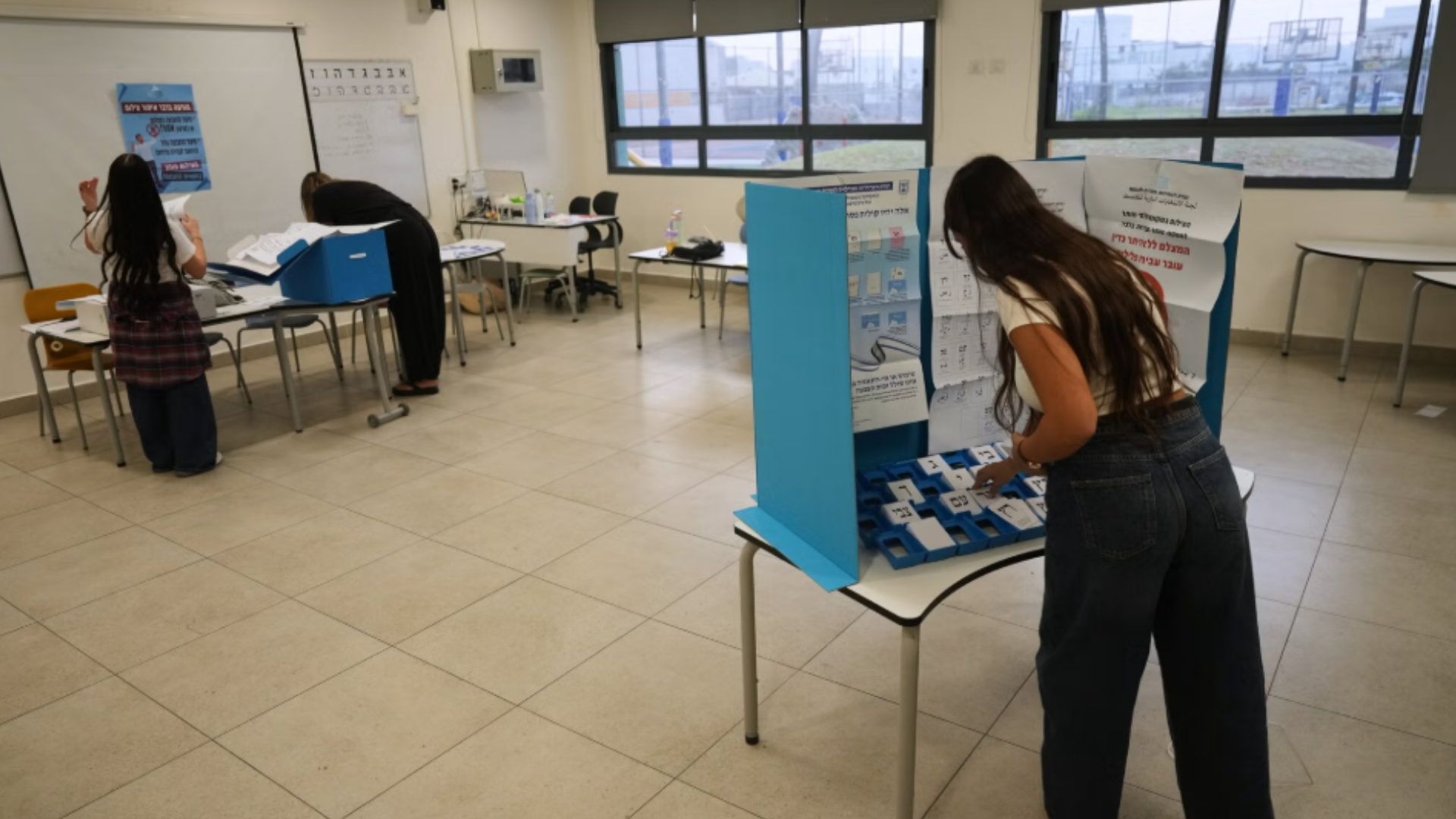
ERBIL (Kurdistan 24) - Israelis voted Tuesday in a national election widely described as the most consequential in the country's history and as a referendum on Prime Minister Benjamin Netanyahu, the first election since the Hamas-led attacks of October 7, 2023, upended Israeli life and ignited three years of war.
Approximately 7.3 million citizens are eligible to vote, with the voting age set at 18 years. Israel’s parliament, the Knesset, comprises 120 seats, and any bloc or coalition requires a minimum of 61 seats to form a majority government. A party must cross the electoral threshold of 3.25 percent of the total vote to enter the Knesset. The Knesset term lasts four years with no limit on the number of terms a prime minister can serve.
Those eligible to vote include Israeli citizens, Arab citizens of Israel known as the Palestinians of 1948, and Israeli settlers in the occupied West Bank and occupied East Jerusalem. Those without voting rights include Palestinians in Gaza, Palestinians in the West Bank and occupied East Jerusalem who hold Palestinian rather than Israeli identity documents, and the majority of Israeli citizens living abroad.
Voters are choosing between two blocs offering starkly different visions for Israel's future. Netanyahu leads a coalition of nationalists and ultra-Orthodox Jews, the most far-right government in Israeli history, seeking re-election on a platform of a more religious Israel with an ever-tighter grip over the West Bank and Gaza. Facing him is a fractious group of opposition parties loosely led by Gadi Eisenkot, a former military chief of staff whose son was killed in the Gaza war, who has pledged to repair Israel's damaged international image and pull the country back from what his allies describe as the brink of becoming a pariah state under international sanctions.
Both sides have framed the election as a make-or-break moment. Netanyahu's coalition promises to continue the judicial overhaul that critics say could undermine Israel's liberal democracy, to maintain the grip on the West Bank and Gaza despite international condemnation, and to resist establishing an independent commission to investigate the failures that allowed the October 7 attacks to occur. Opposition leaders have called for a reckoning over what they describe as Netanyahu's failure to prevent the catastrophic attacks, pledging to crack down on Israeli extremist violence against Palestinians in the occupied West Bank and restore Israel's standing in the international community.
Netanyahu, 77, has dominated Israeli political life for decades, leading the country for 19 of the past 30 years. In recent days he has repeatedly suggested that Israel could face annihilation without him in charge.
As Israelis head to the polls, Palestinians in the West Bank are under an Israeli military lockdown. Palestinians in the West Bank and Gaza cannot vote in Israeli elections but face significantly different futures depending on the outcome.
Opinion polls suggest Netanyahu's allies and rivals are roughly tied, making the outcome deeply uncertain. Assembling a governing coalition in Israel's parliamentary system is expected to take weeks or months after voting closes at 10 p.m. Tuesday. The possibilities range from a fragile coalition to a minority government to another round of elections.
President Trump endorsed Netanyahu ahead of the election, praising him as an important partner in the war against Iran and saying anyone else would be the wrong leader for Israel. Trump and Netanyahu spoke as recently as Sunday according to Netanyahu's own public disclosure, in which the Israeli PM revealed they discussed the importance of eliminating the Iranian regime. Analysts were skeptical that Trump's intervention would sway many voters in what is fundamentally a domestic reckoning over October 7, judicial reform, and Israel's place in the international order.