Kirkuk Shoe Market Traders Given Three Days to Vacate Shops
Traders told Kurdistan24 they have been unable to obtain alternative premises or reach an agreement over compensation.
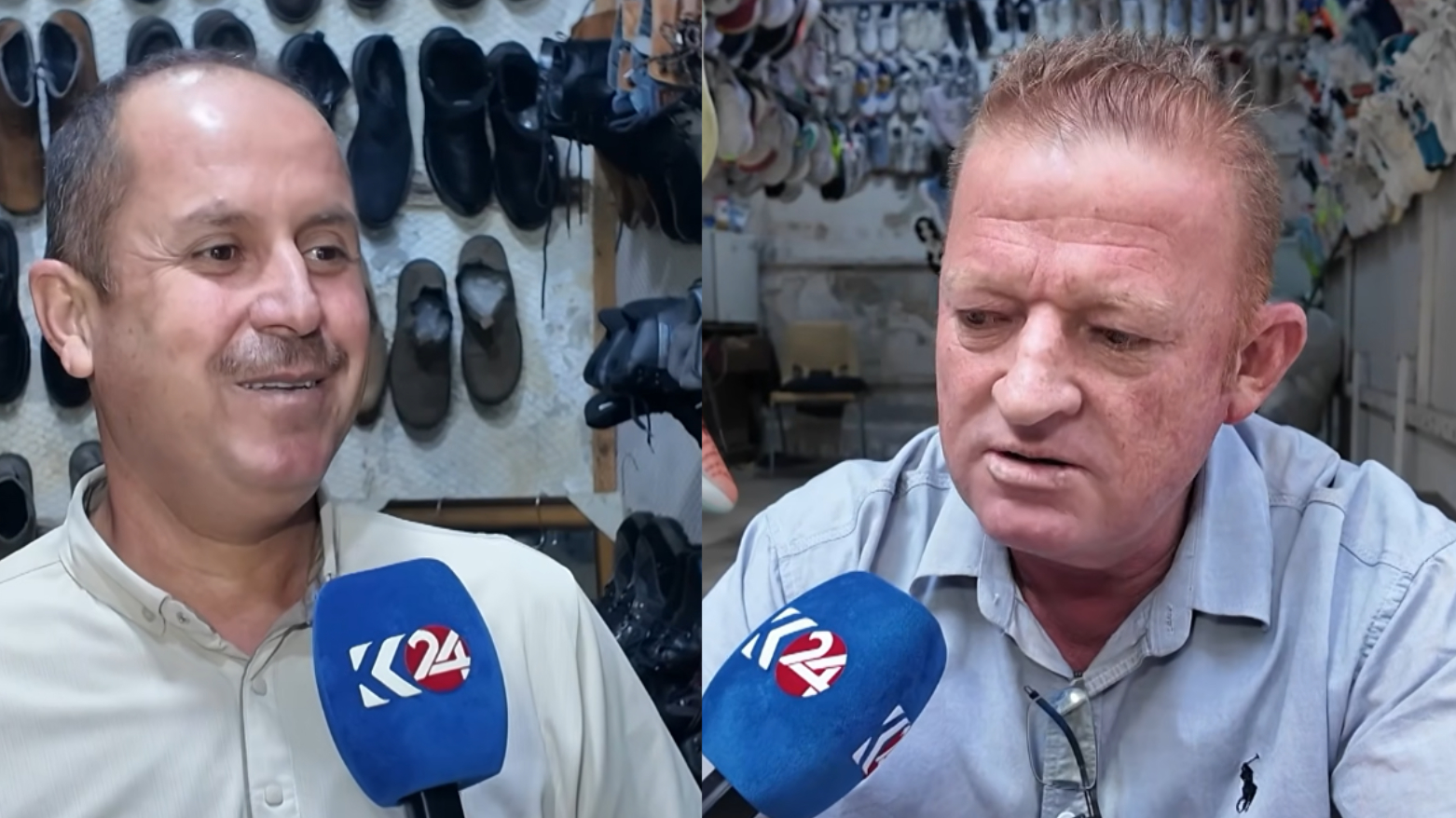
ERBIL (Kurdistan24) - Some shopkeepers at Kirkuk's shoe market have received notices ordering them to vacate their premises within three days after the site was allocated for investment, raising fears that more than 20 families could lose businesses that have supported them for years.
Traders told Kurdistan24 they have been unable to obtain alternative premises or reach an agreement over compensation. They are appealing to officials to reconsider the arrangements before the shops are cleared, saying the decision threatens their source of income.
The dispute concerns a long-established market where some traders have worked for more than two decades. Shopkeepers are asking for a way to remain in business if the area is redeveloped, including the possibility of obtaining commercial space in the project planned for the site.
According to information obtained by Kurdistan24, the Investment Board has allocated three million Iraqi dinars in compensation to the owner of each shop slated for demolition. The traders consider the payment inadequate, arguing that it fails to address the loss of their shops and the income those businesses generate.
Farman Sur, one of the shopkeepers, said he and others had acquired their premises legally and held them under contractual agreements. He disputed the legality of allocating the site to an investment project, though no court ruling on that question was cited.
"We have been working in this market for more than 20 years," Sur told Kurdistan24.
He accused those seeking to remove the traders of trying to take their shops by force. He also alleged that shopkeepers were subjected to questioning and pressure after rejecting the compensation offered.
His concerns were echoed by Saman Asi, another shopkeeper, who described the traders as "a group of poor people who returned to Kirkuk after 2003." Asi said the current dispute had revived uncertainty for shop owners who had previously experienced displacement.
Asi said the traders had not been provided with an alternative location from which to continue their businesses. He added that they were not even permitted to sell on the streets, leaving them without a temporary option for earning a living if the shops close.
Some of the traders have received notices requiring them to leave their premises within three days. It was not clear from the available information whether the deadline applies to every shop or when demolition of the shoe market might begin.
Shopkeepers said they had approached the relevant authorities and exhausted other avenues without securing an acceptable solution. Through Kurdistan24, they are now asking officials to address their concerns before the market is cleared.
They have proposed that, if the property is to be transformed into a commercial development or tower, existing shopkeepers should be given premises inside it. Such an arrangement, they believe, would enable them to keep trading rather than permanently lose the businesses on which their families depend.
The dispute follows a separate controversy over an investment project in Aliawa village, also in Kirkuk province. On Oct. 22, Kurdistan24 correspondent Hemin Dalo reported that demolition machinery had begun tearing down shops and other commercial properties near the Amel Shaabi neighborhood, along the Kirkuk–Dibis road.
Read More: Demolitions Begin in Kirkuk Village, Threatening 80 Kurdish Families
Residents in Aliawa said between 70 and 80 Kurdish families faced the possible demolition of their homes as part of a residential investment project. They said they had been formally settled there in 2011 and 2012 under arrangements connected to Article 140 of Iraq's Constitution, which addresses the normalization of Kurdistani territories outside the KRG's Administrative Control and their unresolved status.
Those residents also described an offer of approximately two million dinars in compensation as unacceptable and continued protesting the demolition work. The Aliawa project is separate from the shoe market case, and the accounts do not establish that the two developments involve the same site or investment plan.
At the shoe market, the immediate issue is whether traders facing three-day notices will be offered replacement premises or revised compensation. The information available to Kurdistan24 did not identify any agreement addressing their requests before the deadline.