Korek Telecom Disputes Iraq Regulator's Debt and Tax Demands
Iraq's communications regulator demands tax clearance and 500 billion dinars from Korek for 4G services, while the company disputes the terms and allegations.
ERBIL (Kurdistan24) - Iraq's Communications and Media Commission has set two conditions for restoring Korek Telecom's operations and authorizing its fourth-generation (4G) services, demanding federal tax clearance and an initial payment of 500 billion Iraqi dinars. Korek, however, says the regulator has obstructed an agreement intended to resolve their longstanding dispute.
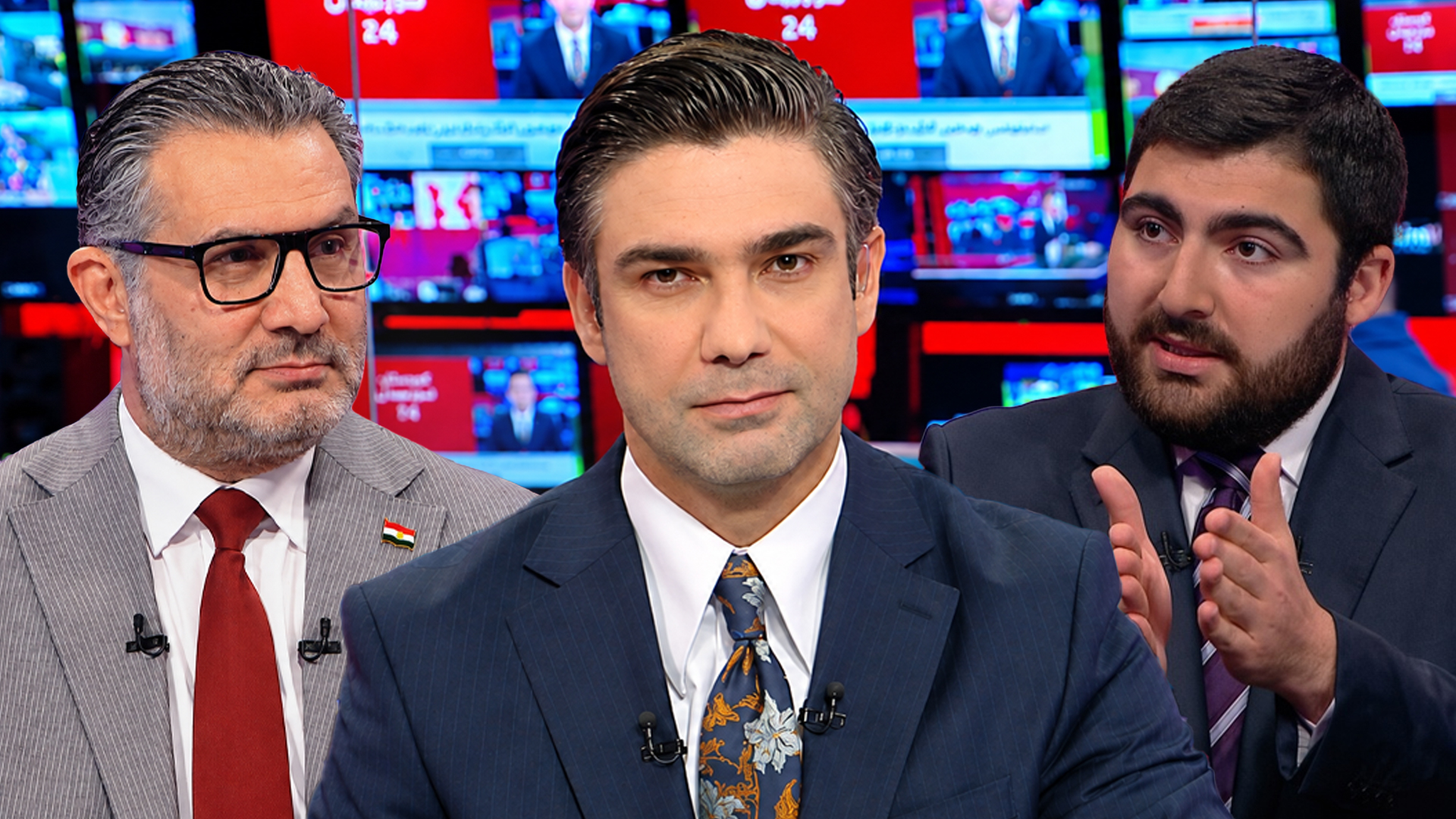
The competing positions emerged during separate interviews with Kurdistan24 news anchor Kovan Izzat, who spoke with Communications and Media Commission Chairman Baligh Abu Galal and Korek Telecom's Director of Relations, Mazen Sirwan Barzani.
Their accounts revealed disagreements extending beyond outstanding payments to include taxation between Erbil and Baghdad, judicial authority, company management and disputes involving foreign investors.
The commission maintains that Korek must fulfill its financial and regulatory obligations before receiving authorization to operate 4G services.
Korek argues that the conditions have been applied in a manner that prevents it from competing while leaving several legal and financial disputes unresolved.
Two Conditions for Restoring 4G Services
Abu Galal said the commission reached a settlement with Korek in 2025 to resolve their dispute. Under that agreement, he said, the company acknowledged owing the commission nearly two trillion Iraqi dinars.
Separately, he said Iraq's federal Ministry of Finance was demanding approximately 2.5 trillion dinars in outstanding taxes and other financial obligations.
According to the chairman, Korek must obtain a tax-clearance certificate from the federal Finance Ministry and pay the first 500-billion-dinar installment of its debt to the commission before its operations can be normalized and 4G services authorized.
Korek Telecom's Director of Relations challenged the commission's account of the company's compliance, saying Korek had been prepared to make the payment but expected the regulator to authorize 4G services simultaneously.
He said the commission instead insisted on receiving the money before beginning administrative procedures that could require another month, leaving Korek without the technology it considered essential for competing in the telecommunications market.
"We told them the money was ready and in the bank, and that both steps should be carried out together and at the same time," Mazen Sirwan Barzani said.
He accused the commission of rejecting that arrangement and creating obstacles that undermined the company's confidence in the settlement.
The central disagreement therefore concerns not only the payment itself but also the sequence of obligations: whether Korek should receive 4G authorization upon payment or only after the regulator completes subsequent procedures.
Erbil-Baghdad Tax Dispute
The requirement for federal tax clearance has also brought a longstanding disagreement between the Kurdistan Regional Government (KRG) and Baghdad into the dispute.
Mazen Sirwan Barzani said Korek paid taxes to the KRG between 2007 and 2019, with the KRG Ministry of Finance formally notifying federal authorities of those payments.
He accused Baghdad of seeking additional payments covering the same period, describing the demand as double taxation.
According to Korek Telecom's Director of Relations, Korek has paid taxes directly to the federal government since 2019 under the budget law.
He also maintained that Korek had obtained a Federal Court ruling prohibiting the company from being taxed twice, but accused the Communications and Media Commission and federal Finance Ministry of failing to implement the decision.
The company's position is that payments already made to the KRG should be recognized rather than demanded again by federal authorities. The commission, however, continues to require a federal tax-clearance certificate.
Mazen Sirwan Barzani separately raised a taxation measure introduced during the war against ISIS.
He said Iraq's Parliament imposed a 20-percent tax on mobile phone cards in 2015 to finance expenses associated with the Popular Mobilization Forces (PMF).
Disagreement Over Judicial Authority
The interviews also exposed opposing positions on which judicial institutions have the authority to resolve disputes involving the regulator.
Abu Galal rejected relying on rulings from courts outside the federal system. He identified an Appeals Board affiliated with the Supreme Judicial Council as the only authorized body for settling such disagreements.
He maintained that rulings issued outside that framework, particularly those from courts in the Kurdistan Region, have no legal effect in these cases.
Korek Telecom's Director of Relations disputed the independence of the appeals mechanism, alleging that the board operates inside the Communications and Media Commission's premises and that its members receive salaries from the commission.
"You are both my opponent and my judge. That has no place in any legal system," Mazen Sirwan Barzani said.
He argued that Korek should be permitted to bring its complaints before an impartial court rather than a body he considers institutionally connected to the regulator.
Korek Telecom's Director of Relations also raised an earlier dispute concerning the 0790 mobile telephone prefix, which he said Korek purchased in 2007 before the commission subsequently withdrew it and assigned it to Zain.
He said a Baghdad court ruled in Korek's favor in 2015 and ordered the commission to compensate the company, but alleged that the judgment has never been enforced.
Management Dispute and Foreign Financial Claims
Company management has become another contentious issue.
Abu Galal called for Korek's leadership to be replaced, arguing that the current management bears responsibility for the prolonged dispute and the failure to resolve the company's outstanding problems.
He also claimed Korek owed a combined $1.3 billion abroad to telecommunications company Orange and investment firm Agility.
According to the chairman, the commission has received a summons from a court in London in connection with disputes involving Korek and its foreign partners.
He warned that the commission could face potential losses estimated at between $800 million and $1 billion.
Those figures represent the commission chairman's assessment of the financial exposure rather than an established court judgment.
Korek Telecom's Director of Relations rejected the demand for management changes, maintaining that the Communications and Media Commission has no legal authority to determine who manages a private company.
He also accused the regulator of contributing to Korek's difficulties with its foreign partners.
According to Korek Telecom's Director of Relations, the commission previously placed a supervisor inside Korek to monitor operations, but that appointment created problems in the company's relationships with Orange and Agility.
He said Korek would not accept another externally appointed figure becoming involved in its management, arguing that the previous arrangement had damaged rather than improved relations with its partners.
Subscriber Warnings and Licensing Disputes
The commission chairman also addressed Korek's customers, urging subscribers to retain their existing telephone numbers while transferring their services to competing operators Zain or Asiacell.
His comments accompanied broader warnings about telecommunications regulation in the Kurdistan Region.
Abu Galal said internet companies operating in the Region, apart from Korek, were considered unlicensed by the commission and had accumulated fines totaling nearly $50 million.
He called on the Kurdistan Region's Ministry of Transport and Communications to permit Zain and Asiacell to expand their operations and allow commission personnel to enter the Region.
Apple Pay, 5G and Waze
Beyond the Korek dispute, Abu Galal discussed several developments affecting Iraq's telecommunications sector.
He said Apple had officially entered the Iraqi market and that negotiations were underway concerning the introduction of Apple Pay, the company's electronic payment service.
The chairman also said discussions about introducing fifth-generation mobile technology, or 5G, were expected to begin in 2027.
Addressing speculation about restrictions on digital services, he denied that the commission had made any decision to block the Waze navigation application.
The separate interviews ended without an announced resolution to the Korek dispute.
The regulator continues to demand federal tax clearance and an initial debt payment, while Korek insists that 4G authorization must accompany the payment and that its outstanding legal and taxation claims must be addressed.