Nineveh Governor Outlines Plan to Remove Foreign Fighters From Sinjar
Nineveh Governor Abdulqadir Dakhil outlines plans to integrate 4,165 Ezidi fighters, remove foreign fighters from Sinjar and relocate Mosul security sites.
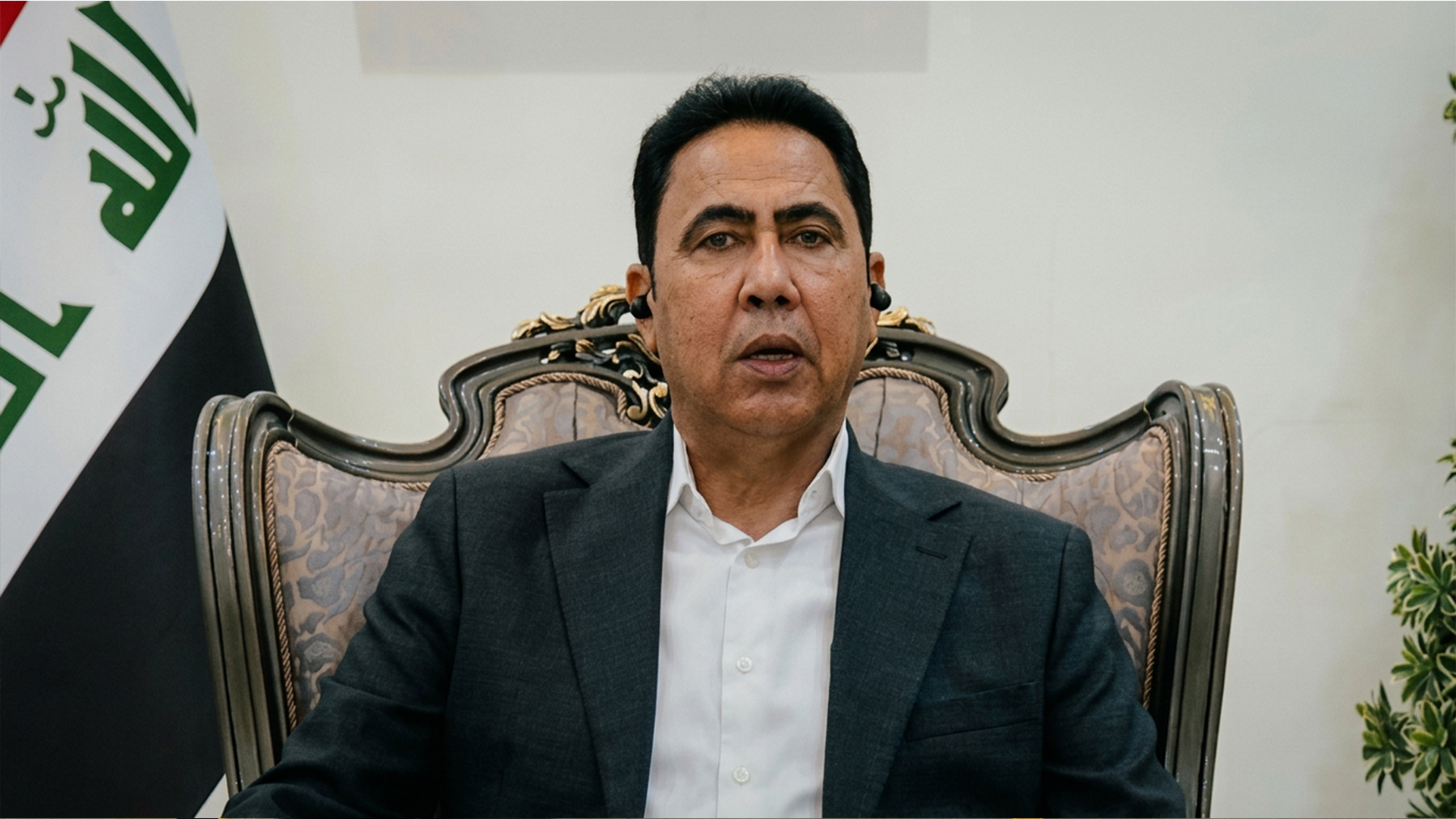
ERBIL (Kurdistan24) - Nineveh Governor Abdulqadir Dakhil said the Iraqi government plans to integrate 4,165 Ezidi fighters from Sinjar into state security forces and transfer foreign fighters to Qandil and international parties as part of efforts to restore government authority in the district.
Speaking on Kurdistan24's Basi Roj (Topic of the Day) segment, presented by Zhino Mohammed, Dakhil outlined security changes concerning Sinjar and Mosul, including plans to remove armed groups from Mount Sinjar and relocate military and security headquarters outside Mosul.
The measures are intended to address longstanding security problems while creating conditions for reconstruction, investment and the return of displaced residents. Their implementation, however, remains an important question, particularly given the failure to enforce previous agreements concerning Sinjar.
Dakhil said the government had decided to integrate 4,165 members of the Sinjar Resistance Units (YBŞ), whom he identified as Iraqi citizens belonging to the Ezidi community, into Iraq's security forces and army.
"Foreign fighters will be transferred to Qandil and international parties, because in reality the PKK has merely served as a cover for YBŞ forces," he said.
The governor did not provide a timetable for the transfers or identify the international parties involved. He described the measures as part of a wider government effort to bring armed groups operating outside state authority under control.
Dakhil also referred to an agreement between Baghdad and Ankara under which PKK and YBŞ forces would be completely removed from Mount Sinjar. In return, he said, Türkiye would withdraw its military personnel from areas including Bashiqa.
He did not specify when the proposed withdrawals would occur or provide further details about the arrangements between the two governments.
According to Dakhil, the Iraqi government is formally demanding, for the first time, that armed groups outside its authority surrender their weapons.
He linked Prime Minister Ali Zaidi's efforts to disarm such groups to the broader regional security situation, particularly the threat of conflict around the Strait of Hormuz and its implications for Iraq’s oil exports and economy.
Beyond the presence of armed groups, Dakhil said Sinjar continues to face political, social and security difficulties, compounded by inadequate public services.
He called for the complete implementation of the Sinjar Agreement, reached during former Prime Minister Mustafa al-Kadhimi's administration, expressing concern that its provisions had never been fully enforced.
"The agreement must be implemented in full and should not be only a partial solution, because ISIS crimes against the Ezidis represented a different kind of terrorism," he said.
"When we ask displaced people to return, we must provide them with full services," he added.
The governor emphasized that restoring normal conditions in Sinjar would require genuine dialogue and improvements in essential services alongside changes to security arrangements.
Turning to Mosul, Dakhil announced a decision by Prime Minister Zaidi to relocate all security headquarters currently operating inside the city to locations beyond its boundaries.
"Three days ago, we received an unprecedented decision from Prime Minister Ali Zaidi that all security headquarters inside Mosul will be relocated outside the city," he said.
The measure is intended to reduce Mosul's extensive military presence and facilitate its development as a civilian and tourism-oriented city.
Dakhil explained that authorities would increasingly rely on technology and organized intelligence operations rather than maintaining a large military presence throughout the city.
He acknowledged that Mosul's social fabric had suffered considerably during three years of ISIS occupation, but said the city was gradually recovering.
The governor also asserted that Nineveh's local administration now exercises full administrative and security authority and that armed groups no longer dominate Mosul's economy.
On economic development, Dakhil praised the Kurdistan Region's reconstruction and investment experience, saying Nineveh hopes to benefit from its achievements as Mosul continues rebuilding.
"The Kurdistan Region's experience in reconstruction and investment is a highly advanced one. We are trying to bring that experience to Mosul, and we call on Kurdish investors to come and work in Nineveh," he said.
He also commended the Kurdistan Democratic Party's support for Mosul's development and described relations between Nineveh and the Kurdistan Region's provinces as very good.
Dakhil's remarks outlined two priorities for Nineveh: establishing government control over security arrangements in Sinjar and reducing the military presence in Mosul while promoting civilian development. The timetable for implementing the announced measures was not specified.