Erbil International Book Fair Boosts Tourism and Local Business
Erbil International Book Fair draws publishers from 40 countries, with an economist citing benefits for tourism, local trade and temporary employment.
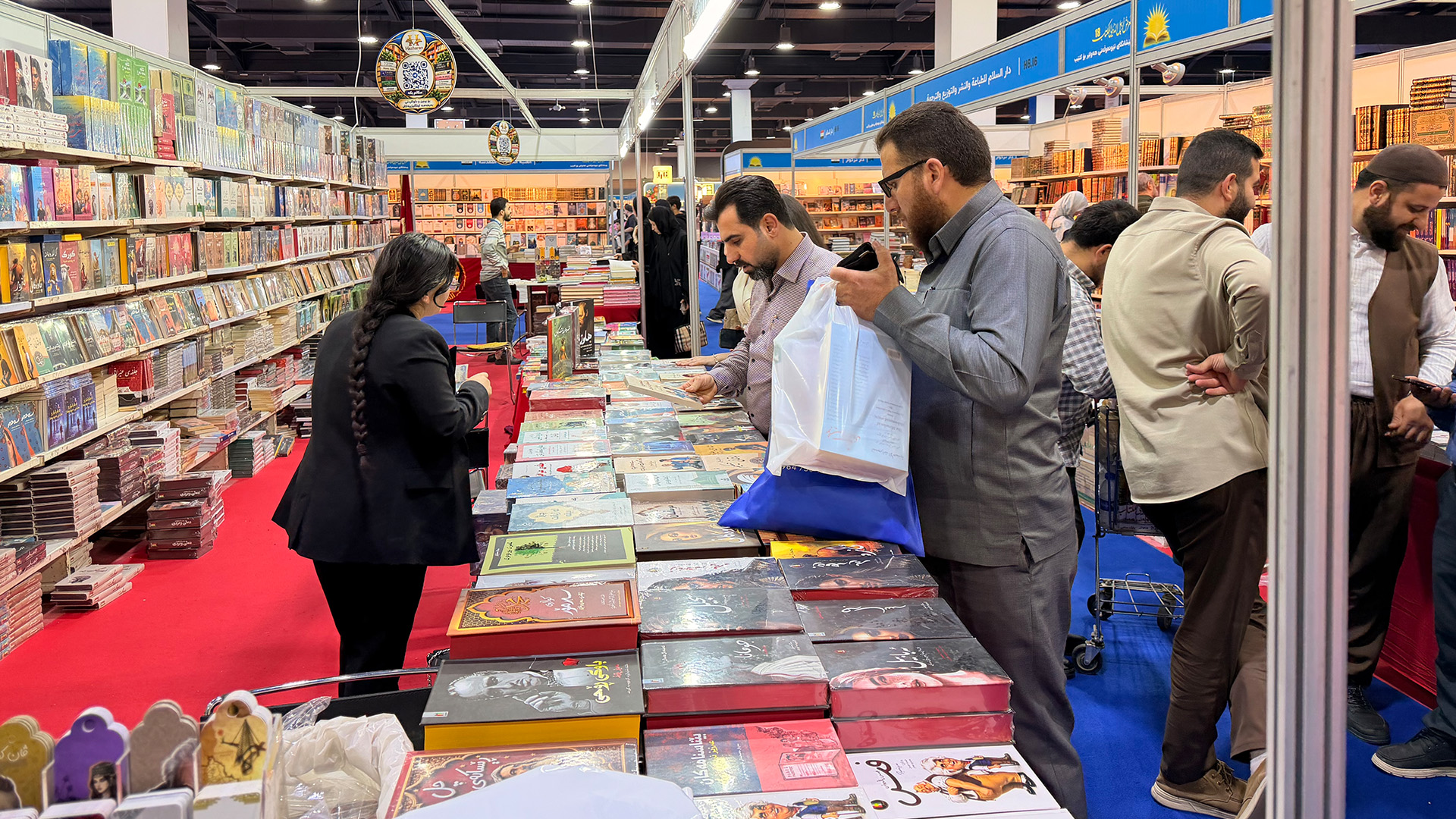
ERBIL (Kurdistan24) - The Erbil International Book Fair is generating business for hotels, restaurants, transport providers and retailers as visitors from inside and outside the province arrive for the event, according to an economist who says the gathering could become a larger driver of tourism and investment in the Kurdistan Region.
Dr. Khalid Haider told Kurdistan24 on Friday, Oct. 30, that the participation of 400 publishing houses and what he described as hundreds of thousands of visitors over 10 days create "a large and rapid demand for goods and services," extending well beyond book purchases.
The resulting trade, he said, increases business income, supports short-term employment and helps money circulate more quickly through Erbil's market.
Spending by foreign delegations and visitors travelling from elsewhere brings additional money into the city, Haider explained. Hotels and restaurants are among the beneficiaries, alongside transport operators, retailers and businesses providing services to exhibitors.
His assessment highlights the economic reach of an event commonly associated with publishing and cultural exchange.
Book transactions represent just one part of that activity, he said, suggesting that combined gains in accommodation and transport could potentially surpass profits from book sales.
Establishing whether that is the case, however, would require detailed figures on sales and visitor expenditure.
The fair opened on Wednesday, Oct. 21, in the presence of President Barzani, bringing together 400 publishing houses from 40 countries. It is scheduled to continue until Saturday.
For young people, the temporary work created around the exhibition carries both immediate and longer-term benefits, according to Haider.
Earnings can help workers and their families manage financial pressures, while experience gained during the event can build practical skills and professional connections that may prove useful in future employment.
Not all revenue generated by the fair stays in the Kurdistan Region.
Haider acknowledged that a portion of book-sale proceeds goes elsewhere, but said spending on venue rentals, employee wages, accommodation, services and taxes keeps another portion within the local economy.
As businesses and workers spend some of that income in turn, the fair can generate activity beyond the initial transactions. Haider described this as a multiplier effect, with several sectors benefiting from a single exhibition.
He also outlined ways to broaden the fair's appeal beyond its current program. His proposals include affordable travel and hotel packages, easier visa procedures, customs discounts for books and exhibition supplies, low-cost local transport and sponsorship from private companies.
Haider argued that government and businesses should pursue these measures through a multiyear plan aimed at making Erbil a regional center for exhibitions.
Encouraging participants to extend their visits would also allow spending to reach more local businesses rather than ending when their time at the fair concludes.
Under those conditions, he said, the fair could potentially double its economic benefits. The proposal remains conditional on the measures being adopted and visitors staying longer, while detailed economic data would be needed to assess the outcome.