Iraqi Armed Group Threatens Forceful Response Over US Airspace Use
Iraqi armed group Ansar Allah al-Awfiya threatens a forceful response if US aircraft use Iraqi airspace to attack Iran amid disputes over sovereignty.
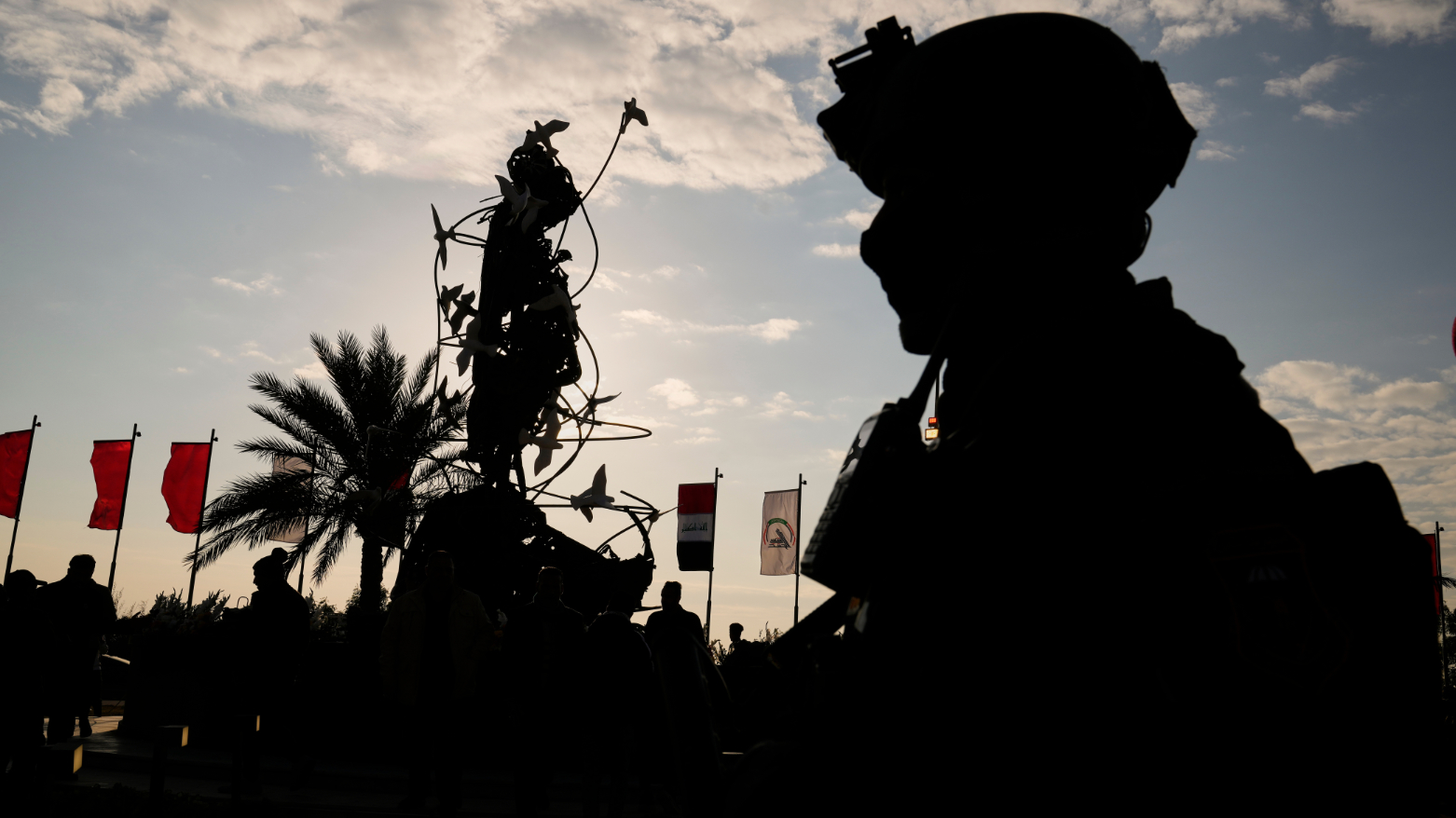
ERBIL (Kurdistan24) - An Iraqi armed faction has threatened a forceful response if the United States uses Iraq's airspace or territory to attack Iran, while saying it would remain neutral as long as the country is not used as a base for military operations against its neighbors.
Ali al-Fatlawi, spokesman for the Ansar Allah al-Awfiya Movement, an armed group affiliated with the Islamic Resistance in Iraq, said Washington must respect Iraq's sovereignty. Any response to an alleged violation would be decided by the movement's leadership according to the circumstances, he said.
The warning comes amid heightened confrontation between the United States and Iran and an increasingly contentious debate inside Iraq over who can authorize military action, control armed factions and protect the country's airspace.
Fatlawi's statement did not identify a specific new U.S. operation or announce that his group had launched an attack.
Fatlawi maintained that the movement would refrain from involvement in the confrontation if Iraqi territory was not used to carry out strikes against neighboring countries. He warned, however, that the use of Iraqi airspace for attacks on Iran would cross a line that the group was prepared to answer with force.
His comments add to complaints by the Islamic Resistance in Iraq about alleged U.S. flights over the country.
In an Oct. 24 statement previously reported by Kurdistan24, the coalition of armed factions said it had recorded 171 violations involving American military and surveillance aircraft between Sept. 30 and Oct. 23.
The group characterized the flights as breaches of Iraqi sovereignty and official agreements, and called on Baghdad to account publicly for what it alleged had occurred. The 171 incidents were the group's own tally; no independent verification of the figure was presented in the cited statements.
Read More: Iraqi Islamic Resistance Claims 171 US Violations of Airspace
Ansar Allah al-Awfiya has previously been designated a terrorist organization by Washington. Its latest warning follows months of strained relations between U.S. forces and Iraqi armed groups, particularly as the confrontation involving Iran has intensified.
The disagreement over airspace comes at a sensitive point in Iraq's security transition.
Prime Minister Ali Faleh al-Zaidi declared earlier this month that the Iraqi state had regained full responsibility for its security after the U.S.-led international coalition completed its military mission in the country on Sept. 30.
In an Oct. 3 National Day address, al-Zaidi said Iraq now controlled its national decisions, territory and airspace, with weapons subject to the authority of the commander-in-chief of the armed forces. His government has also committed to preventing Iraqi territory from serving as a platform for attacks against neighboring states.
Read More: Al-Zaidi: Iraq Now Controls Its Decisions, Territory and Weapons
That position overlaps with Fatlawi's objection to attacks launched from Iraq, but the approaches differ over who has authority to respond.
Baghdad says military power must be exercised through state institutions, while the armed movement has reserved for its own leadership the decision on any retaliatory action.
The government has sought to define its post-coalition security role through national control over weapons, while continuing certain cooperation with former coalition partners in training, intelligence, expertise and technology.
Al-Zaidi has said Iraq should pursue balanced relations abroad and avoid being drawn into surrounding conflicts.
Bringing independent armed factions under state control remains one of the government's most difficult challenges. On Oct. 21, Abdul Qadir Karbalai, a military deputy of Harakat al-Nujaba, publicly rejected disarmament, referring to his group's arsenal as the "sacred weapons of the resistance."
His position emerged amid reports that some factions had proposed suspending military activity for as long as two years in place of an immediate handover of weapons. According to earlier reports, the groups sought safety guarantees for their leaders, while Iraqi political sources said the government had rejected the proposal.
Read More: Nujaba Rejects Disarmament as Baghdad Faces Pressure to Bring Militias Under State Control
Accounts of the disarmament discussions indicate divisions among armed factions: some have reportedly signaled a willingness to surrender weapons, while others remain opposed.
The legal status of the Popular Mobilization Forces complicates the issue, because the institution is recognized by Iraqi law even as some associated groups maintain separate command structures.
Tensions over relations with Iran have extended beyond military questions. In its Oct. 24 statement, the Islamic Resistance in Iraq also criticized restrictions on airports and border crossings with Iran, portraying them as concessions to American pressure.
The dispute became visible in Maysan province after Baghdad closed the al-Shib border crossing on Oct. 20. Federal officials attributed the closure to deficiencies in inspection and monitoring infrastructure, while a provincial council chairman threatened civil disobedience unless it reopened. Al-Zaidi subsequently ordered an investigation into the official's remarks.
Read More: Al-Shib Closure Dispute Leads to Investigation of Maysan Official
A Kurdish lawmaker argued that Washington had pressed Baghdad to restrict crossings with Iran, but the United States had not publicly confirmed such a request. The competing explanations reflect how border decisions, like airspace allegations, have become entangled with the broader debate over Iraqi sovereignty.
Fatlawi's statement leaves the movement's threatened response conditional rather than immediate. What happens next depends in part on whether further incidents are alleged and on Baghdad's ability to assert the exclusive security authority its prime minister has pledged to uphold.