$20 Million Erbil Motor City Project to Create Jobs and Boost Tourism
The Erbil Motor City project, being implemented by Toyota Iraq in cooperation with Sardar Group, will cover a total area of 250,000 square meters and include a motorsports complex, an expanded Pre-Delivery Inspection (PDI) Center, and a Central Parts Depot (CPD).
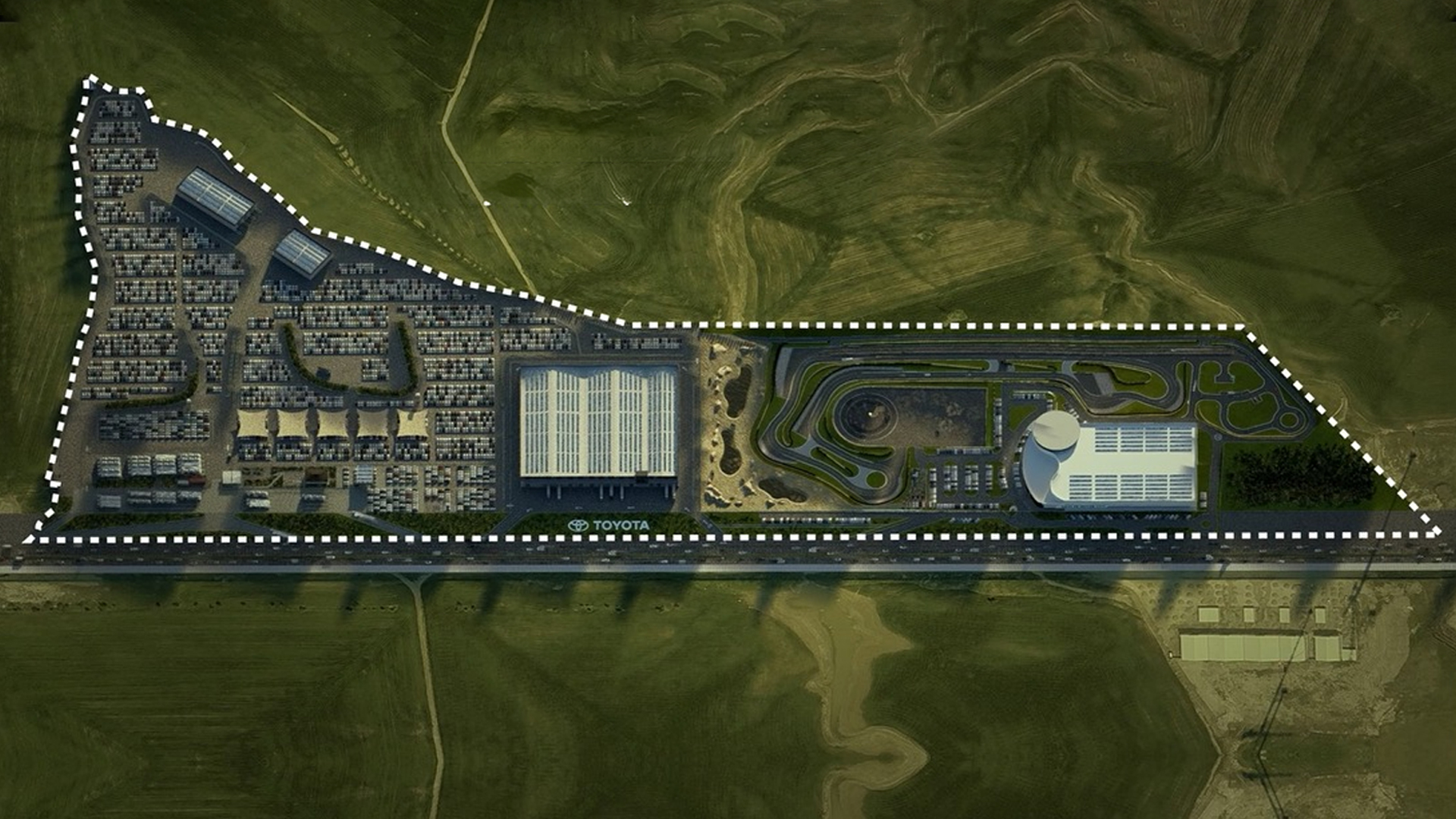
ERBIL (Kurdistan24) – A $20 million automotive and motorsports complex is under development in Erbil, with the aim of strengthening the Kurdistan Region's industrial and tourism sectors, attracting foreign investment, and creating new employment opportunities.
The Erbil Motor City project, being implemented by Toyota Iraq in cooperation with Sardar Group, will cover a total area of 250,000 square meters and include a motorsports complex, an expanded Pre-Delivery Inspection (PDI) Center, and a Central Parts Depot (CPD).
The project's foundation stone was laid by Kurdistan Region Prime Minister Masrour Barzani on September 30. Its first phase, covering 100,000 square meters, represents an investment of approximately $20 million.
In an exclusive interview with Kurdistan24, Chiwas Hawaizi, Deputy General Manager of Government Affairs and Public Relations at Sardar Group, said the project was designed to introduce international automotive and motorsports standards to the Kurdistan Region while supporting economic development.
He explained that the main Motor City complex would feature indoor and outdoor karting tracks, a vehicle-handling track, a dynamic driving pad for drifting and driver training, and a dedicated off-road track.
Hawaizi said the facilities would provide young people with a safe and regulated environment to pursue their interest in driving and motorsports, while promoting responsible driving and improving road safety.
"Our main objective is to raise safety standards on public roads. Through this center, we want to move the enthusiasm young people have for driving away from public streets and into a legal, controlled, and safe environment that meets international standards," he said.
Employment and economic opportunities
Hawaizi said the project would generate direct and indirect employment opportunities, with the PDI Center currently employing 85 people.
The Central Parts Depot is expected to create between 30 and 40 additional jobs, while the Motor City complex will employ between 60 and 70 people in management, maintenance, training, and reception.
The construction phase is also expected to involve dozens of local engineers and workers.
Beyond employment, the project is expected to stimulate the automotive supply market, including businesses specializing in tires, suspension systems, and vehicle modification equipment.
Hawaizi added that the complex would contribute to sports tourism by attracting athletes and visitors from across Iraq and neighboring countries, benefiting Erbil's hotels, restaurants, and transportation services.

Supporting the private sector and investment
Speaking at the foundation stone-laying ceremony, Prime Minister Masrour Barzani highlighted the importance of private-sector investment in diversifying the Kurdistan Region's economy and creating opportunities for young people.
He praised Sardar Group and Toyota Iraq, led by Sardar Bebany, for their investment initiatives in the industrial and tourism sectors.
"From the outset, the ninth cabinet's agenda has been to create job opportunities for our youth and give importance to the private sector so that it can contribute to economic revival across all sectors," Barzani said.
He also emphasized the Kurdistan Region's strategic geographical position between Türkiye, Iran, and Arab countries, describing it as an opportunity to strengthen regional trade, investment, and economic cooperation.
Barzani said facilities such as Motor City could attract thousands of visitors to Erbil while providing young people with professional training in safe driving and helping reduce traffic accidents.

Toyota standards and modern infrastructure
The project also includes the expansion of Toyota's PDI Center and the establishment of a Central Parts Depot, which Toyota Iraq's General Manager of Legal and Compliance, Awara Azad Ahmed, described as the first modern customs warehouse of its kind in Iraq and the Kurdistan Region.
The facility is expected to facilitate and accelerate the import and distribution of automotive spare parts.
Hazem Bustami, Toyota Iraq's General Manager of Spare Parts, said the initiative was not simply about constructing a facility but also about investing in people and innovation.
Meanwhile, Hitoshi Ishizuka, Head of the Japanese Consulate Office in Erbil, representing Japan's ambassador in Baghdad, conveyed his government's congratulations, saying the projects would strengthen economic and historical ties between Japan, the Kurdistan Region, and Iraq.
Hawaizi said Sardar Group also aimed to transfer Toyota Japan's standards and expertise to the local workforce through specialized training and the introduction of modern equipment and technologies.

Implementation timeline
According to Hawaizi, the project will be implemented in several phases, with the first phase expected to be completed within 12 months of the September 30 foundation stone-laying ceremony.
This phase will include the off-road track and dynamic driving pad, which will subsequently become accessible to the public and motorsports enthusiasts.
He said the initial phase was not designed to host major international competitions but would establish the necessary infrastructure for regional events, including time trials, karting, and drifting championships.
The project is expected to position Erbil as an emerging destination for motorsports in the region, while supporting the Kurdistan Regional Government's broader efforts to attract investment, expand the private sector, and diversify the economy.
