Saudi Strikes Hit Yemen’s Hodeidah Ports and Oil Facility as Riyadh Steps Up Campaign Against Houthis
Seven people reported wounded in attacks on strategic Red Sea infrastructure as Saudi Arabia intensifies efforts to weaken the Iran-backed movement and support Yemen’s internationally recognised government
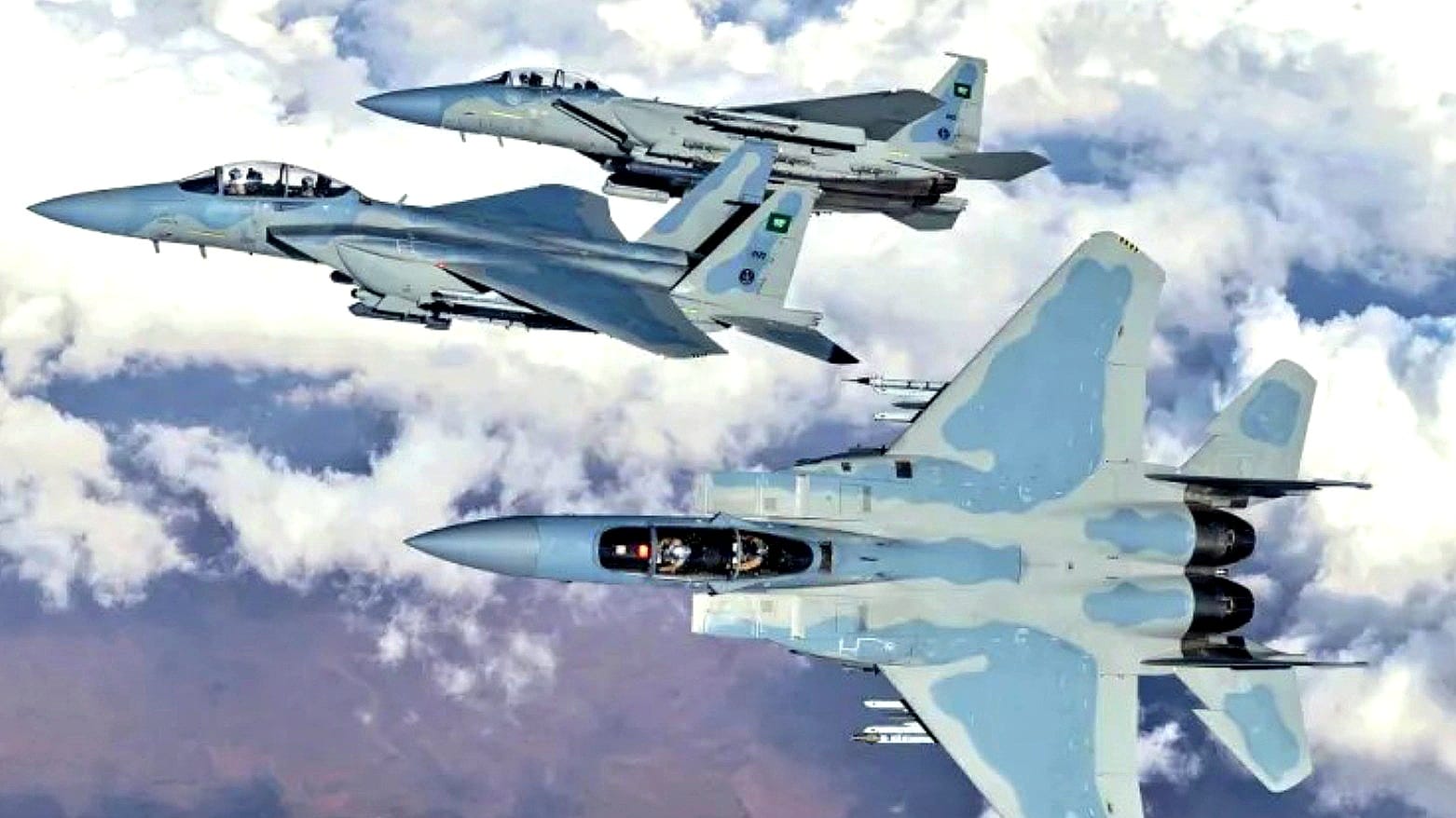
ERBIL (Kurdistan24) — Saudi-led coalition airstrikes targeted Yemen's strategic Ras Issa port and an oil facility in Hodeidah province on Monday, wounding seven people, according to Houthi officials, as Riyadh intensifies its military campaign against the Iran-backed movement amid renewed fighting in the country.
Four civilians were wounded in strikes on Ras Issa port, while another three were injured in an attack on an oil facility in Bajil district, Houthi health ministry spokesman Anees Alasbahi said in a post on X.
The Houthi-affiliated Al-Masirah television channel reported that Saudi aircraft had also targeted a pier and a commercial vessel at the port. The group condemned the attacks, accusing the coalition of targeting civilian infrastructure and violating international humanitarian law.
The Saudi-led coalition said it had conducted "a precision operation to neutralise vital resources" used by the Houthis.
The latest strikes followed reports of attacks on Sunday targeting the faculty of medicine at Hodeidah University. Two residents told AFP they had heard an explosion in the area.
Hodeidah is strategically important because it hosts the largest seaport under Houthi control and serves as a major entry point for food, fuel and humanitarian supplies. Ras Issa, north of Hodeidah city, is also a key facility for importing and storing oil.
Renewed fighting threatens Yemen's stability
The attacks come amid a sharp escalation in Yemen's civil war, following the collapse of the relative calm established under a United Nations-brokered truce in 2022.
The Houthis have expanded their military operations against forces aligned with Yemen's internationally recognised government, making advances along the western coast and threatening strategically important areas near the Bab al-Mandeb Strait, a major international shipping route.
In September, the movement captured the Red Sea port city of Mokha and the island of Perim, also known as Mayyun, raising concerns over maritime security between the Red Sea and the Gulf of Aden.
Government-aligned forces have since sought to recover lost territory through counteroffensives along several fronts.
The escalation has also increased security concerns in Saudi Arabia. On Oct. 27, the Saudi-led coalition said it had intercepted three ballistic missiles and four drones launched by the Houthis towards the kingdom's Eastern and Southern regions.
Riyadh seeks to reverse Houthi gains
Saudi Arabia has increasingly shifted from prioritising negotiations towards a more assertive strategy combining military pressure, financial assistance and efforts to unify Yemen's internationally recognised government.
In October, Reuters reported that Riyadh was preparing a new offensive against the Houthis, including possible operations along the Red Sea coast and coordinated assaults across multiple fronts.
The campaign would rely primarily on Yemeni government-aligned forces, supported by Saudi air power.
Saudi Arabia is also strengthening the military and financial capabilities of anti-Houthi forces. In February, Reuters reported that Riyadh had allocated nearly $3 billion in 2026 to support Yemeni civil servants and military personnel, with broader development and energy assistance potentially taking its commitment above $4 billion.
The strategy aims to consolidate government control in southern and eastern Yemen, improve coordination among rival factions and prevent the Houthis from expanding their influence along the Red Sea coastline.
However, divisions among anti-Houthi groups remain a significant obstacle. The Houthis, meanwhile, retain considerable missile and drone capabilities and control large parts of northern Yemen, including the capital, Sanaa.
Saudi Arabia faces the challenge of weakening the movement without becoming embroiled in another prolonged and costly conflict, particularly after years of efforts to negotiate an end to the war.
The conflict began in 2014 when the Houthis seized Sanaa and forced the internationally recognised government from power. Saudi Arabia intervened in 2015 at the head of a military coalition to restore the government.
The latest escalation has further worsened the humanitarian situation. The United Nations says more than 1,600 people have been killed and over 300,000 displaced since fighting resumed, while millions remain dependent on humanitarian assistance.
For Riyadh, the immediate priority is to prevent further Houthi territorial gains, protect its southern border and secure the strategic Red Sea shipping corridor. Whether military pressure can achieve these objectives without undermining prospects for a political settlement remains uncertain.