Iraq Weapons Deal Claim Disputed
Hoquq bloc head Saud al-Saadi says the Coordination Framework and armed groups have agreed on weapons but Prime Minister Ali al-Zaidi has not signed, while a Framework source says nothing has been put in writing
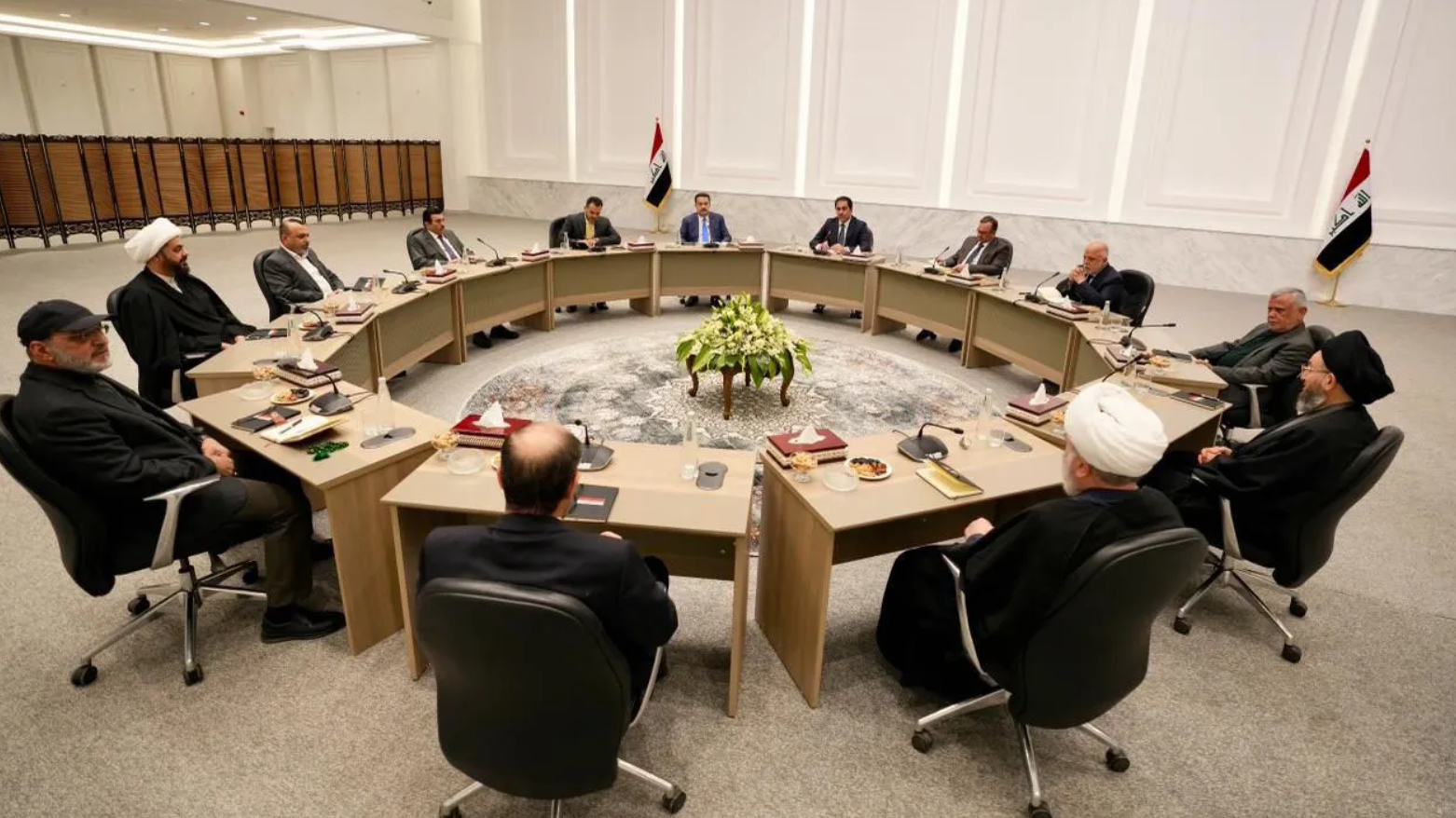
ERBIL (Kurdistan 24) - The head of the Hoquq Movement (Harakat Al Hoquq) in Iraq’s parliament said on Monday that the Coordination Framework and armed groups have reached an understanding on their weapons, but that Prime Minister Ali al-Zaidi has not signed it. A source in the Coordination Framework told Kurdistan 24 that no draft agreement exists.
Saud al-Saadi, whose bloc is the parliamentary wing of Kataib Hezbollah, said a committee was supposed to be formed from the resistance front, the government, the Popular Mobilization Forces and the Coordination Framework, but al-Zaidi has yet to sign off. “The government must officially announce its position on not signing the agreement,” al-Saadi said, adding that there is suspicion Washington does not approve of it and that this has made al-Zaidi hesitate. He said the agreement stresses regulating the weapons rather than removing them.
The source in the Coordination Framework said the file remains complicated, that only a few points have been discussed verbally, and that no written agreement exists. The source said no draft has been drawn up between the armed groups and the Framework’s committee.
The positions reflect a gap that has run through the talks. Al-Zaidi set June 30, 2027, as the deadline for bringing weapons outside state control under government authority on October 1, replacing an earlier September 30 target, after the US-led coalition ended its mission in Iraq, according to AFP. He had outlined the timeline in September, and Secretary of State Marco Rubio discussed disarming armed groups with him at the UN General Assembly. The Coordination Framework endorsed the timetable at an emergency meeting on October 2 and welcomed what it called the armed factions’ commitment, Iraqi Local Media reported.
Al-Zaidi said on October 5 that three factions had handed over weapons and two more had agreed to, though Kataib Hezbollah immediately said it is “not bound by any timetable or agreement,” AFP reported, and Harakat al-Nujaba has also refused. Former Prime Minister Nouri al-Maliki has said there will be no disarmament of the factions, only a regulation of their weapons.
Deputy Prime Minister Mohammed Ali Tamim said some armed groups have made senior executive posts a condition for putting down their weapons and joining politics. He said the prime minister is not against their taking part in governing, as long as they disarm fully and abide by the law like other political parties. The move is seen as an attempt to end the long-running crisis of weapons outside the law and draw those forces into formal institutions, reducing the threat to the state and society.
Posts have been central to the bargaining. On October 15, parliament confirmed Laith al-Khazali, a leader of Asaib Ahl al-Haq, as a deputy prime minister, after Baghdad asked Washington to drop its objection, and Asaib’s Sadiqoun party took the Labor Ministry, according to the Long War Journal and Alhurra. Al-Zaidi argued that rewarding a group that agreed to give up its weapons could persuade others to follow, according to Alhurra. Kurdistan 24 reported in September that the Trump administration warned al-Zaidi that monthly dollar transfers to Iraq would be suspended if Iran-aligned groups did not disarm. Some factions are pushing to extend the deadline to the end of 2027.