Syriac School Proposed in Sulaimani to Support Christian Community
KRG Minister of State for Components Affairs Aydin Maruf backs a proposed Syriac school in Sulaimani and calls for stronger Turkmen-language education and minority representation.
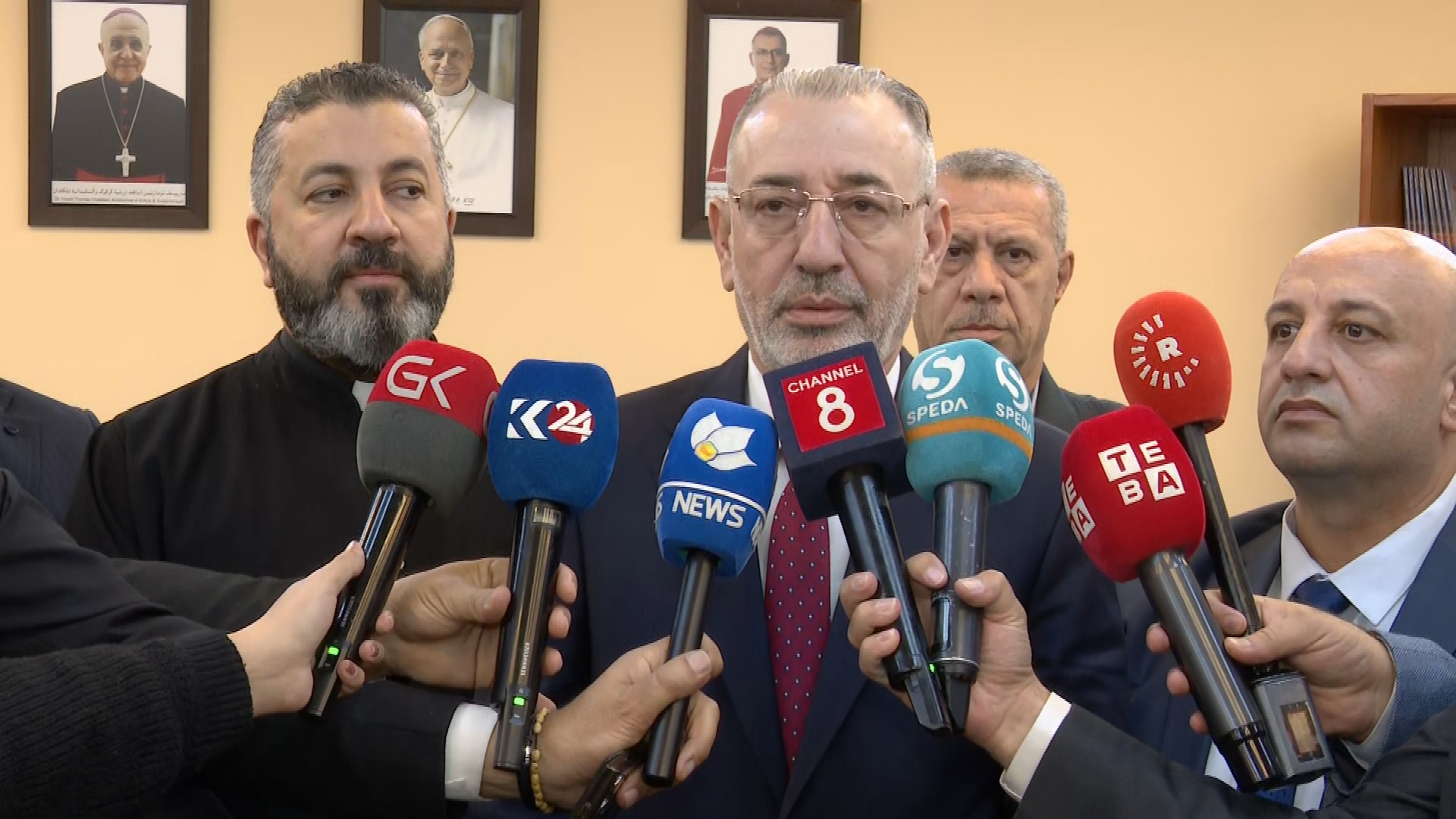
ERBIL (Kurdistan24) - Kurdistan Regional Government (KRG) Minister of State for Components Affairs Aydin Maruf said Tuesday, Nov. 3, 2026, that efforts were underway to establish a Syriac school for the Christian community in Sulaimani, while also calling for greater support for existing Turkmen-language schools in the city and Kifri district.
Maruf made the announcement during a visit to Sulaimani, where he met Governor Haval Abubakr and representatives of the city's religious and ethnic communities. He said the meetings were intended to assess their circumstances directly and strengthen cooperation between community representatives and local authorities.
"A proposal has been made to open a Syriac school for the Christian community in Sulaimani. We attach great importance to this issue and support it," Maruf told reporters.
His remarks indicate official support for the proposal, but do not establish that a school has been approved or opened. The minister did not announce a location, construction or operating budget, expected enrollment, or date for the proposed school's establishment.
Education was a central focus of the visit, alongside Maruf's broader emphasis on the place of different communities in Sulaimani's public life. He described the city as an example of religious and ethnic coexistence, and said preserving that environment was important to the KRG.
"The purpose of our visit is to closely assess the situation of the different communities in Sulaimani. As everyone knows, Sulaimani is a city of coexistence among different religions and ethnicities. This is very important to us, and the Kurdistan Regional Government has always supported this coexistence," he said.
Turkmen-Language Education
Maruf also discussed the availability of Turkmen-language education, identifying one Turkmen school in Sulaimani city and three in Kifri district.
"There is one Turkmen school in Sulaimani called Barish School, while there are also three Turkmen schools in Kifri district. Greater attention needs to be given to this educational sector in order to preserve and develop the culture and language of the communities," he said.
The figures provide an outline of existing Turkmen schooling in the two locations, but Maruf did not say how many students attend the four schools, whether additional schools are planned, or what specific measures would be taken to strengthen teaching.
His comments placed education within a wider effort to maintain community languages and cultural traditions. The proposed Syriac school would address the Christian community's educational needs, while his call for more attention to Turkmen schools concerned institutions already operating in Sulaimani and Kifri.
The minister presented both initiatives as matters requiring attention in discussions with the relevant administrations.
Coexistence and Local Participation
Alongside schooling, Maruf emphasized the contribution of Chaldean, Syriac and Assyrian Christians and Turkmen to political and administrative affairs in the Kurdistan Region and Iraq.
"The communities play an important role in the political and administrative process in Iraq and the Kurdistan Region. Turkmen live within Sulaimani and Garmian, particularly in Kifri district, and enjoy very good coexistence with their Kurdish brothers and other communities," he said.
Maruf was accompanied by representatives of the Christian community in the Kurdistan Parliament and Turkmen representatives from Kifri, a delegation he said reflected the purpose of the visit.
He called for closer coordination with the administrations of Sulaimani and Garmian so that community representatives could participate more actively in political and administrative affairs in their areas.
The discussions combined two related objectives: supporting education in community languages and increasing participation in political and administrative processes. Maruf did not identify new appointments, agreements or administrative changes resulting from Tuesday's meetings.
For the proposed Syriac school, the next steps remain to be specified. Likewise, the minister's appeal for greater attention to Turkmen-language education was not accompanied by a timetable or detailed implementation plan.
His visit nevertheless put the education and representation of Sulaimani's Christian and Turkmen communities on the agenda of talks with provincial officials, with further decisions still needed to translate the proposals into practical measures.