Kurdistan Parliament Elects Presidency, Ending More Than Two Years of Legislative Deadlock
Vala Fardi of the KDP is elected Speaker, with Rami Nouri chosen as Deputy Speaker and Mona Qahwachi as Parliament Secretary, marking a major step toward reactivating the legislature and advancing government formation
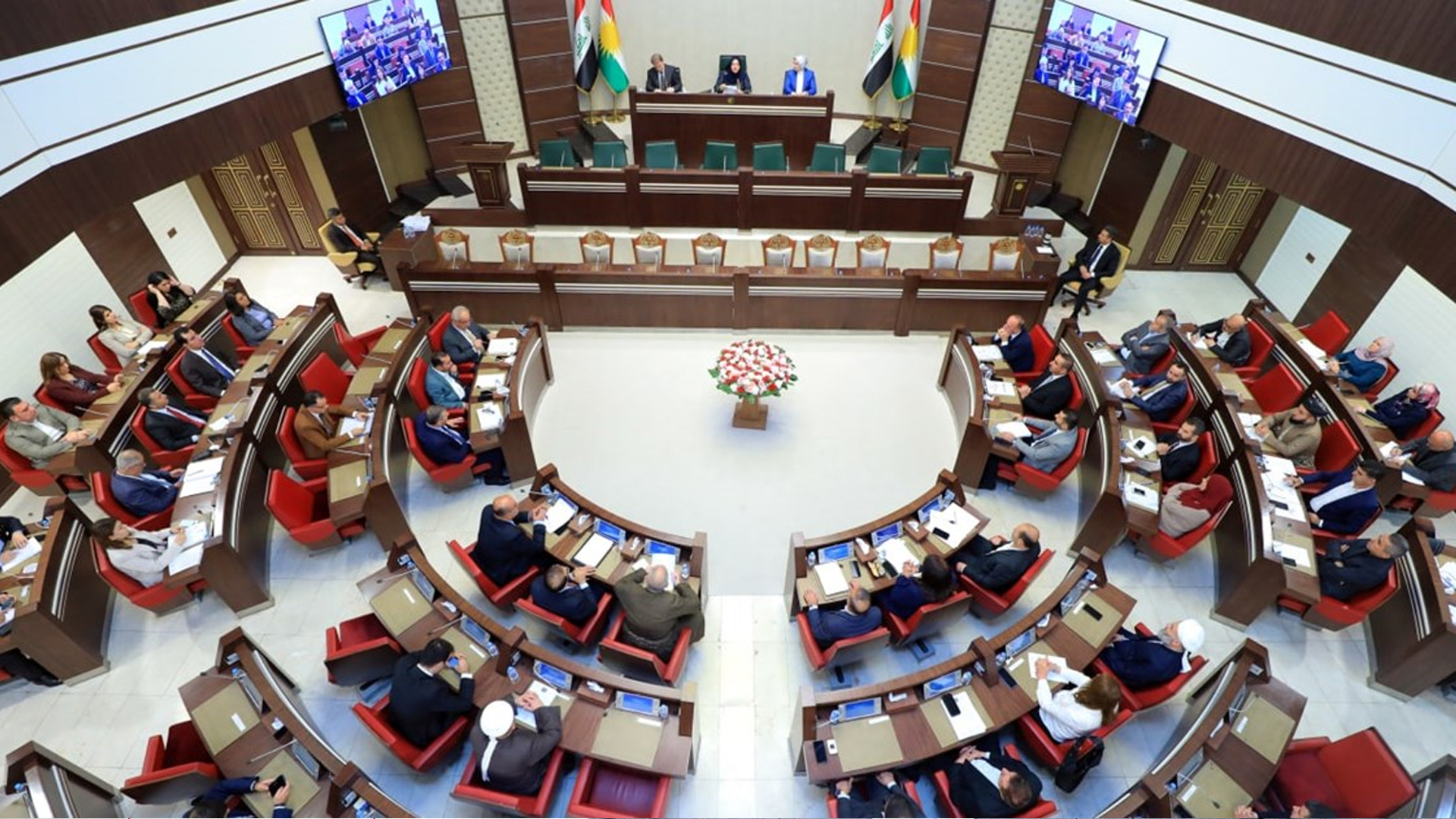
ERBIL (Kurdistan24) — The Kurdistan Region's parliament on Wednesday elected its presidency, with 52 lawmakers attending the session, choosing Kurdistan Democratic Party (KDP) lawmaker Vala Fardi as Speaker, Rami Nouri from the Christian component as Deputy Speaker, and Mona Qahwachi from the Turkmen component as Parliament Secretary.
The election marks a major breakthrough in efforts to reactivate the legislature after more than two years of political deadlock, restoring a key constitutional institution whose legislative and oversight activities had remained largely stalled.
The three officials were elected to complete the parliament's leadership structure, allowing the sixth parliamentary term to move beyond its unfinished inaugural proceedings and toward regular legislative work.
The parliament's sixth term was elected in October 2024, and lawmakers held their inaugural session on Dec. 2 of that year. However, disagreements among political parties over the distribution of senior positions, particularly between the KDP and the Patriotic Union of Kurdistan (PUK), prevented lawmakers from electing the parliamentary presidency and moving forward with the legislature's regular activities.
The prolonged deadlock also became closely linked to the formation of the Kurdistan Regional Government's (KRG) tenth cabinet. Without an active parliament, the Region lacked a functioning legislative forum to carry out its full constitutional responsibilities, including passing legislation, overseeing the executive branch, and voting on the new government.
The election of the Speaker and other parliamentary leaders is therefore an important institutional step toward restoring the legislature's role.
It provides the framework for parliamentary committees to resume their work, lawmakers to debate legislation, and political blocs to address outstanding issues through the parliamentary process.
The reactivation of parliament is also expected to facilitate the next stage of government formation, as the KDP and PUK continue efforts to resolve their differences over power-sharing arrangements and the distribution of senior government positions.
Wednesday's election thus marks a significant development in the Region's efforts to restore its elected institutions and move beyond the prolonged political impasse.
Election results and the parliamentary deadlock
The Kurdistan Region held its sixth parliamentary elections on Oct. 20, 2024, following repeated delays. The Iraqi Independent High Electoral Commission announced the final results on Oct. 30, allocating the 100 seats in the legislature among political parties and minority components.
The Kurdistan Democratic Party emerged as the largest political force, followed by the Patriotic Union of Kurdistan and the opposition New Generation Movement.
The distribution of the 95 general seats was as follows:
Kurdistan Democratic Party (KDP): 39 seats
Patriotic Union of Kurdistan (PUK): 23 seats
New Generation Movement: 15 seats
Kurdistan Islamic Union (KIU): 7 seats
Halwest Movement: 4 seats
Kurdistan Justice Group (Komal): 3 seats
People's Front: 2 seats
Change Movement (Gorran): 1 seat
Kurdistan Region Alliance: 1 seat
The remaining five seats were allocated to minority components, bringing the parliament's total membership to 100.
Despite the election, political disagreements over parliamentary leadership and the formation of the Kurdistan Regional Government's (KRG) tenth cabinet prevented the legislature from beginning its regular work.
The first session of the sixth parliamentary term was held on Dec. 2, 2024, when elected lawmakers took their constitutional oaths and officially assumed their parliamentary responsibilities.
However, the session was adjourned after lawmakers failed to secure the required legal quorum to elect the speaker, deputy speaker, and parliament secretary. Subsequent efforts to reconvene the legislature also failed, leaving the parliament unable to exercise its legislative and oversight functions.
Several attempts have since been made to break the deadlock. In January 2025, an attempt to convene lawmakers to elect the parliamentary leadership failed because of insufficient attendance. Mohammed Sulaiman, the interim parliament speaker and a New Generation Movement lawmaker, subsequently announced his resignation after failing to secure the required quorum.
In August 2025, the KDP and PUK announced an agreement to make intensive efforts to reactivate parliament in September and advance the formation of the new regional government. However, disagreements between the two main parties over power-sharing arrangements and key government positions prevented the agreement from being implemented.
The KDP renewed its appeal in June 2026, calling on all parliamentary factions, regardless of their seat numbers, to return to the legislature and resolve outstanding political issues through parliamentary dialogue. The party said previous bilateral and multilateral meetings, initiatives, delegations, and communications had failed to produce the necessary breakthrough.
In September 2026, reports indicated that the KDP and PUK had again reached an understanding to reactivate parliament in October, with the aim of electing its leadership and moving forward with the formation of the tenth KRG cabinet. However, the political deadlock persisted.