President Barzani Calls for Political Reconciliation Between KDP and PUK
President Masoud Barzani calls for KDP-PUK dialogue to end Kurdistan's political crisis and urges parties to form a broad-based national government.
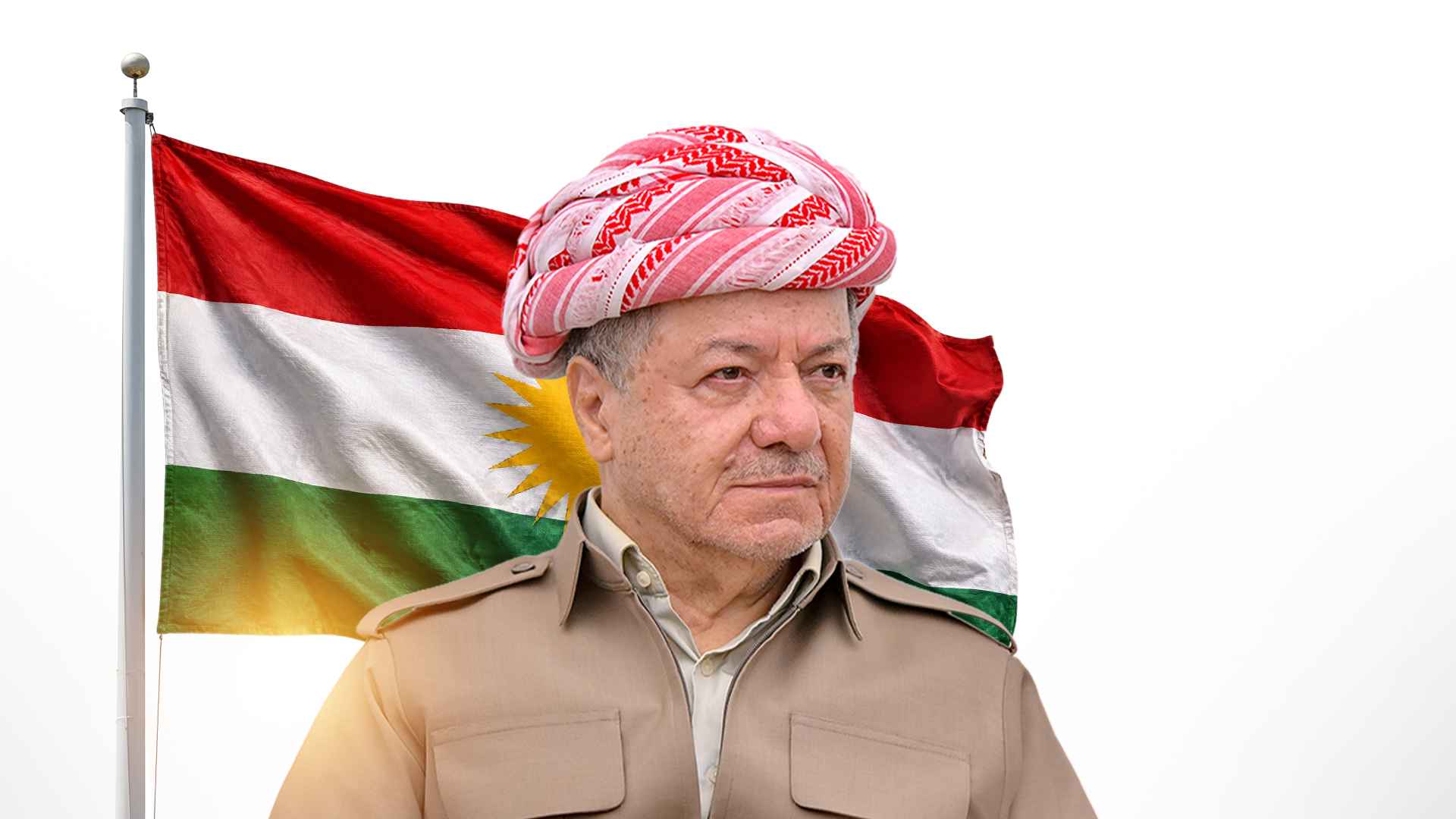
ERBIL (Kurdistan24) - President Masoud Barzani has called on the Kurdistan Democratic Party (KDP) and the Patriotic Union of Kurdistan (PUK) to hold talks and resolve their differences, urging all political forces in the Kurdistan Region to work together toward a broad-based national government as the dispute over power-sharing continues.
In a statement issued on Monday, Nov. 9, 2026, President Barzani said the interests of the people of Kurdistan must take precedence over the priorities of individual political parties, describing dialogue as the way to overcome the Region's political crisis.
"Regarding the recent developments and the political situation, all sides must bear in mind that the interests of the people of Kurdistan are greater than any other interest or objective," he said.
President Barzani directed a specific appeal to the PUK, asking its leadership to sit down with the KDP and seek a resolution to the disagreements that have stalled the formation of the Kurdistan Regional Government's (KRG) tenth cabinet.
"On this basis, I call on our brothers in the Patriotic Union of Kurdistan to sit down together with the Kurdistan Democratic Party, resolve the problems, and bring an end to the political crisis in the Kurdistan Region," he said.
His statement also extended beyond the two largest parties. President Barzani expressed a desire for other political groups to participate in the next stages of the political process and jointly establish a government capable of responding to public expectations.
He called on them to "jointly form a broad-based national government, and respond to the demands and aspirations of the people of Kurdistan."
Parliament's Reactivation
The call comes five days after the Kurdistan Parliament resumed its unfinished inaugural session on Nov. 4 and elected a new presidency, ending a prolonged period without a fully functioning legislative leadership.
The development created a procedural route toward advancing government formation, but it did not settle the disagreements between the KDP and PUK.
Fifty-two lawmakers attended the session in the 100-member legislature, exceeding the 51 votes needed to elect the parliamentary leadership.
Vala Farid of the KDP was elected speaker, Rami Nouri, representing the Christian community, became deputy speaker, and Mona Qahwachi, representing the Turkmen community, was elected secretary. All three received 52 votes.
The session took place despite a boycott by the PUK and the New Generation Movement, alongside other political groups.
Some lawmakers elected on the lists of boycotting parties nevertheless attended, allowing the chamber to reach the required majority.
The KDP maintained that the sitting followed parliamentary law and internal procedures.
Farid said the newly elected leadership was permanent rather than interim and urged the absent factions to return to parliamentary work.
The PUK, however, challenged the legitimacy of the session and argued that the two major parties needed to agree on the distribution of senior positions before the political process could advance.
Those competing positions illustrate why the reopening of parliament has not, by itself, ended the deadlock.
Government Formation 'Unresolved'
The dispute dates to the October 2024 parliamentary elections, when the KDP secured 39 seats, the PUK won 23 and New Generation gained 15. No party obtained an outright majority, leaving the formation of a new cabinet dependent on negotiations among political forces.
Lawmakers were sworn in during the inaugural sitting on Dec. 2, 2024, but disagreements over the parliamentary presidency kept the session unfinished for nearly two years.
The failure to complete that process also complicated efforts to select the Region's next government.
The KRG's Ninth Cabinet, formed in 2019 and led by Prime Minister Masrour Barzani, has remained in office while the parties negotiate the tenth cabinet.
The new parliamentary presidency has said it intends to move ahead with the relevant legal procedures, including steps connected to the Region's presidency and government formation.
President Barzani's latest intervention therefore addresses the political agreement still needed alongside the restoration of parliamentary procedures.
His call for a broad-based government leaves room for participation by parties beyond the KDP and PUK, without announcing any agreed distribution of cabinet posts or a timetable for a deal.
Beyond Party Lines
The need for political agreement has also been raised in recent meetings with foreign representatives.
On Nov. 7, Türkiye's Consul General in Erbil, Erman Topçu, met Fadhil Mirani, head of the KDP Politburo's Administrative Board, in Pirmam.
Topçu expressed hope that the Kurdistan Region's political parties would reach an agreement and form a new government, while emphasizing the importance of stability and continued cooperation.
Mirani described parliament's reactivation as a positive beginning and urged parties to set aside their differences and participate in the next cabinet.
Two days earlier, diplomatic and consular representatives met the new parliamentary presidency in Erbil.
Sri Lanka's honorary consul, Ahmed Jalal, said the return of constitutional institutions was important for stability and cooperation, while the Philippines' honorary consul, Falah Anwar, expressed hope that the step would help advance the democratic process.
Greece's Consul General in the Kurdistan Region Nikolaos Stergioulas also described a visit to the Kurdistan Parliament as "positive," underlining the strength of his country's relations with Erbil.
The European Union (EU), last Thursday, welcomed the reactivation of the Kurdistan Region Parliament and the election of its new presidium, describing the developments as important steps towards ensuring the proper functioning of democratic institutions.
Additionally, the United States reaffirmed its support for a strong and resilient Kurdistan Region, describing it as a foundational pillar of the broader U.S.-Iraq relationship, while calling on all parties to work constructively to strengthen Iraq's state institutions.
In a response to Kurdistan24's email inquiry on Thursday, a U.S. State Department spokesperson said Washington remained committed to its partners across Iraq who are working to build a sovereign, stable, and prosperous country.
"The United States supports a strong and resilient Iraqi Kurdistan Region, which remains a foundational pillar of the broader U.S.-Iraq relationship," the spokesperson said in a statement provided on background.
Such statements reflect wider attention to the Region's political impasse, but the negotiations themselves remain the responsibility of the Kurdish parties.
Parliament can now begin restoring its legislative and oversight roles, while agreement on executive leadership and power-sharing remains outstanding.
President Barzani's appeal puts that unresolved political question at the center of the next phase.
Rather than proposing a government formed by one side alone, he urged the KDP, PUK and other parties to pursue a shared outcome based on the interests and aspirations of the people they represent.
The report was updated on Monday, Nov. 9, 2026 at 11:06am.