Christian Alliance Backs President Barzani's Reconciliation Call
Christian Alliance backs President Masoud Barzani's reconciliation call, urging a broad-based Kurdistan government and guarantees for Christian representation.
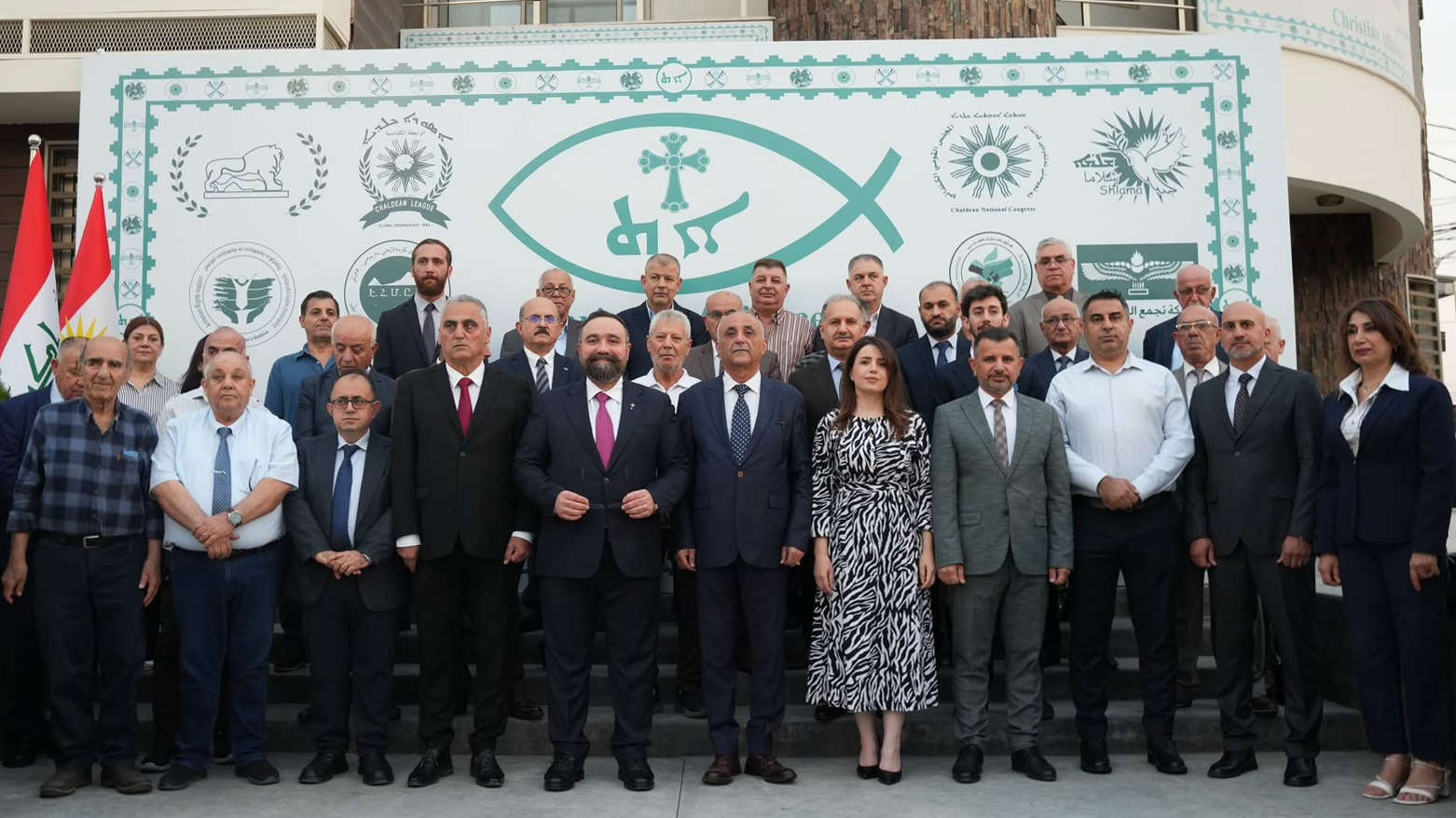
ERBIL (Kurdistan24) - The Christian Alliance on Monday welcomed President Masoud Barzani's appeal for dialogue between the Kurdistan Democratic Party (KDP) and Patriotic Union of Kurdistan (PUK), urging political forces to end the Kurdistan Region's political crisis and establish a broad-based national government while safeguarding the rights of its Christian communities.
In a statement dated Nov. 9, 2026, the alliance said resolving the political deadlock and protecting the Region's institutions required a collective commitment that went beyond party rivalries. It called on all parties to support President Barzani's initiative and turn his appeal into a political agreement.
The alliance also used its statement to press for guarantees of fair Christian representation in government and decision-making, reiterating its demand that only Christian voters be permitted to elect lawmakers occupying seats reserved for Christians.
Support for Dialogue and National Partnership
The Christian Alliance described President Barzani's call as a "welcome, wise and necessary initiative" and said it could help preserve the Kurdistan Region's political and constitutional unity.
It argued that responsibility for the Region's future did not belong to any single party, emphasizing the need for cooperation among the forces represented in its political institutions.
"Serving the interests of the people of Kurdistan and safeguarding the Region and its institutions are shared responsibilities that transcend partisan interests and political differences," the alliance said.
Identifying itself as the largest Christian political alliance in Iraq and the Kurdistan Region, and the only Christian alliance to participate in the Kurdistan parliamentary elections, the group urged political leaders to give practical effect to President Barzani's message.
It said an agreement should strengthen political unity, ensure that institutions function effectively and respond to citizens' aspirations, while protecting the Region's constitutional and legal status.
The alliance also praised President Barzani's role in the Region's modern history, crediting his leadership with protecting indigenous communities, encouraging understanding among political forces and defending the rights of Kurdistan's people. Those assessments were expressed by the alliance in its endorsement of his initiative.
Christian Quota and Representation
Beyond its support for political reconciliation, the statement outlined the alliance's expectations of any future governing arrangement.
It called for guarantees protecting the rights of Chaldean, Assyrian, Syriac and Armenian Christians, with fair representation and meaningful participation in government institutions and decision-making at every level.
The alliance said communities must be able to choose their own political representatives, and renewed its demand that voting for Christian quota seats in both the Kurdistan Region and Iraq be restricted to Christian voters.
That position is a proposed change advocated by the alliance, not an announcement that the existing electoral rules have been amended.
"The rights of our people are a foundation of partnership and must never be subject to political bargaining," the statement said.
By raising the quota issue alongside government formation, the alliance made clear that its vision of a broad-based national government includes specific protections for minority political participation, not simply an agreement between the Region's largest parties.
President Barzani Call to KDP and PUK
The alliance's intervention followed a statement earlier on Monday in which President Barzani called on the KDP and PUK to resolve their differences through direct talks.
President Barzani said the interests of the people of Kurdistan should come before any other political objective and appealed specifically to the PUK to meet with the KDP to bring the crisis to an end.
He also expressed the hope that other political parties would participate in forming a broad-based national government able to answer the demands and aspirations of the population.
The appeal comes after prolonged negotiations over the formation of the Kurdistan Regional Government's (KRG) tenth cabinet, following the October 2024 parliamentary election. The KDP won 39 seats, the PUK 23 and the New Generation Movement 15, leaving no single party with a majority in the 100-seat legislature.
Parliament Reactivated, Disputes Remain
The political standoff has continued despite the reactivation of the Kurdistan Parliament on Nov. 4, when 52 lawmakers attended a session to elect the chamber's leadership.
Vala Farid of the KDP became speaker, Rami Nouri, representing the Christian community, was elected deputy speaker, and Mona Qahwachi, representing the Turkmen community, became secretary. The election ended a lengthy impasse over parliamentary leadership but did not settle the dispute over the next government.
The PUK and New Generation were among the parties that boycotted the sitting. The KDP maintained that the proceedings followed parliamentary rules, while the PUK challenged the session's legitimacy and argued for prior agreement on senior positions.
The KRG's Ninth Cabinet, headed by Prime Minister Masrour Barzani, remains in office while negotiations over its successor continue.
For the Christian Alliance, an eventual agreement must address both the political divisions that have stalled government formation and the place of Christian communities within the Region's institutions.
Its statement adds a minority political perspective to the calls for reconciliation: a broader government, it argues, should be founded not only on compromise among major parties, but also on guarantees that smaller communities can participate fairly and choose their own representatives.