Barrack Highlights Judicial Cooperation, Economic Partnership in Talks With Iraqi Officials in London
U.S. envoy says Washington and Baghdad have an opportunity to deepen longstanding ties through judicial cooperation, investment, institutional development, security, and regional stability
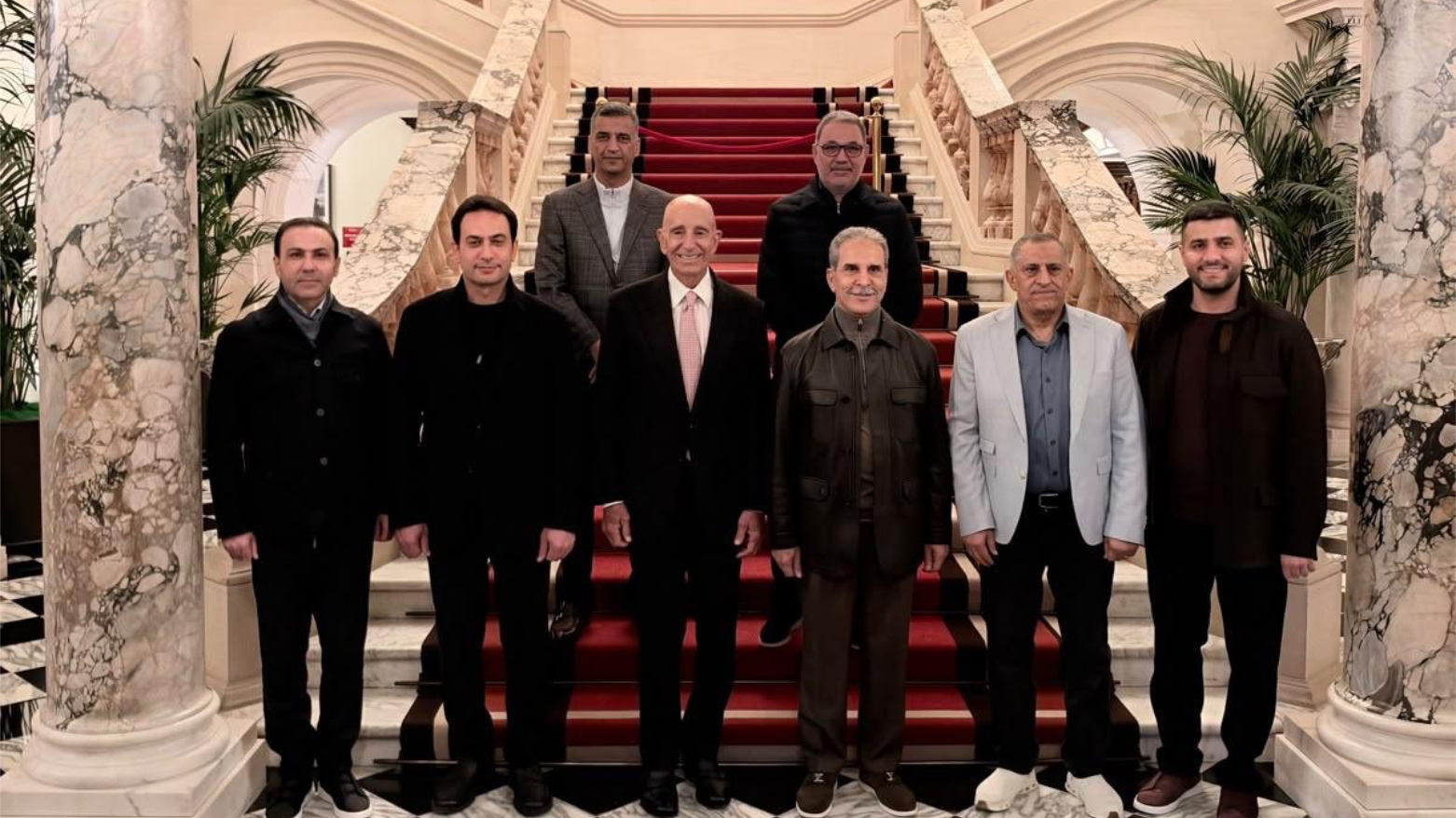
ERBIL (Kurdistan24) — U.S. Ambassador to Türkiye and Special Presidential Envoy for Syria and Iraq Tom Barrack said on Tuesday that Washington and Baghdad have an opportunity to chart an ambitious new course in bilateral relations following a meeting with a delegation of senior Iraqi officials, led by Supreme Judicial Council President Faiq Zaidan, in London.
In a statement posted on X, Barrack described the meeting as an important exchange on the future of U.S.-Iraq relations, saying the two countries could build on their longstanding partnership at what he called a historic moment for both nations and the wider region.
He identified judicial cooperation, strengthening the rule of law, energy, investment, economic development, institutional partnerships, security, and regional stability as key areas offering significant opportunities for expanded bilateral engagement.
"Strong, independent judicial institutions and deeper cooperation between our legal systems are essential to building confidence, advancing the rule of law, and securing a more prosperous future," Barrack wrote.
He added that closer cooperation could help unlock Iraq's economic potential, strengthen relations between the two peoples, and lay the foundations for shared prosperity and lasting peace.
A Broader U.S.-Iraq Partnership
The London meeting comes amid renewed diplomatic engagement between Washington and Baghdad, with both sides seeking to expand cooperation beyond traditional security arrangements into economic, institutional, and judicial fields.
Barrack previously met Zaidan in Baghdad on Nov. 5, where they discussed strengthening judicial relations and cooperation between Iraq and U.S. counterparts.
The broader diplomatic engagement also follows the conclusion of the U.S.-led international coalition's military mission in Iraq, marking a transition toward bilateral security cooperation and a wider framework for relations between the two countries.
Washington has increasingly emphasized economic development, investment, institutional capacity, and regional stability as priorities in its relationship with Iraq, while Baghdad faces the challenge of strengthening state institutions, safeguarding national sovereignty, and attracting international investment.
Barrack said the United States looked forward to continuing its work alongside Iraqi partners, expressing confidence that deeper cooperation could strengthen ties between the two nations and contribute to a more prosperous and stable future.