Fuad Hussein Warns Closing Iran Border Would Punish Iraqis
Iraqi Foreign Minister Fuad Hussein told France24 that closing border crossings with Iran is impossible, and discussed oil exports via Hormuz and armed groups.
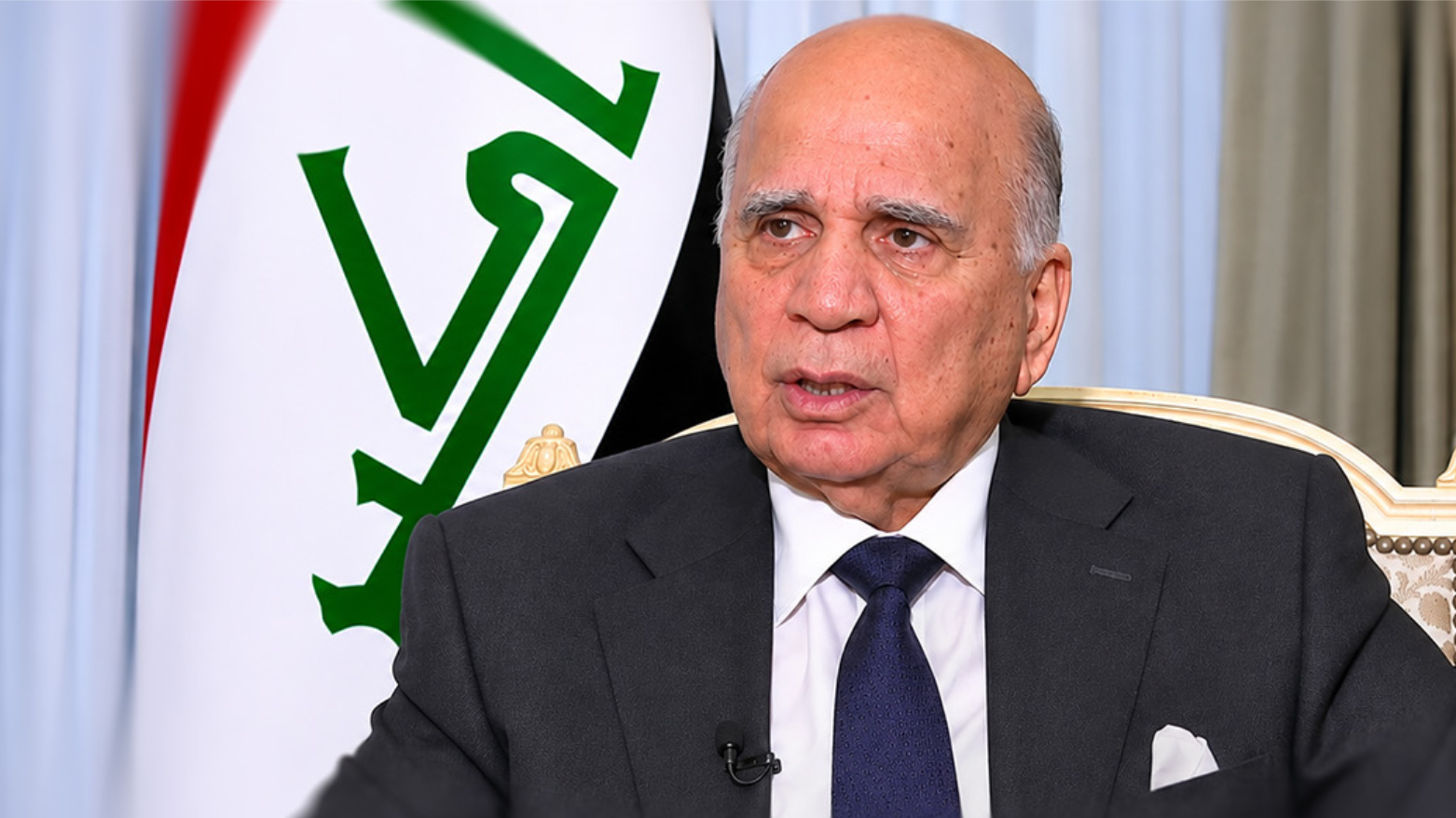
ERBIL (Kurdistan24) - Iraqi Foreign Minister Fuad Hussein said on Friday that Washington’s request for Iraq to close its border crossings with Iran, apart from two, is unrealistic and impossible to carry out. He made the remarks in an interview with France24 in which he set out Baghdad’s official position on US pressure, oil exports, armed groups, and Iranian Kurdish parties.
Hussein said the long border between the two countries and their strong economic ties would make such a closure a form of punishment imposed on the Iraqi people.
He added that Baghdad has not implemented the request and is in talks with US officials to clarify the situation.
At the start of the interview, he said Iraq had managed to resume oil exports through the Strait of Hormuz under the protection of US forces.
Over the past month and a half to two months, exports have moved along the Omani sea route, beginning at 2.2 million barrels per day. According to the latest Ministry of Oil figures, they have now reached 3.2 million barrels per day.
Hussein also said about 500,000 barrels of oil a day are exported through the Kurdistan Region’s pipeline to Türkiye’s Ceyhan port. He added that Iraq has other projects under way with Syria and Jordan to find new export routes.
Turning to statements by Iranian officials about parties from Eastern Kurdistan (Western Iran) in the Kurdistan Region, Hussein said talks between Iraq and Iran, with the participation of Kurdistan Region, are continuing, and a meeting on the matter was held recently.
He expressed hope that the issue will be resolved without violence, through options such as a general amnesty for those who wish to return.
He reaffirmed that, under the constitution and Iraq’s fixed policy, Iraqi territory and the Kurdistan Region will not be allowed to serve as a base for attacks on neighboring countries.
That position extended to the investigation into last September’s drone attack on Saudi Arabia, which he said was launched from Iraqi territory.
Hussein confirmed that an investigation was carried out on the prime minister’s orders and found the attack was launched from a border area near Iran.
The inquiries are continuing until all the facts are settled, he said, and the findings will be published. He ruled out the presence of any official Iranian military force inside Iraq.
On disarming armed groups and bringing them under state authority, Hussein said PM Ali al-Zaidi is personally overseeing the negotiations.
Some groups have already agreed, he said, and talks with the others are continuing. He stressed that the government is fully opposed to resorting to a military option because it would lead to civil war.
He added that the US side has agreed to postpone the final deadline to June 2027 to give diplomacy and domestic solutions a chance.
Hussein described the current situation in the Middle East as a stage of “neither war nor peace.” He warned that renewed war in the region would be the greatest nightmare for Iraqis, saying the country has suffered the devastation of war for decades and every family has paid the price. Baghdad’s main duty, he said, is to prevent any new war.
On Zaidi’s visit to Iran, where he met Iranian Parliament Speaker Mohammad-Bagher Ghalibaf, Hussein said many countries in the region are now attempting mediation because the war is a regional one, not a conflict between two parties. Iraq is caught up in it, he said, which is why the prime minister traveled to Iran to discuss ending the war.