Sulaimani Governor Rejects Division of Kurdistan Region
Sulaimani Governor Haval Abubaker rejects division of the Kurdistan Region, calls for an inclusive government and advocates administrative decentralization.
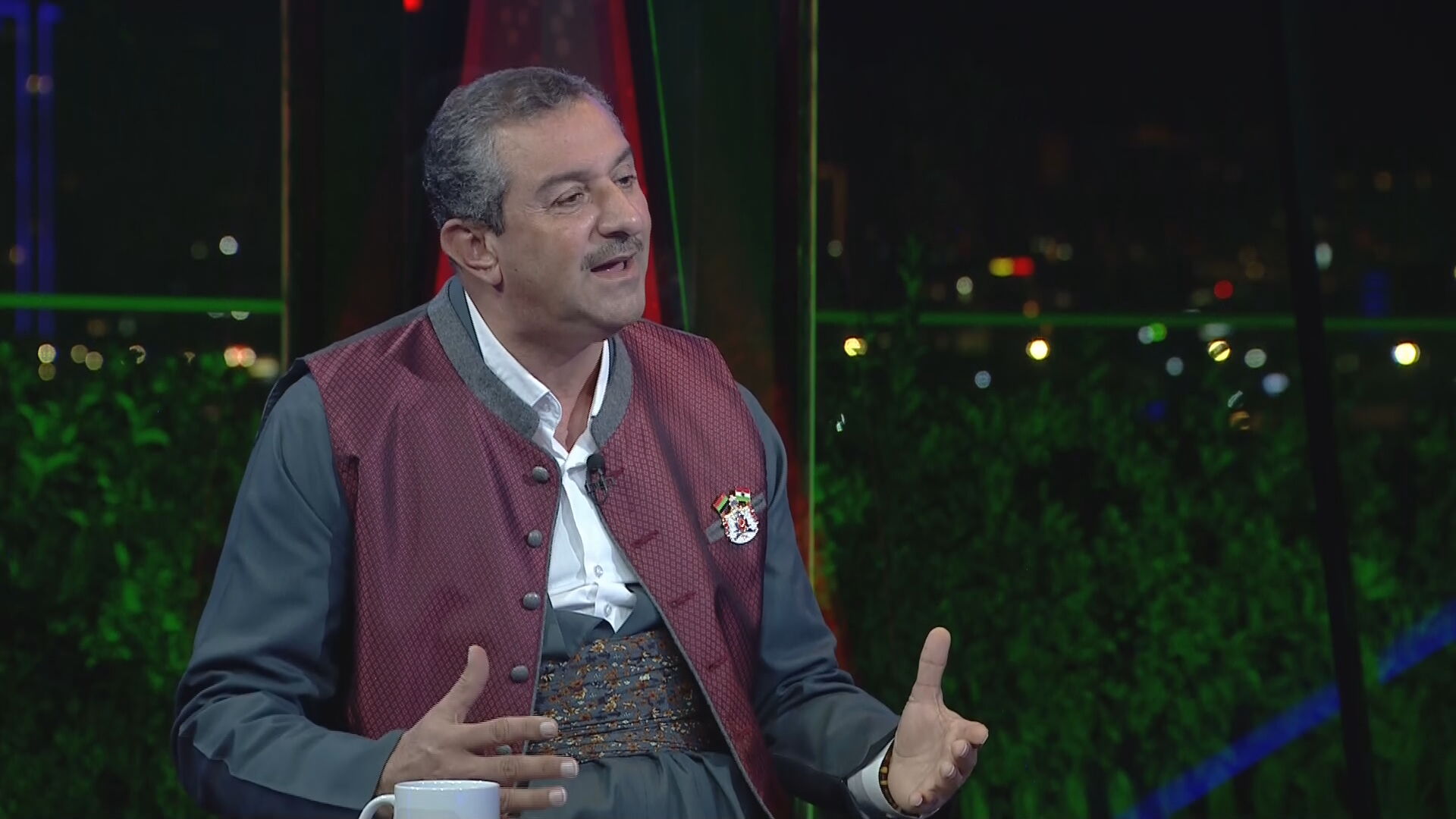
ERBIL (Kurdistan24) - Sulaimani Governor Haval Abubaker has rejected any proposal to divide the Kurdistan Region, insisting that demands for greater local powers should not be confused with political separation and urging Kurdish political forces to form an inclusive government that represents all its people.
Speaking to Kurdistan24 presenter Zhino Mohammed on the "Basi Roj" program during Sulaimani's 242nd founding anniversary on Saturday, Nov. 14, Abubaker said the Region's cities share a common destiny and warned against allowing partisan rivalries to undermine that bond.
"Our past was together, and for our future to be together, today we must be together. And our destiny is one," he said.
'No One Is for Dividing the Region'
Asked directly whether Sulaimani should break away from the Kurdistan Region, Abubaker rejected the idea and said his position reflected that of the local administration rather than simply his personal view.
"We support a strong Region. A Region in which everyone sees themselves," he said.
He argued that administrative and financial decentralization would help strengthen the Kurdistan Region by giving local authorities greater responsibility and capacity to respond to the needs of their communities.
"We favor devolving powers. We say this to strengthen the Region, not to weaken it," he said. "For us to endure, we must implement administrative and financial decentralization. We never meant geography or politics."
He added: "No one wants Sulaimani to join anywhere else. No one is for dividing the Region. Sulaimani is the true mother of this Region. She will never ruin it."
Abubaker also criticized unilateral governance and political confrontation, arguing that no party could claim exclusive ownership of Kurdistan because of its historical role or sacrifices.
"No political force can rule Kurdistan unilaterally," he said, calling instead for a system in which people of different political views could see themselves represented.
He recalled the sacrifices made by families in Sulaimani and surrounding districts through successive periods of conflict, including the Anfal campaigns and the chemical attacks on Kurdish communities. Those experiences, he said, demanded respect and recognition rather than political exclusion.
"We all made sacrifices. No home in Sulaimani has not paid a price and made great sacrifices," he said. He urged political forces to abandon what he called "imposition, unilateralism, obstinacy and provoking one another."
Solidarity Beyond Provincial Boundaries
The governor's appeal drew particular force from the recent deadly flooding in Erbil. Mohammed asked him about his telephone call to Erbil Governor Omed Khoshnaw as the city faced the emergency and his offer to assist the capital.
Abubaker said the gesture was an expression of a shared sense of homeland rather than a matter of official protocol.
"If any part of this homeland is shaken, gets a fever, or gets hurt, pain reaches our heart," he said. "We must revive this feeling. I urge political forces not to kill this feeling in us. Do not take it from us."
He named Erbil, Duhok, Amed, Qamishlo, Mardin, Mahabad, Sina, Kermanshah and other Kurdish cities as places to which Sulaimani's people feel connected.
He said he had never regarded sympathy for people in other Kurdish cities as separate from his responsibility to Sulaimani, recalling contacts and cooperation with communities across Kurdistan and the diaspora.
His message went beyond solidarity during emergencies. He warned against new internal boundaries and confrontation among Kurds, asking whether it was reasonable to turn places such as Degala into dividing lines after generations of shared struggle.
"We need an inclusive Government. A Government for all of the Kurdistan Region, that trusts local administrations, adapts to people, their hopes and demands, not force people to its personal views," he said.
Diversity as a Principle of Government
Throughout the interview, Abubaker described Sulaimani's political and cultural diversity as a defining strength, arguing that the city developed through civic relations rather than tribal or family ties.
"Sulaimani was founded on diversity," he said, describing a community where people may disagree even within the same household but can cooperate around common goals.
He said political affiliation should not determine access to government services, and that local authorities should act as an umbrella for residents with different beliefs.
"Our local Government must belong to everyone, to all people, a Government for citizens, based on law and rule of law, equally distant from all," he said.
Abubaker acknowledged that such an approach was difficult in a political environment shaped by party interests. Nevertheless, he argued that local government must coordinate with the regional and federal authorities, elected institutions, investors, universities, media organizations and civil society rather than work for a single faction.
He also defended freedom of thought and the city's history of political organizing, saying differences of opinion renew Sulaimani rather than diminish it.
"If you want the city across its length, breadth, depth, and height to be with you, accept them as they are, not like you," he said.
Anniversary Celebrations Belong to the Public
The interview took place as Sulaimani celebrated 242 years since its founding in 1784. Mohammed described crowds of families, young people and children filling the city's streets for the occasion.
Abubaker said the administration had sought to make the anniversary a public celebration rather than a government-directed ceremony, leaving residents, civic organizations and media outlets free to shape it themselves.
"It's not only one color. It's not only one party. Sulaimani is not only the rulers, authorities, and the rich," he said, describing the variety of people who had joined the celebrations.
He said public participation also helped revive cultural practices, including traditional Kurdish clothing, while supporting shops, artists and other local businesses.
For Abubaker, the anniversary's message was inseparable from the political appeal he made throughout the interview: Sulaimani's distinctiveness, he argued, can coexist with commitment to a united Kurdistan Region.
"Without Kurdistan, Sulaimani is what? What is Sulaimani outside Kurdistan?" he asked, emphasizing that pride in the city should not be mistaken for a desire to separate it from the wider homeland.