Kataeb Hezbollah Accuses Iraq’s PM of Yielding to US and Gulf Pressure Over Weapons Dispute
The Iran-backed armed group rejects allegations of oil smuggling in "Nasr City", claims a technical committee found no violations, and demands investigations into other government contracts
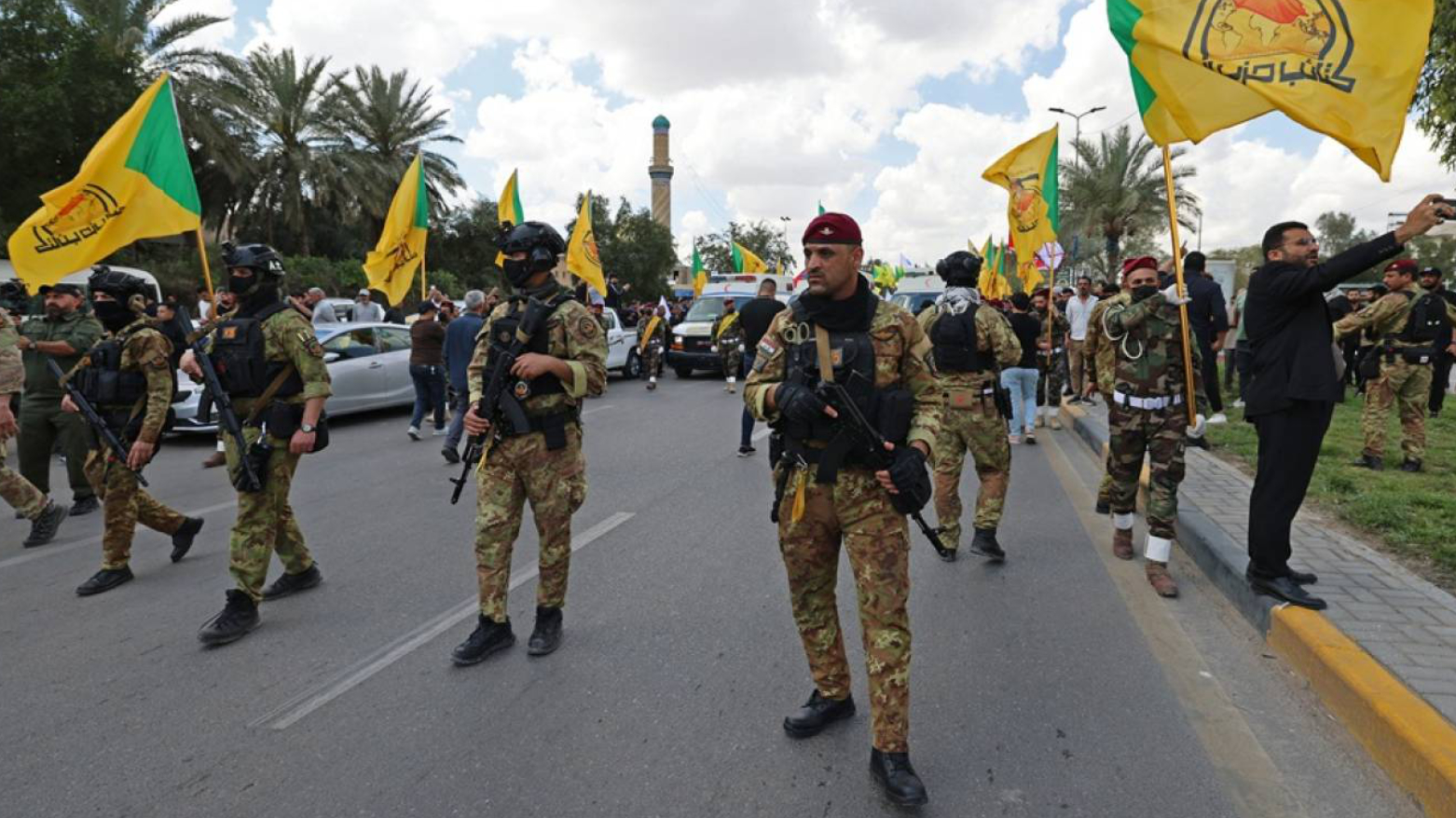
ERBIL (Kurdistan24) — Iraq’s Kataeb Hezbollah has accused Prime Minister Ali al-Zaidi of breaching commitments reached with the group over regulating weapons and state sovereignty, escalating tensions between the government and the powerful Iran-backed armed faction over demands for armed groups to surrender their weapons.
In a statement issued on Sunday, the group accused al-Zaidi of yielding to pressure from the United States, Saudi Arabia, and the United Arab Emirates, alleging that his office had circulated fabricated reports through regional and local media outlets to pressure the group into giving up its weapons.
Kataeb Hezbollah said it had entered negotiations over the regulation of weapons and signed what it described as a sovereignty agreement with members of the Coordination Framework and the government. However, it accused the prime minister of violating his commitments and using what it called fabricated allegations to target the group.
The faction insisted that the issues of "Nasr City," widely known as Jurf al-Sakhar and the weapons of what it calls the resistance should remain outside political disputes, saying it would not abandon that position despite mounting pressure.
Group rejects oil-smuggling allegations
Addressing allegations of oil smuggling in "Nasr City", Kataeb Hezbollah claimed that a technical committee sent to investigate the accusations found no violations involving the oil pipelines running through the area.
According to the statement, the committee documented fuel storage tanks and a small facility used to improve fuel quality, which the group said served military vehicles, heavy machinery, generators, and other equipment.
The group argued that the facility was established to address shortages and insufficient fuel supplies for Popular Mobilization Forces (PMF) units operating along a strategically sensitive military sector stretching from northern Babil province to al-Qaim, near the Syrian border.
Kataeb Hezbollah also accused some media outlets of publishing fabricated images of a fuel tank and falsely presenting them as evidence provided by the technical committee. It maintained that the facility's storage tanks were openly visible and had not been concealed from investigators.
The group further claimed that the facility was located more than five kilometers from the oil pipeline in the area.
Kataeb Hezbollah called on Iraq's judiciary to review sanctions imposed on individuals following the allegations, arguing that the technical committee's findings contradicted the accusations.
It also demanded investigations into alleged corruption in military food supplies, ration-card commodities, and a partnership contract with the Abu Dhabi National Oil Company (ADNOC).
Growing tensions over armed groups
The statement comes amid mounting tensions between Zaidi's government and Iran-aligned armed factions over the future of weapons outside state control.
Zaidi has pledged to ensure that all armed groups surrender their weapons to state institutions, making the issue a central challenge for his government.
Senior Iraqi politicians have previously told AFP that the prime minister repeatedly expressed his readiness to confront armed factions if they refuse to disarm.
Kataeb Hezbollah, which Washington designates as a terrorist organization, has issued several increasingly critical statements against the prime minister, accusing him of corruption and threatening his government.
The dispute also unfolds against the backdrop of heightened regional tensions. Iran-aligned armed groups in Iraq have previously targeted US interests in the country and intensified attacks across the region in support of Tehran during the Middle East war.
Washington has also accused Iran of exploiting Iraq's economy to circumvent international sanctions and has previously imposed sanctions on Iraqi individuals, including an oil official and businessmen, over allegations involving the blending of Iraqi and Iranian oil.
The confrontation over weapons, oil-related allegations, and the authority of state institutions presents a significant challenge for Zaidi as his government seeks to assert control over armed factions operating outside the formal security establishment.