Ezidi Genocide Survivors Testify at First-of-Its-Kind Truth Commission in Berlin
Around 30 survivors from the Ezidis are expected to give evidence during the three-day initiative, organised by civil society groups with UK public funding. The
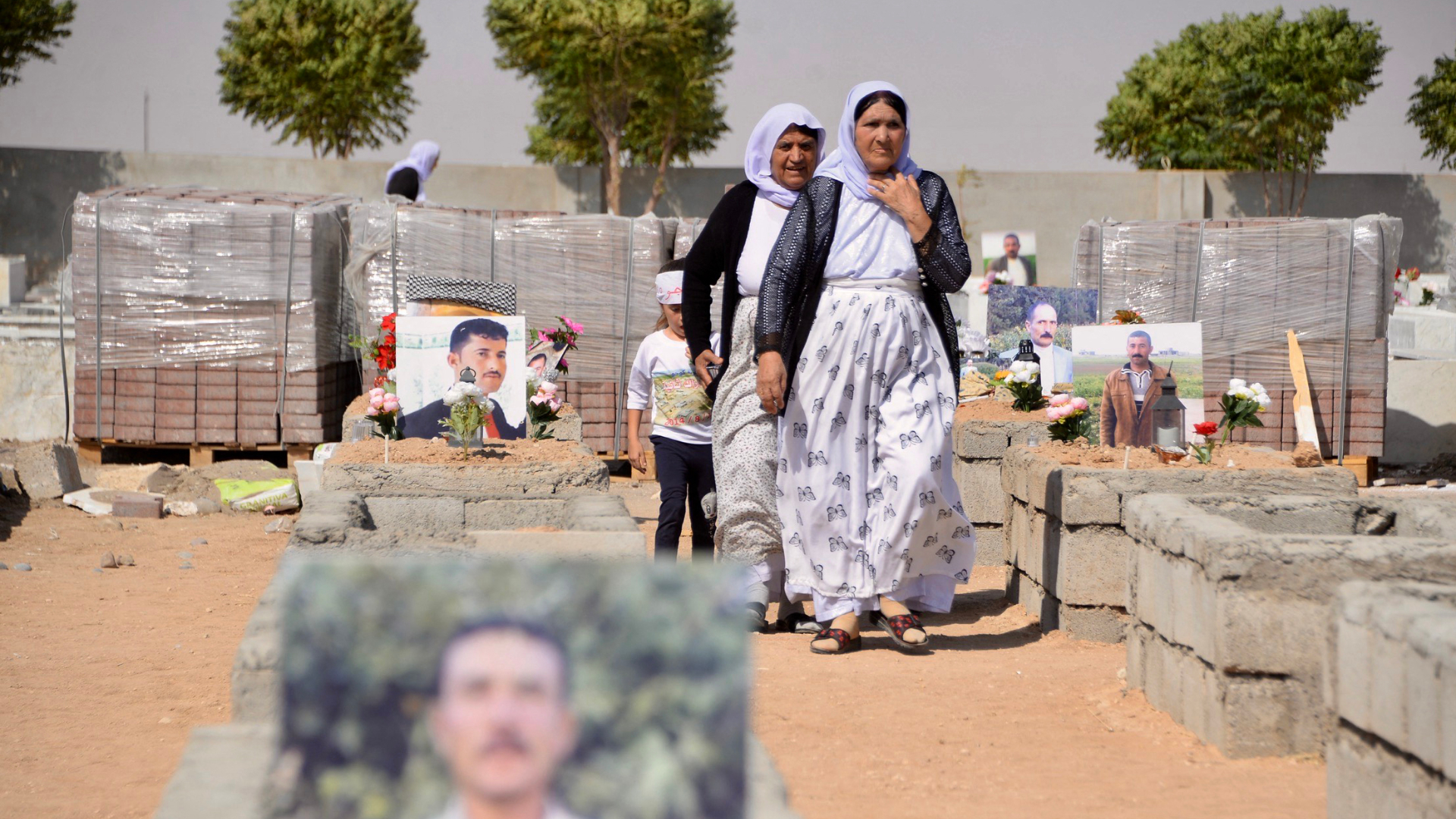
ERBIL (Kurdistan24) – Survivors of the Ezidi genocide committed by Islamic State (ISIS) militants testified Monday at a first-of-its-kind truth commission in Berlin, seeking justice and accountability 12 years after the atrocities.
Around 30 survivors from the Ezidis are expected to give evidence during the three-day initiative, organised by civil society groups with UK public funding. The commission aims to compile a report for the British government documenting the crimes committed against the community.
Seven commissioners, including 2026 Nobel Peace Prize laureate Navi Pillay and lawmakers from Germany and the United Kingdom, are evaluating testimonies detailing murder, torture, rape, enslavement, and forced marriage.
"There has been no meaningful accountability for the atrocities committed in the past 12 years," chief commissioner Helena Kennedy said during the opening session.
"The rape and enslavement of (Ezidi) women and girls is one of the great shames of the last couple of decades," Kennedy told AFP.
ISIS militants launched a major offensive across northern Iraq, Syria and the Kurdistan Region in 2014, capturing large areas, including the Ezidis' ancestral homeland in the Sinjar Mountains. The group declared a so-called caliphate and carried out a systematic campaign of violence against the Ezidi population.
An estimated 5,000 Ezidis were killed and around 6,400 women and children were abducted and enslaved. More than a decade later, many survivors have yet to publicly recount their experiences.
Among those testifying was Najlaa Matto, who described the August 15, 2014, assault on her home village of Kocho in Iraq, during which ISIS militants killed her father and brother.
"They killed the men because they refused to convert," she told the commissioners. "I cannot forget what ISIS did to me."
Matto said she was taken to Mosul, where she was "inspected, sold and given away" to an ISIS fighter. After attempting to escape, she was raped and sold to another militant, spending four months close to starvation before eventually being freed.
The 39-year-old said she hopes to confront her captors in court one day, adding: "That is my justice."
Another witness, Sanaa Alnemeat, warned that the genocide against the Ezidi people remains unresolved, pointing to the fate of more than 2,000 Ezidis who are still missing.
The United Nations and several countries, including Germany, have recognised ISIS's crimes against the Ezidis as genocide. However, efforts to prosecute those responsible have been uneven, with many ISIS members detained in Iraq convicted on charges such as membership in a terrorist organisation.
In July, a German court convicted an Iraqi couple of genocide for enslaving two Ezidi girls, marking another step in efforts to hold perpetrators accountable.
International accountability efforts have nevertheless faced significant limitations. The United Nations established the Investigative Team to Promote Accountability for Crimes Committed by Da'esh (UNITAD) in 2017 to collect evidence of ISIS crimes and support prosecutions. However, the team ended its operations in 2024 at the request of the Iraqi government.
Organisers hope the Berlin truth commission will renew international pressure for justice and strengthen efforts to secure accountability for the crimes committed against the Ezidis.
"We're going to be calling for a proper tribunal to be created," Kennedy told AFP, adding that "the United Nations really has to rise to this occasion."