Iraqi PM, IRGC Commander Reportedly Reach Deal on KH Withdrawal From Jurf al-Sakhar
Iraqi sources report a Zaidi-Qaani deal for Kataib Hezbollah (KH)'s withdrawal from Jurf al-Sakhar as the armed group rejects the plan amid oil-smuggling allegations.
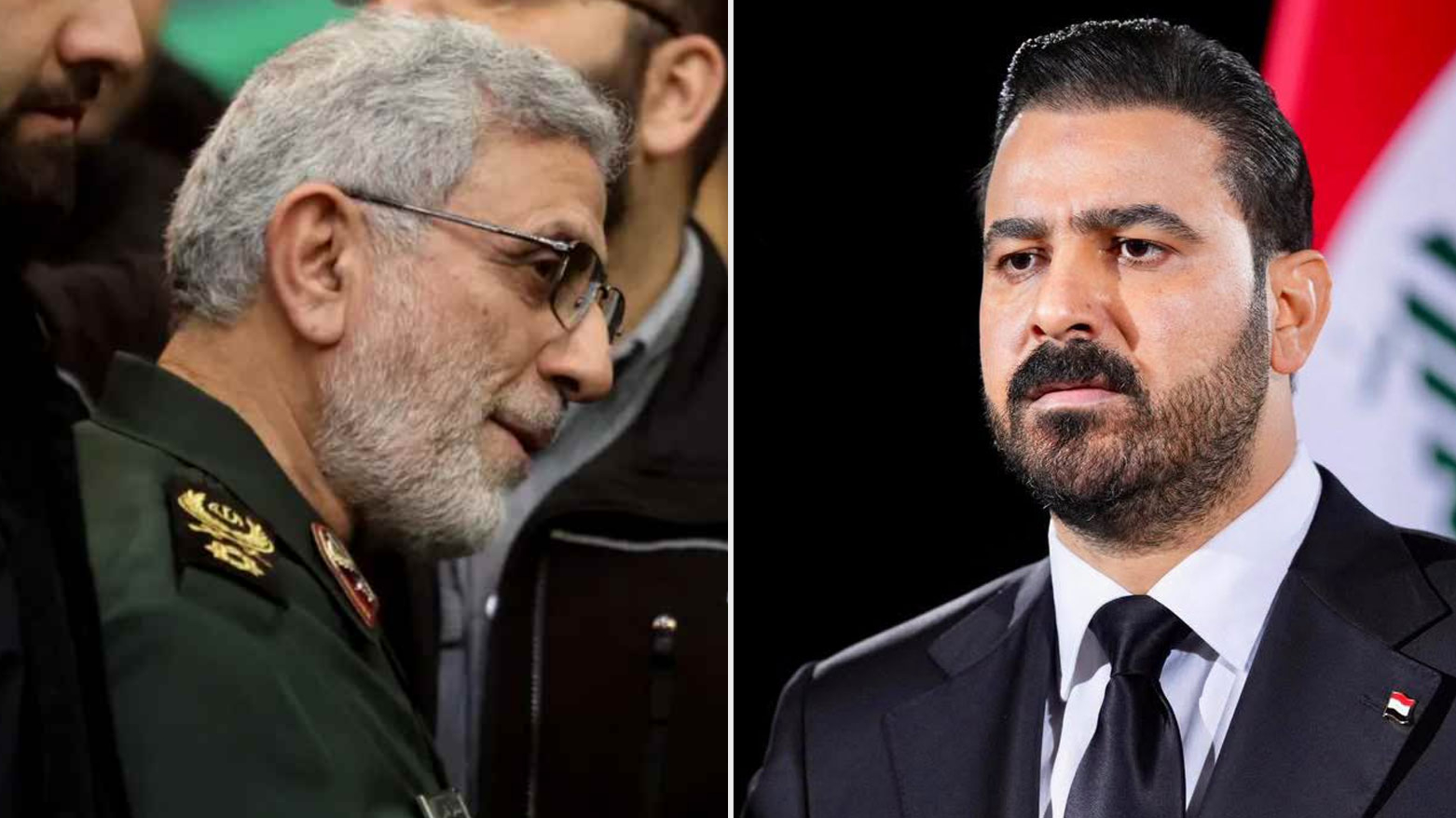
ERBIL (Kurdistan24) - Iraqi Prime Minister Ali Falih Zaidi and Esmail Qaani, commander of Iran's Islamic Revolutionary Guard Corps (IRGC) Quds Force, have reportedly reached an agreement for Kataib Hezbollah (KH) to withdraw from Jurf al-Sakhar, potentially averting a military confrontation between Iraqi government forces and the Iran-backed armed group.
The reported understanding, disclosed Tuesday, Nov. 17, 2026, by sources within Iraq's ruling Coordination Framework to Alhurra, would allow a joint force of Popular Mobilization Forces (PMF) personnel and government security units to enter the subdistrict in Babil province and establish state authority.
However, the arrangement remains unconfirmed by either government, and a senior KH figure publicly rejected withdrawal on Tuesday, raising questions about whether the proposed agreement can be implemented.
The developments follow days of escalating tensions over alleged oil smuggling, armed-group autonomy and Baghdad's efforts to regain control of the area.
Overnight Negotiations
According to Alhurra, Qaani arrived in Baghdad on Monday night and held discussions with Zaidi that continued until approximately 4 a.m. Tuesday.
The sources, speaking anonymously because they were not authorized to discuss the negotiations publicly, said both sides had agreed on a proposal under which KH would leave Jurf al-Sakhar and a combined PMF-government security force would assume control.
The reported compromise was designed to prevent an operation that Baghdad had been preparing against the armed group's positions.
No precise timetable for withdrawal was disclosed, and the composition of the replacement force remains undetermined.
Neither Zaidi's office, Iranian authorities nor KH had formally confirmed the reported Zaidi-Qaani agreement.
Alhurra said it had sought a response from the Iraqi government but had not received one.
The involvement of Qaani, who oversees the IRGC's external operations through the Quds Force, reflects Tehran's connections with influential Iraqi armed factions, including KH.
Raised Alarms
The reported negotiations followed warnings that a government operation in Jurf al-Sakhar could trigger retaliation against Baghdad.
Two security and political sources told Alhurra that Coordination Framework figures had conveyed threats to Zaidi on Monday night that missiles and drones would target Baghdad's heavily secured Green Zone if government forces entered the subdistrict.
Diplomatic missions in the capital were reportedly informed of the threats and adopted precautionary measures.
Earlier Monday, KH-affiliated media published photographs of armed fighters and footage showing missiles being prepared at a missile and drone facility.
The material carried a declaration that the group's weapons were legitimate and would remain in its fighters' possession.
Government spokesperson Haider Aboudi subsequently announced that Zaidi had ordered Iraqi armed forces to enter Jurf al-Sakhar and had established a deadline for the faction's withdrawal.
A security source told Alhurra that the deadline would expire Friday, Nov. 20. Tanks and armored vehicles had reportedly arrived around the district from Baghdad and Musayyib on Sunday night.
Discord
The confrontation also exposed disagreements within Iraq's governing Shiite political alliance.
According to Alhurra's sources, a Coordination Framework meeting Monday evening witnessed a heated exchange between Zaidi and Hadi al-Amiri, Secretary-General of the Badr Organization.
Amiri reportedly described KH fighters in Jurf al-Sakhar as "mujahideen" and urged restraint rather than an immediate military confrontation.
After both officials departed, participants reportedly proposed deploying PMF personnel unaffiliated with the armed factions, selected by Zaidi, to replace KH.
The proposal was not discussed further at that meeting.
Security sources also told Alhurra that an earlier government operation, scheduled for the preceding Friday and involving three military brigades, had been postponed after a military commander allegedly leaked the plan to Coordination Framework and PMF leaders.
The disclosure reportedly prompted political pressure and communications directed at Zaidi, delaying the operation.
Investigation and Response
The standoff stems partly from an investigation into suspected oil theft involving pipelines passing through Jurf al-Sakhar.
According to Iraqi government spokesperson Haider Aboudi, investigators examined six locations and identified evidence of pipeline interference, alongside two refineries, an oil tanker and fuel-storage facilities.
The inquiry followed an Interior Ministry intelligence report documenting suspected petroleum theft dating back to 2021.
Government sources cited by Alhurra estimated the annual value of oil allegedly smuggled from the area at nearly $2 billion. That estimate has not been independently established.
On Saturday, Zaidi dismissed nine senior security and administrative officials in Babil province following the investigation.
The government also directed that individuals implicated in suspected violations be referred to the judiciary and ordered security agencies to prevent unauthorized shipments of petroleum products from Jurf al-Sakhar.
Earlier Kurdistan24 reporting detailed instructions for the Federal Integrity Commission to pursue its investigative responsibilities and for authorities elsewhere in Iraq to strengthen oversight of oil infrastructure.
KH Rejects Allegations
KH has disputed the government's account, denying involvement in oil smuggling and accusing Zaidi and Aboudi of manufacturing allegations to provoke confrontation.
At a Tuesday press conference, senior KH figure Abu Talib al-Saeedi said a government delegation had visited Jurf al-Sakhar without obstruction and had even been offered a meal.
He acknowledged the presence of fuel-processing infrastructure but maintained that the facilities had been established at the group's expense because successive governments had failed to provide adequate supplies.
According to al-Saeedi, the facilities processed purchased heavy fuel oil into diesel used by vehicles and electricity generators, rather than handling stolen petroleum.
He rejected suggestions that his organization had confronted government personnel during their visit.
Separately, Agence France-Presse reported Tuesday that al-Saeedi had categorically rejected the prospect of KH abandoning its stronghold, declaring: "That will not happen, not even over our dead bodies."
His public refusal casts additional uncertainty over the withdrawal arrangement described by Alhurra's anonymous sources.
'Reaffirmed'
Against this backdrop, Zaidi reiterated his government's determination to pursue corruption and weapons held outside state authority.
During a meeting Tuesday with tribal sheikhs and community dignitaries in Najaf province, the Iraqi prime minister said the government's "Sawlat al-Fajr" campaign against corruption would continue.
According to his media office, Zaidi pledged to pursue those carrying weapons outside the state's framework and prevent interference with Iraq's security and public resources.
He also heard requests from local representatives and directed relevant authorities to follow up on them.
A Decade-Long Dispute Over Territorial Control
Located approximately 60 kilometers southwest of Baghdad, Jurf al-Sakhar, also known as Jurf al-Nasr, has remained under KH's control since the area was recaptured from ISIS in October 2014.
Displaced residents have been unable to return, while government institutions have faced longstanding restrictions on access.
Qaani assumed command of the Quds Force in January 2020 following the US strike near Baghdad International Airport that killed his predecessor, Qassem Soleimani, and Abu Mahdi al-Muhandis, a senior PMF figure and founder of KH.
The approaching Friday deadline now places the reported diplomatic understanding against KH's public refusal to withdraw.
Whether the proposed joint security force will enter Jurf al-Sakhar, and under what arrangements, remains unresolved. Neither a final timetable nor a formally confirmed transfer of control has been announced.