KH Leader to Kurdistan24: We Will Not Leave Jurf al-Sakhar or Surrender Our Weapons
Kataib Hezbollah (KH) leader Abu Talib al-Saeedi rejects withdrawal from Jurf al-Sakhar and disarmament as Iraq prepares a joint security deployment on Friday.
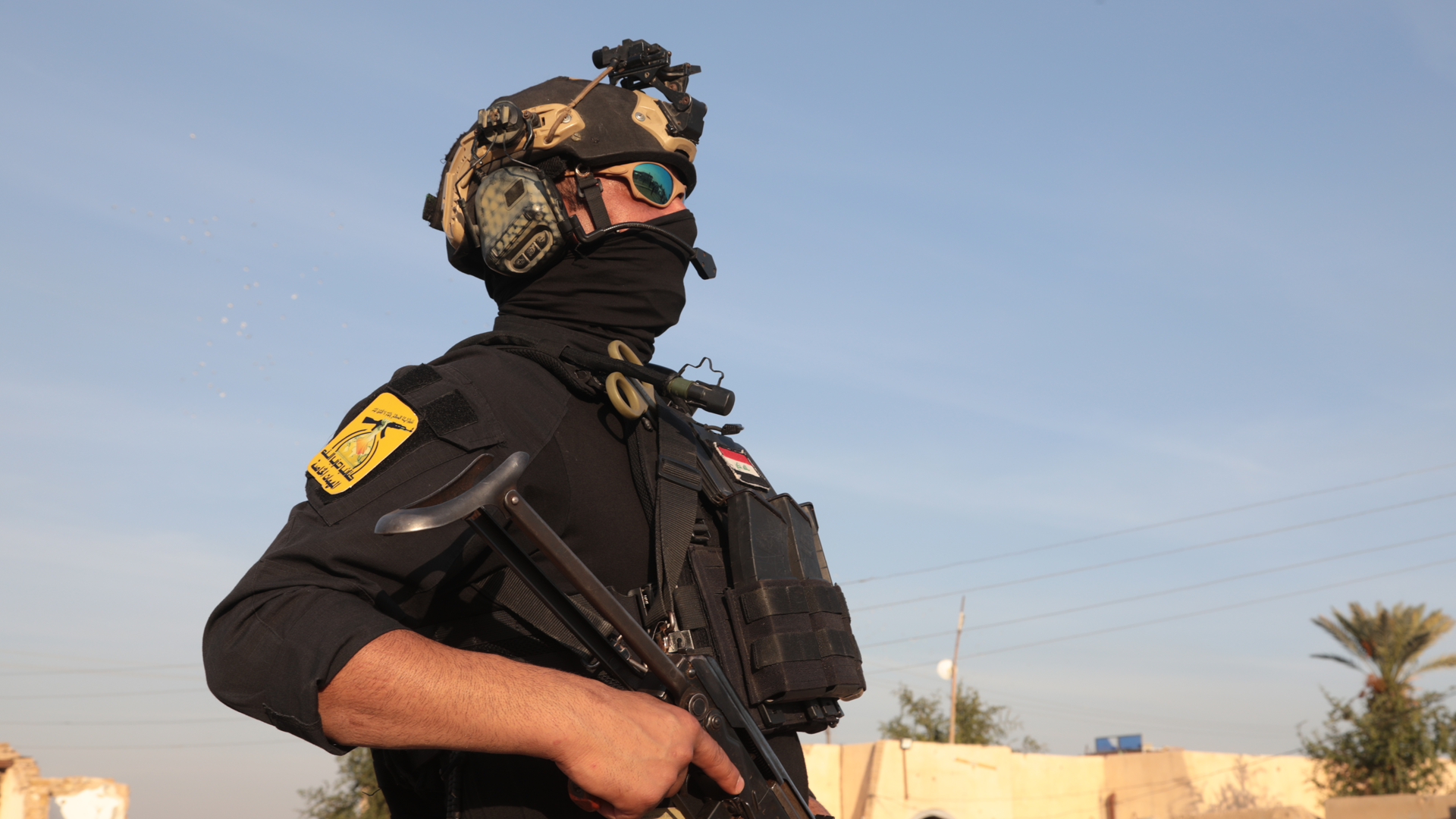
ERBIL (Kurdistan24) - A senior leader of Iraq's Kataib Hezbollah (KH) told Kurdistan24 on Thursday that the armed group would neither withdraw from Jurf al-Sakhar nor surrender its weapons, even as Baghdad prepares to send a joint security force into the area on Friday.
Abu Talib al-Saeedi said negotiations were continuing over the standoff and predicted a solution within hours through religious authorities, tribal leaders and senior political figures, rather than through Iraqi Prime Minister Ali Falih al-Zaidi.
"We are ready for dialogue, and high-level negotiations are continuing," al-Saeedi told Kurdistan24 correspondent Dilan Barzan on Nov. 19. "We bring good news to the Iraqi people that within the next few hours the issue will be resolved."
He said the proposed resolution would come through "the supreme religious authority, tribal sheikhs, the country's leaders and the wise leaders of the Coordination Framework." His remarks provided no details of a finalized agreement or the terms under discussion.
The statements came just one day before a government-approved security deployment intended to place different sectors of Jurf al-Sakhar under the responsibility of Iraqi army, Interior Ministry and Popular Mobilization Forces (PMF) units.
KH Rejects Confrontation and Disarmament
Al-Saeedi accused al-Zaidi of seeking a confrontation between KH fighters and Iraqi security forces, an allegation for which he offered no supporting evidence.
"What Prime Minister Zaidi was betting on, that a confrontation would occur between us and the security forces, was fantasy and meaningless talk," he said. "Such a thing will never happen."
The KH leader also addressed pressure on armed factions to relinquish their weapons, saying the group had previously signed a document concerning the issue and asked the prime minister to make it public.
According to al-Saeedi, the matter was subsequently postponed until 2027, but Tom Barrack had sought to accelerate the disarmament process.
"We are now the last stronghold of the mujahideen in Iraq," al-Saeedi said, describing KH as the only armed faction that had not yielded to what he characterized as pressure from the United States, Israel and several Gulf countries.
He reiterated the organization's position in unequivocal terms: "The sacred weapons will remain in our hands."
His remarks reaffirmed the group's resistance to disarmament at a time when Baghdad is seeking to bring armed formations and strategic infrastructure under state authority.
KH Reports Positive High-Level Talks
The interview came on the same day KH issued a statement saying its secretary-general, Abu Hussein al-Hamidawi, had met Esmail Qaani, commander of Iran's Islamic Revolutionary Guard Corps (IRGC) Quds Force, alongside Hadi al-Amiri and Falih al-Fayyadh, to discuss Jurf al-Sakhar.
The organization described the outcome as "positive," without specifying whether the participants had agreed on a withdrawal, security handover or alternative arrangement.
Earlier reporting had cited anonymous sources within Iraq's Coordination Framework claiming that al-Zaidi and Qaani reached an understanding for KH to leave the area in exchange for the entry of a joint government-PMF force.
That reported understanding had not been officially confirmed, and al-Saeedi's latest statements leave the terms of any prospective settlement uncertain.
Oil-Smuggling Investigation
Al-Saeedi also challenged the investigation that helped bring the dispute to a head.
He said a commission operating under the supervision of al-Amiri, al-Fayyadh and Abu Fadak had inspected Jurf al-Sakhar, but accused al-Zaidi of falsifying its findings.
"Jurf is right in front of you; go ahead and search the entire area," he said.
The allegation was not independently substantiated, and the Iraqi government's account of the investigation differs sharply from KH's position.
Iraqi authorities have reported discovering interference with branches of the strategic Basra-Haditha oil pipeline and an illegal refinery in the area.
Following the investigation, al-Zaidi dismissed nine security and oil-sector officials on Nov. 14.
KH has denied involvement in oil smuggling and previously maintained that its fuel-processing facilities were established to produce diesel for vehicles and electricity generators.
Baghdad Prepares Friday Deployment
A federal security source told the Iraqi News Agency (INA) on Thursday that a joint deployment would begin Friday, Nov. 20, under a plan approved by Lt. Gen. Abdul Amir al-Shammari.
The arrangement assigns separate sectors to the army's 38th Brigade, the Interior Ministry's 17th Brigade and the PMF's 72nd and 79th brigades.
Energy Police will protect oil transmission pipelines, while additional measures include checkpoints, reopening a road and maintaining a Counter-Terrorism reserve force.
Read More: Iraq to Deploy Joint Security Force in Jurf al-Sakhar on Friday
Located approximately 60 kilometers southwest of Baghdad, Jurf al-Sakhar has remained under armed-group control since its recapture from ISIS in October 2014. Its displaced residents have been unable to return for nearly 12 years.
With the government deployment scheduled for Friday, al-Saeedi's rejection of withdrawal and disarmament raises questions about how the security arrangements will be implemented. His promise of a negotiated resolution has yet to be accompanied by publicly disclosed terms or confirmation from Baghdad.