Jurf al-Sakhar Control Headquarters Set to Open on Nov. 20
Iraqi PM Ali Falih al-Zaidi ordered a control headquarters in Jurf al-Sakhar under federal police command, to open at 6 a.m. on Nov. 20, a spokesperson said.
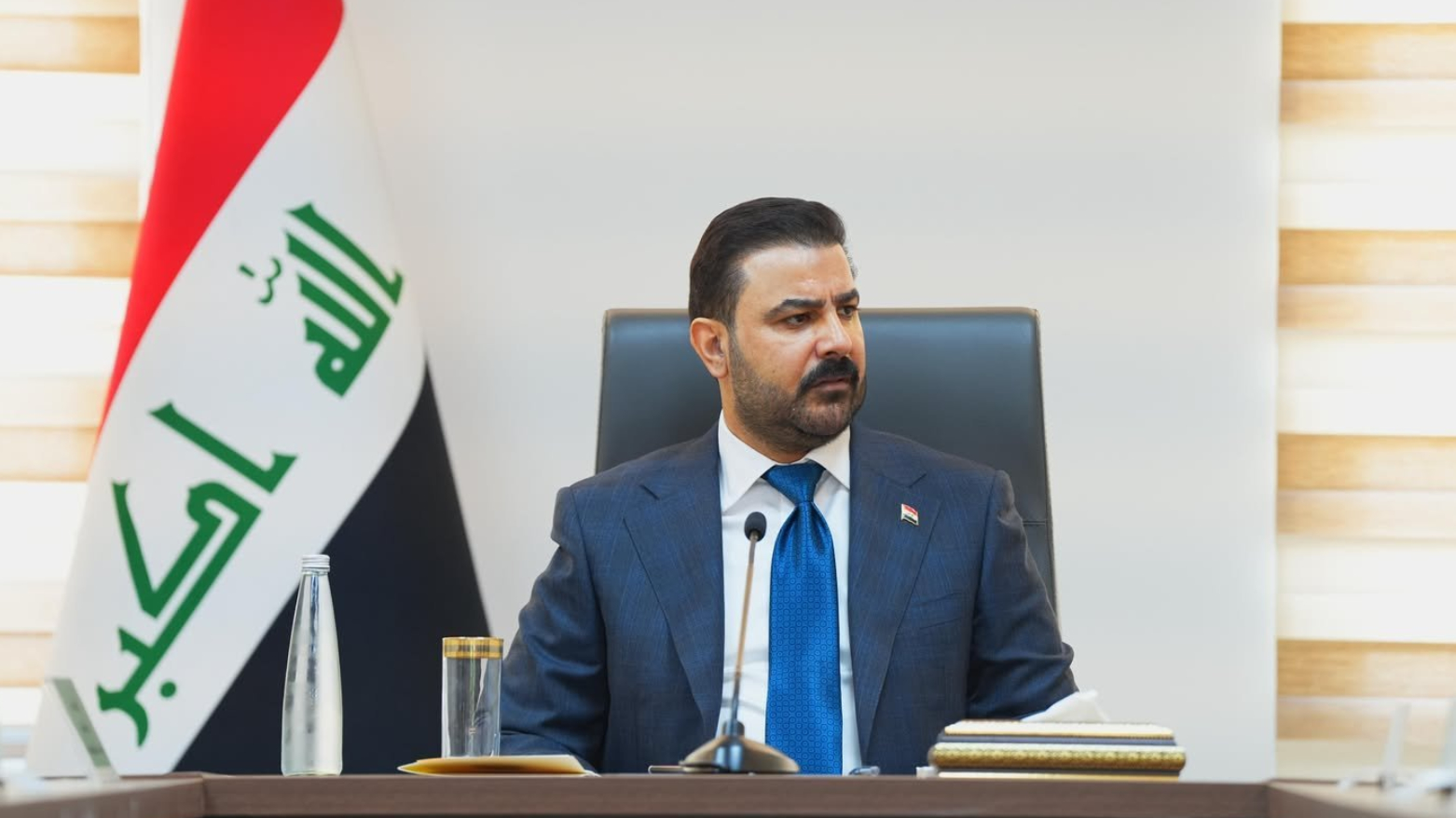
ERBIL (Kurdistan24) - Iraqi Prime Minister and Commander-in-Chief of the Armed Forces Ali Falih al-Zaidi has issued an official order to form a control headquarters in Jurf al-Sakhar, which will be tied in every respect to the command of the federal police forces.
Sabah Numan, spokesperson for the commander-in-chief, announced the order in a statement on Thursday, saying it was issued on Zaidi’s recommendation. Under it, Staff Lt. Gen. Ahmed Hatem Hamid is appointed commander of the control headquarters, with two deputies. Staff Maj. Gen. Hussein Ali Nsayif will serve as deputy for defense affairs, and Odeh Abdulaimah Mashab as deputy for Popular Mobilization Forces (PMF) affairs.
Four formations will be attached to the headquarters. They are one Iraqi army brigade, one federal police brigade, two PMF brigades, and one energy police battalion, which will provide protection for the oil pipelines in the area. The order places the headquarters’ sector within the administrative boundaries of Jurf al-Sakhar.
The headquarters will open at 6 a.m. on Nov. 20, according to the statement, and will exercise command and control over all security units under its orders. It will also coordinate at the highest level with the Babil Police Command and the Karbala, Anbar, and Baghdad Operations Commands.
Kataib Hezbollah rejects withdrawal and disarmament
The announcement came as a senior leader of Kataib Hezbollah (KH) said the group would neither leave Jurf al-Sakhar nor surrender its weapons. Abu Talib al-Saeedi told Kurdistan24 correspondent Dilan Barzan on Thursday that negotiations over the standoff were continuing and that he expected a solution within hours.
He said it would come through religious authorities, tribal leaders, and senior political figures, rather than through Zaidi.
“We are ready for dialogue, and high-level negotiations are continuing,” Saeedi said. “We bring good news to the Iraqi people that within the next few hours the issue will be resolved.”
He said the resolution would come through “the supreme religious authority, tribal sheikhs, the country’s leaders and the wise leaders of the Coordination Framework.” He gave no details of a finalized agreement or the terms under discussion.
Saeedi also accused Zaidi of seeking a confrontation between KH fighters and Iraqi security forces, without offering evidence.
“What Prime Minister Zaidi was betting on, that a confrontation would occur between us and the security forces, was fantasy and meaningless talk,” he said. “Such a thing will never happen.”
On the pressure for armed factions to hand over their weapons, he said the group had earlier signed a document on the issue and asked the prime minister to make it public.
According to Saeedi, the matter was later postponed until 2027, but Tom Barrack had sought to speed up the process.
“We are now the last stronghold of the mujahideen in Iraq,” he said, describing KH as the only armed faction that had not yielded to what he characterized as pressure from the US, Israel, and several Gulf countries. He restated the group’s position: “The sacred weapons will remain in our hands.”
The interview came on the same day KH issued a statement saying its secretary-general, Abu Hussein al-Hamidawi, had met Esmail Qaani, commander of the Quds Force of Iran’s Islamic Revolutionary Guard Corps (IRGC), together with Hadi al-Amiri and Falih al-Fayyadh, to discuss Jurf al-Sakhar.
The group described the outcome as “positive” but did not say whether the participants had agreed on a withdrawal, a security handover, or another arrangement.
Earlier reporting had cited anonymous sources within the Coordination Framework who said Zaidi and Qaani had reached an understanding for KH to leave the area in exchange for the entry of a joint government and PMF force. That understanding has not been officially confirmed.
Saeedi also challenged the investigation that helped bring the dispute to a head. He said a commission working under the supervision of Amiri, Fayyadh, and Abu Fadak had inspected Jurf al-Sakhar, but he accused Zaidi of falsifying its findings.
“Jurf is right in front of you; go ahead and search the entire area,” he said. The allegation has not been independently substantiated.
The Iraqi government’s account differs. Iraqi authorities have reported discovering tampering with branches of the strategic Basra-Haditha oil pipeline and an illegal refinery in the area.
After the investigation, Zaidi dismissed nine security and oil-sector officials on Nov. 14. KH has denied involvement in oil smuggling and has previously said its fuel-processing facilities were set up to produce diesel for vehicles and electricity generators.