KRG Health Minister Unveils Digital Healthcare Plan for 7 Million Residents
KRG Health Minister Saman Barzanji outlines a unified digital health system for nearly seven million residents at the Kurdistan Health Summit in Zakho.
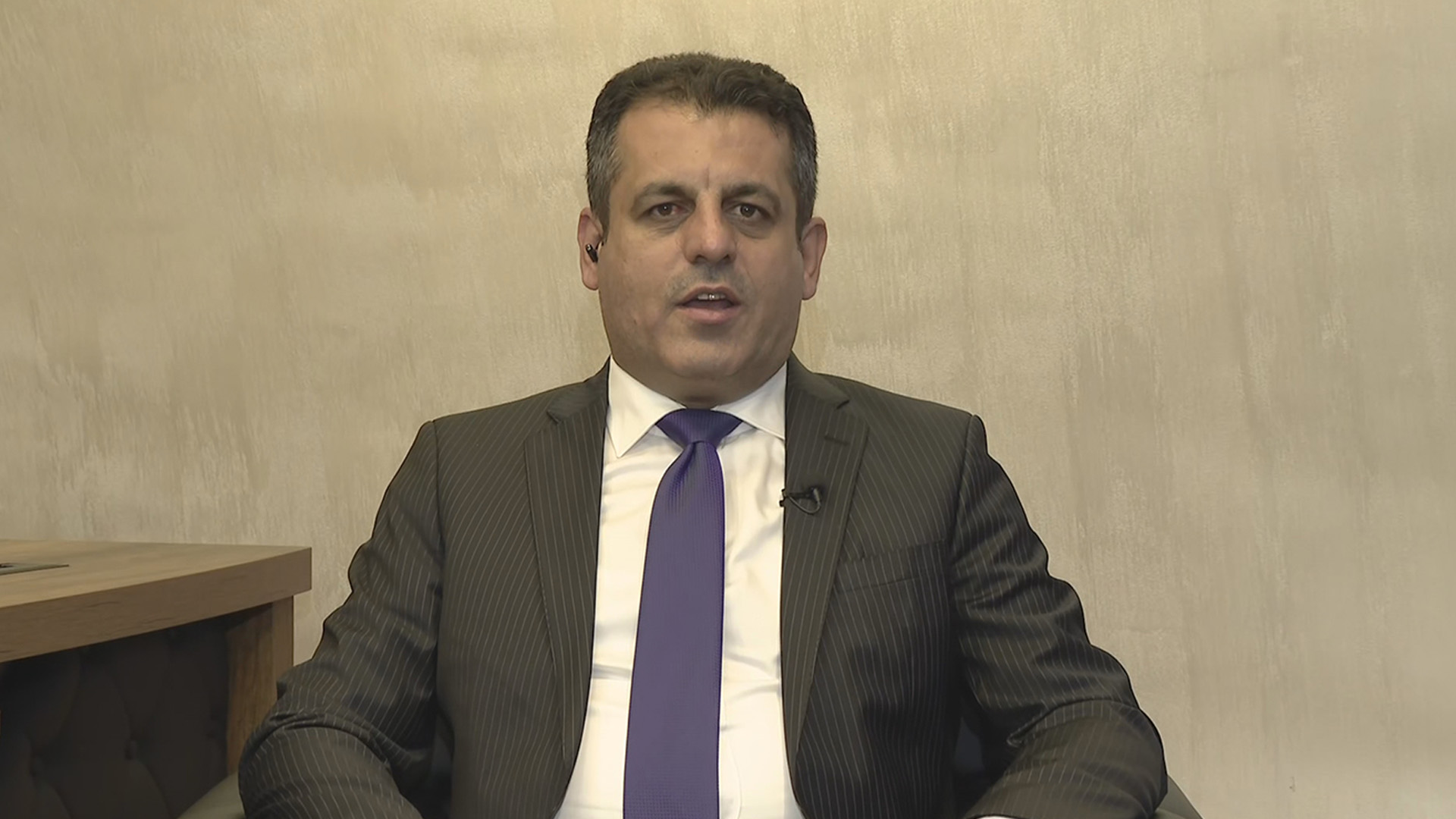
ERBIL (Kurdistan24) - The Kurdistan Regional Government (KRG) has completed nearly two years of planning for a unified electronic health-record system intended to connect approximately seven million residents with hospitals, clinics, pharmacies and other healthcare providers, Health Minister Dr. Saman Barzanji said at the sixth Kurdistan Health Summit in Zakho.
The project has received Council of Ministers approval and reached its final financial stage, but its rollout depends on securing a substantial budget, the minister told a panel examining primary healthcare and health-system reform.
He described the proposed platform as a foundation for broader health insurance and a way to address longstanding gaps in preventive care.
The announcement was among the central policy discussions at the three-day summit, held from Nov. 19 to 21, 2026, with support from the KRG, its Health Ministry, the Zakho Independent Administration and Iraq's federal Health Ministry.
Kurdistan24 is the event's media partner. The gathering brings together 53 speakers across 12 panels to examine how healthcare can reach more people before illness becomes severe.
Digitalization of Healthcare
Barzanji said design work, consultations and a roadmap had been completed in cooperation with the KRG's information technology department. The outstanding challenge is financial: connecting public and private hospitals, laboratories, radiology services, clinics and pharmacies would require considerable investment.
He cautioned against treating the proposal as an entirely new beginning. During the COVID-19 pandemic, electronic records were introduced for some services, including consultations and vaccination.
UNICEF subsequently helped establish a database covering births and deaths, while the World Health Organization (WHO) supported a District Health Information Software (DHIS) platform, he said. Other digital initiatives have operated through health institutions and cancer-related programs.
Those systems already demonstrate how electronic records can support individual care. Barzanji said the registration of newborns helps health workers follow children from their earliest months and avoid missing routine BCG vaccination, which protects against tuberculosis.
But separate programs are not the same as one connected patient record. The proposed platform would bring information from multiple providers into a shared system, giving healthcare services a more consistent way to identify patients and track their needs. Its implementation date has not been announced.
Barzanji linked the project directly to insurance reform, arguing that dependable patient records would be essential to expanding coverage. The government's broader agenda includes health-insurance arrangements for Peshmerga personnel, with expansion planned beyond that group.
'Prevention'
The minister devoted much of his remarks to the difference between offering preventive services and ensuring that people actually receive them.
Primary healthcare centers already run programs for infants, children, pregnant women and older residents, he said. The persistent weakness is the connection between those programs and the people they are designed to serve.
A pregnant woman, for example, should attend scheduled checks throughout her nine months of pregnancy, using a health file and follow-up booklet. Children similarly need timely vaccinations, nutritional assessments, weighing and growth monitoring. A program's existence offers little protection when appointments and screening opportunities are missed.
Barzanji called for stronger public education but argued that awareness campaigns alone cannot guarantee reliable follow-up.
He proposed linking essential preventive care to other government procedures, including birth registration, identity documents and passports, so families have additional reasons to complete required health checks.
He cited the COVID-19 period, when vaccination certificates and PCR tests were tied to travel and other activities, as an example of how different institutions can reinforce health requirements. The newborn-registration measures he discussed were proposals for further integration, not an announcement that every document would immediately depend on medical screening.
Existing infant screening, he said, includes hearing checks, developmental dysplasia of the hip (DDH) and congenital conditions. Officials are also considering additional screening for metabolic disorders during early infancy.
The minister also questioned the reliance on short campaigns. Breast screening and mammography, he argued, cannot be confined to a single awareness month when the underlying service must be available throughout the year. Vaccination drives can remind families of existing programs, but they cannot replace age-based schedules and routine appointments.
"Campaigns are temporary," he said, explaining that their purpose is to reinforce continuous services rather than substitute for them.
Staffing Shortages, Family Medicine and Food Safety
Another constraint is the health workforce. Barzanji agreed with concerns raised by Dr. Jamela Al-Raiby that preventive health centers have not received the necessary staffing since 2013, particularly after financial difficulties weakened the system.
He said attracting doctors and other professionals into prevention and family medicine requires better incentives. Without them, clinicians may favor treating illness or pursuing private clinical work rather than monitoring healthy populations and helping prevent disease.
He also questioned whether the number of health centers has kept pace with new neighborhoods and housing developments. Zakho, the host city, offered an example of how residential expansion can increase demand without a corresponding increase in nearby facilities.
Education inside clinics was another priority.
Barzanji advocated direct conversations with patients before they leave a facility, along with group education, so health advice reaches people during ordinary visits rather than only through occasional public campaigns.
On regulation, the minister pointed to an existing electronic health-permit system covering approximately 4,000 to 5,000 establishments. Food producers, restaurants, venues and other premises, he said, require inspection and authorization, making environmental and food safety part of everyday preventive healthcare.
The broader goal, he concluded, is to place primary care and public health at the center of reform rather than leaving prevention subordinate to treatment.
Spotlights
Kurdistan24 correspondent Mehvan Majid reported from Zakho that the summit's discussions include diabetes, hypertension and heart disease, alongside efforts to strengthen neighborhood and village health centers. Organizers expect a practical healthcare initiative for Zakho to follow the discussions.
Dr. Nawfal Rasheed Hussein, dean of the College of Medicine at the University of Zakho, said the gathering must identify illnesses affecting society and consider how to respond, with stronger primary healthcare as its principal focus.
Assistant Professor Dr. Abdulfattah Hawrami described the summit as a meeting place for government, academia, nongovernmental organizations and international bodies. "Health is far broader than medicine," he said, emphasizing the need for a shared public-health strategy.
WHO Representative in Iraq Dr. Jamela Al-Raiby similarly stressed screening for conditions such as diabetes, high blood pressure and cancer, and the importance of turning summit discussions into action. She pointed to the growing burden of serious diseases in Zakho, the Kurdistan Region, Iraq and internationally.
Taking Healthcare Discussions Beyond the Conference Hall
In an interview with Kurdistan24's Sovan Ferman, public-health specialist and summit board member Goshan Karadaghi said scientific discussions would mean little if their findings failed to reach the wider population.
Karadaghi, dean of students at the American University of Iraq, Sulaimani (AUIS), argued that the media and education sector must help translate technical recommendations into information residents can use. Public health, she said, depends partly on individuals understanding their responsibilities to themselves and their communities.
She cited Project 19, launched after an earlier summit in Halabja and continuing for more than a year, as an example of a conference producing sustained primary-healthcare activity.
For Zakho, she said, the intention is to develop a similar practical project focusing on chronic conditions, including diabetes, hypertension and heart disease.
Karadaghi explained that the summit changes host locations because its ambitions extend across Kurdistan, from Zakho to Khanaqin. She praised Zakho's local administration, particularly its work concerning the environment, and said the city could offer lessons applicable elsewhere.
International participation also matters, she added, not simply to seek outside assistance but to show visiting specialists what Kurdistan's health institutions have achieved and invite partnerships that build on that work.
The summit's wider program includes healthcare governance, equitable access, sustainable financing, workforce planning, digital transformation and public engagement. Its final-day discussions are also scheduled to address pharmaceutical production, health communication and the use of data to prevent disease.
For Barzanji, the immediate priorities are clear: finance the unified records system, strengthen staffing and family medicine, make preventive services continuous, and improve coordination between health authorities and other government institutions. Whether these proposals become routine services will depend on the funding, staffing and administrative arrangements still to be completed.