Kurdish Sculptor Sohrab Transforms Ordinary Trees Into Street Art
In Eastern Kurdistan, 24-year-old sculptor Sohrab creates fleeting clay faces on tree trunks, turning city streets into places of art, memory and reflection.
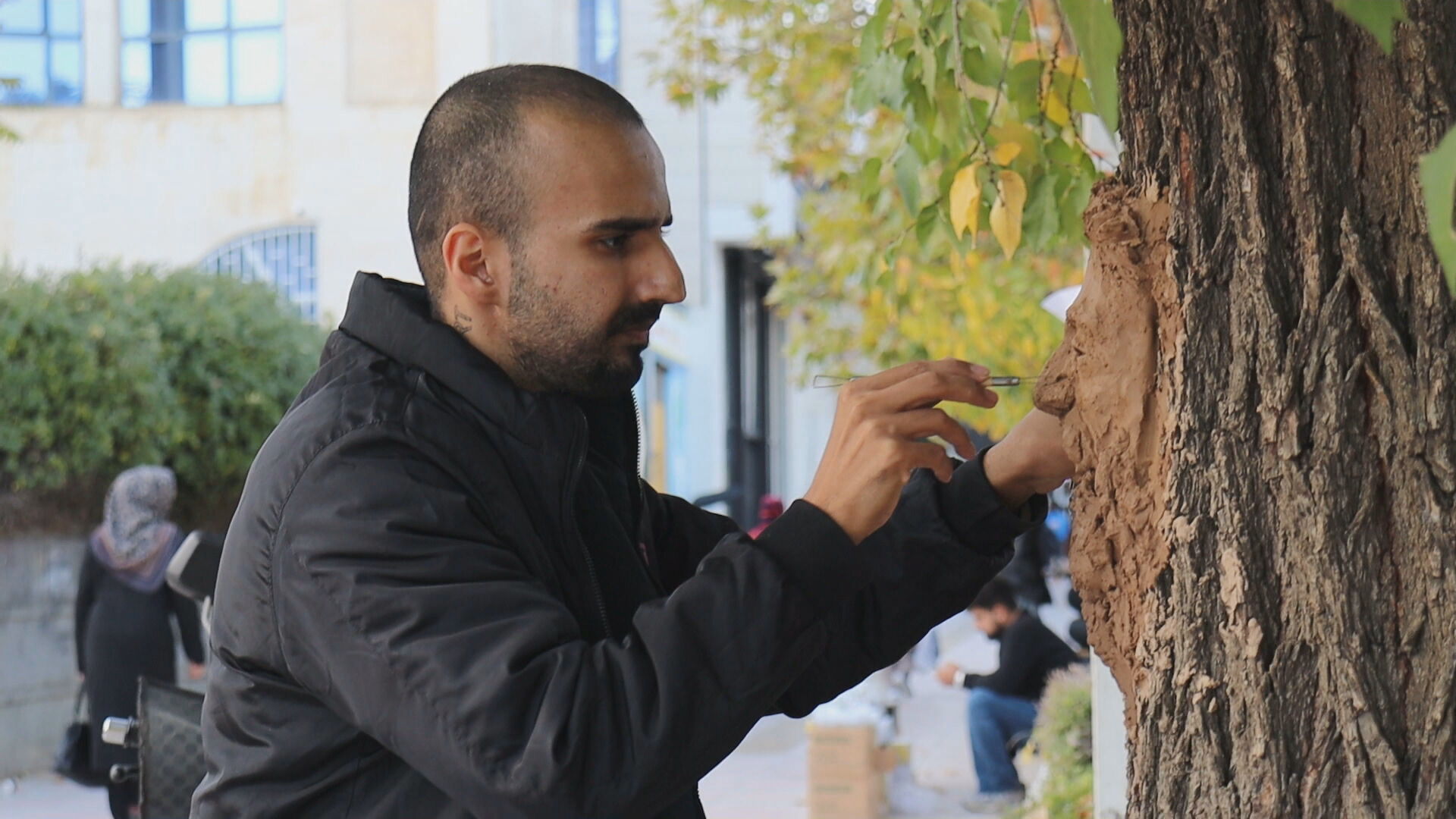
ERBIL (Kurdistan24) - On the streets of Eastern Kurdistan, trees have been acquiring faces. The portraits are the work of Sohrab, a 24-year-old Kurdish sculptor who uses clay to give trunks human features, inviting people passing by to look at something familiar in an unfamiliar way.
For roughly a year and a half, Sohrab has carried out the project in Kermanshah, Kamyaran and Sina, creating faces on 15 trees. Originally from Kamyaran and now living in Sina, he works without outside funding or institutional support. What began as a personal idea has become a recurring encounter between the artist, the city and its residents.

The question behind the work came during a period of loneliness: if objects that cannot speak had human personalities, how might they act toward people?
"Art should express something," Sohrab told Kurdistan24. He said he wanted to explore what it would mean for inanimate things to possess human identities, and that curiosity led him to begin shaping faces directly on tree trunks.
The project does not take place in a studio or exhibition hall. Sohrab selects a tree along a street and works there, using clay to form a face that becomes part of the scene for anyone walking past. His choice of public space means people encounter the work while going about their ordinary routines, often without expecting to find art there.

Most of the portraits are in Sina, he said. He identified Adab Intersection and Eqbal Square among the locations where he has worked, along with several trees in Awyer. Other pieces have appeared in Kermanshah and his hometown of Kamyaran.
Kurdistan24 journalist Kamil Bokani reported that the sculptures regularly attract curious onlookers. Some stop to watch, while others take photographs or record videos. A number approach Sohrab to ask about the project; some even help him finish a piece, adding their own contribution to its final appearance.

One woman who stopped to look said the sculpture made her think about the tree's age and personality. Rather than seeing only a face placed on bark, she interpreted the work as an attempt to reveal a character already associated with the tree.
She said she studies handicrafts at university and had previously encountered similar techniques in workshops, though those works had been made on walls rather than trees.
"But it's my first time on a tree," she said.

For Sohrab, the pleasure of creating the sculptures is enough to keep him returning to the streets. He is not receiving external support, and the works themselves are not made to last. Clay exposed to changing seasons can be washed away by rain or damaged by wind, leaving little trace of a face that might briefly have stopped passersby in their tracks.
The disappearance is not incidental to the story. As Bokani observed in his report, the short life of each portrait carries a reflection on human life itself: people, like the clay faces, do not remain forever, but memories of their presence can.
Sohrab continues to work despite knowing that the next spell of bad weather may erase what he has made. For the people who stop, watch or join him, the encounter may outlast the sculpture.


