Muthanna Province Has 36 Kurdish Teachers, Official Says
A Kurdish-language supervisor in Iraq's Muthanna province told Kurdistan24 that 36 teachers teach Kurdish and urged an exchange program with Kurdistan Region.
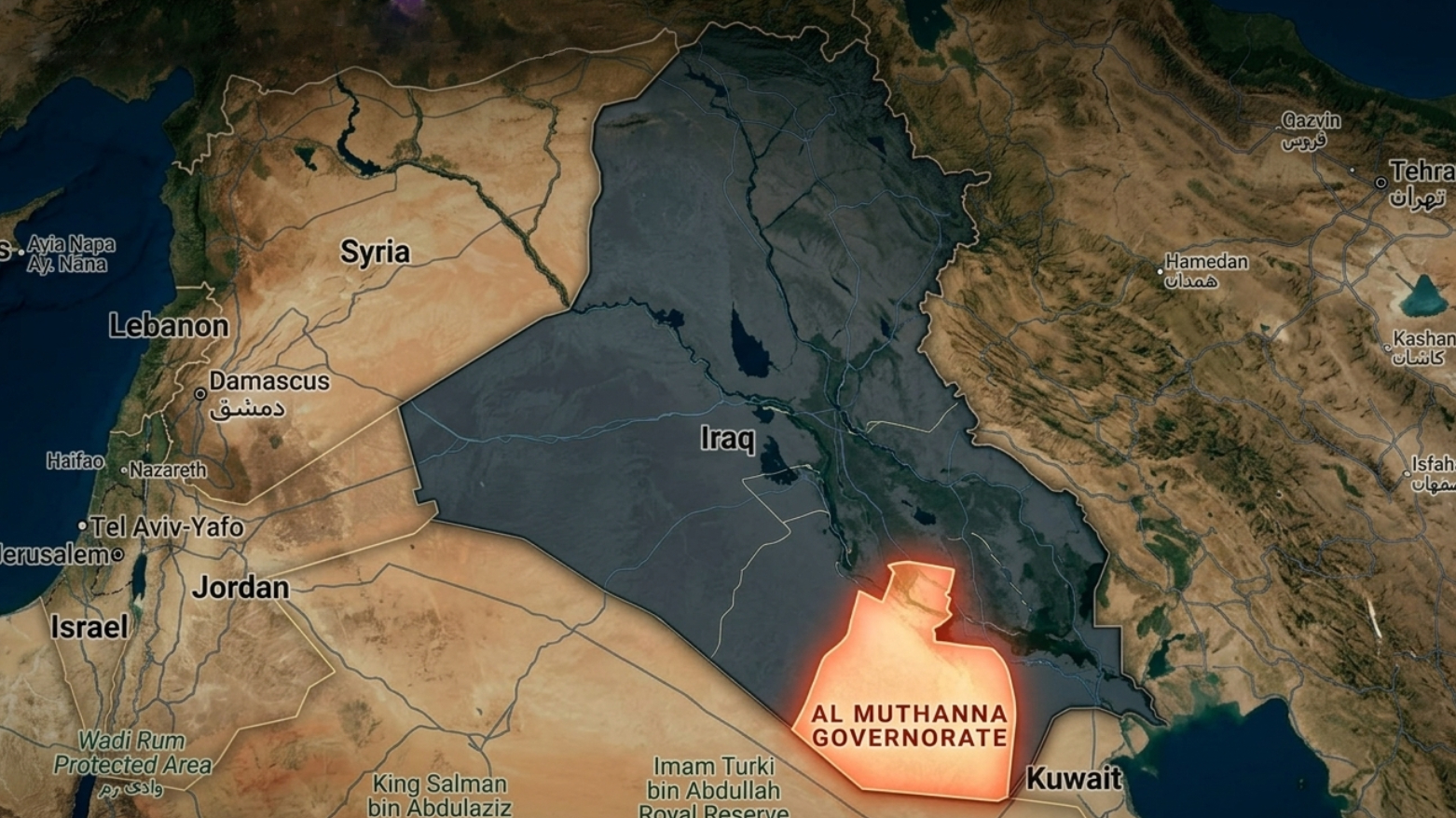
ERBIL (Kurdistan24) - In the southern Iraqi province of Muthanna, 36 teachers now carry Kurdish into classrooms, and the official overseeing them is asking for closer ties with educators in the Kurdistan Region. Mohammed Darwish, the province's special supervisor for Kurdish studies, told Kurdistan24 on Sunday that an exchange program with Kurdistan Region teachers would deepen their expertise and strengthen relations.
Darwish said Kurdish is taught in all Iraqi schools at the preparatory and secondary levels, as well as in fine arts institutes, teacher training institutes, and vocational preparatory schools.
He said the language received considerable attention after 2003, when the Iraqi constitution recognized Kurdish as an official language of the country.
Departments of Kurdish studies were then opened in all of Iraq's education directorates. Administratively, they are linked to the General Directorate of Kurdish Studies at the Ministry of Education, a connection he said gives the language a distinct status among other school subjects.
Darwish said the province once had only four specialist teachers and one other teacher of Kurdish. In 2009, the Kurdish studies department organized a training course for teachers in other specialties, such as Arabic and philosophy, who were later assigned to teach Kurdish.
In 2017, another group of teachers from different specialties joined Kurdish training courses and were distributed as volunteer lecturers across Samawah, the provincial center, and the districts of Rumaitha and Khidr.
In 2023, those teachers were officially appointed and tasked with teaching Kurdish throughout Muthanna.
On their distribution, Darwish said: "In Muthanna's provincial center, Samawah, 26 teachers teach Kurdish, covering most schools in the center. There are six teachers in the district of Rumaitha and four in the district of Khidr, who teach in most of the districts' central schools, in addition to teaching at fine arts institutes and vocational schools."
He explained that in recent years, the specialist supervision department, in cooperation with the Kurdish studies department at Muthanna's education directorate, has held training courses and workshops for people interested in teaching Kurdish. The aim, he said, was to raise students' scientific and cultural levels.
Darwish added: "With the cooperation of the Kurdish studies department and the support of the education director, we have organized several exhibitions and festivals to introduce Kurdish national culture and folklore to the educational community."
Darwish stressed that supervisory experience has shown both teachers and students have a strong passion and desire to learn Kurdish.
To further develop teachers' expertise, he called for an exchange-of-experience program with teachers from the Kurdistan Region, a step he said would strengthen relations.
The enthusiasm he described is visible in individual classrooms. As Kurdistan24 reported on Nov. 20, Isra Jabar Zagam, who has taught Kurdish in the Rumaitha district for the past four years, said her methods have generated considerable enthusiasm among 10th- and 11th-grade students in both the scientific and literary streams.
She uses Kurdish folk materials, cultural displays, and theatrical performances to make lessons more engaging.
Zagam holds a bachelor's degree in Arabic language and changed her specialization to Kurdish four years ago, driven by her love of the language and her interest in Kurdish literature, history, and cultural heritage.
With 36 teachers already in place from Samawah to Rumaitha and Khidr, Darwish's request for an exchange with Kurdistan Region educators points to the next step he wants for Kurdish teaching in Muthanna: a stronger link with teachers across the Kurdistan Region.