Iraq's parliament has passed only three laws this term.
MPs and analysts say bloc disputes over posts and committees and a system built on compromise keep key bills, including the budget, stuck, while earlier terms passed 216, 164, 91 and 69 laws
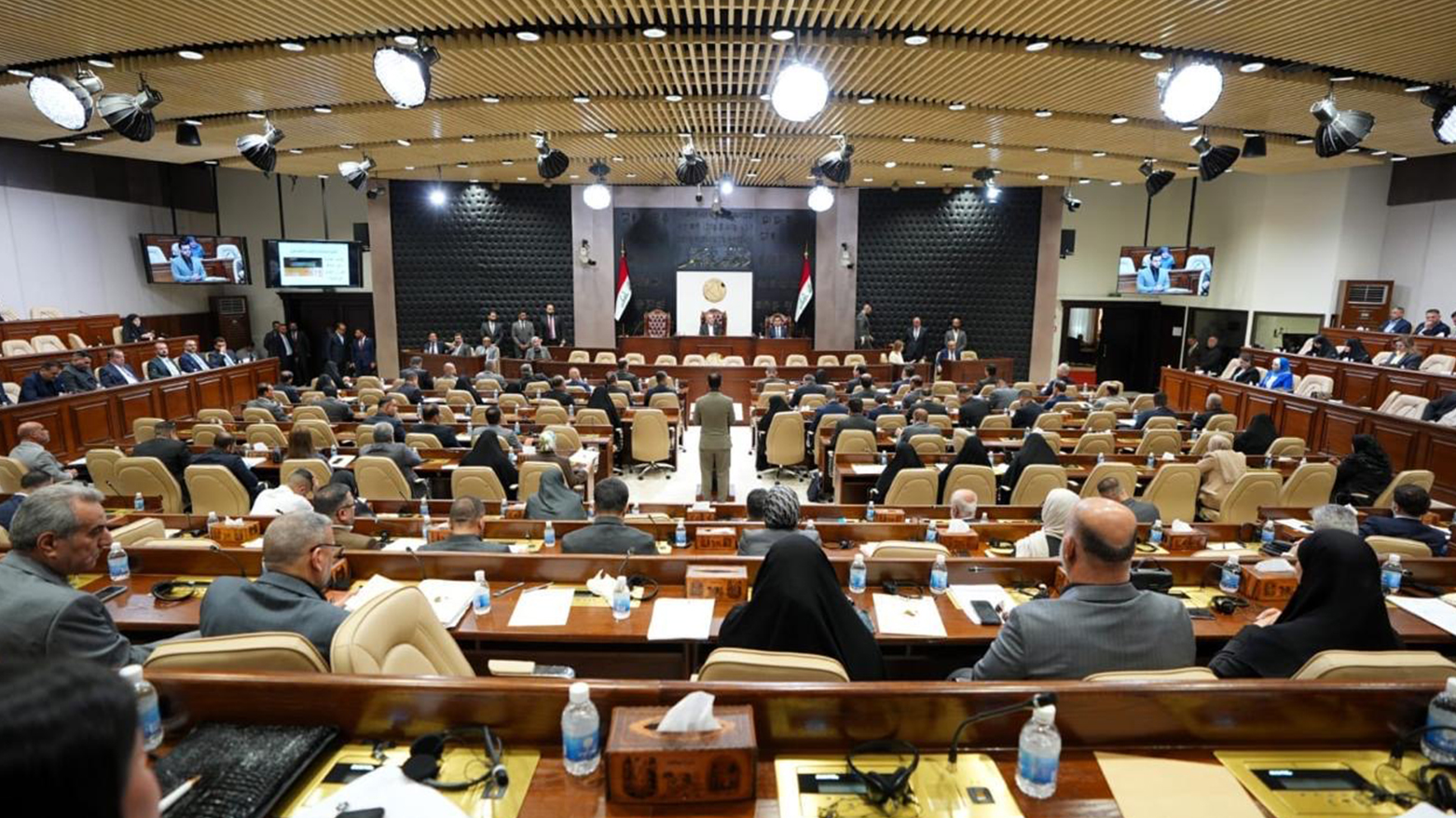
ERBIL (Kurdistan 24) - Members of Iraq's parliament say political disputes, party quota sharing and clashes of interest among blocs are the main reasons for the paralysis in passing laws. Continuing disagreements over how parliament is run and how committees are formed, together with the lack of consensus on contested draft laws, have lengthened the life of stalled files and limited parliament's legislative and oversight roles, they said.
According to figures cited in the report, there has been a steady decline in legislation across Iraq's parliamentary terms. Parliament passed 216 laws in the term from 2010 to 2014, which fell to 164 in 2014 to 2018, to 91 in the fourth term that ended early in 2021, and to just 69 in the fifth term, which ended in 2025.
In the current sixth term, from its start in late December 2025 to November 21, 2026, parliament passed only three laws, while about 30 laws were passed in the first year of the 2014 to 2018 term and only two in the first year of the 2022 to 2025 term. The Iraqi Parliamentary Observatory's data, reported by The New Arab, also show that only three of 69 proposed laws have been approved.
Ahmed Dagher, an Iraqi MP, said the delay in passing laws is linked to political disputes and the lack of consensus, to delays in putting laws ready for a vote on the agenda, and to disputes over forming parliamentary committees.
He said that extending the legislative season to await the draft general budget has had no result and that the budget has still not reached parliament, which paralyzed the institution further.
Dagher said the parliament's presidency and the political blocs are responsible for resolving the situation, and warned of the effects on citizens, particularly the freezing of laws on rights, services, economic opportunities and livelihood files, which erodes public trust in the institution.
Political observer Mujashe Tamimi told Iraqi media that the problem is deeper than a dispute over one law, and is tied to the nature of a political system built on consensus and quota sharing.
He said parliament's work has become hostage to the agreements of the forces in the State Administration Coalition, which includes the Shia, Sunni and Kurdish forces that make up the government. "Parliament has come under the influence of the coalition's compromises and cannot carry out its tasks independently," Tamimi said, noting that since the start of the previous term political understandings have become a precondition for legislation, accountability and oversight. He said a parliamentary system needs a governing majority and an active opposition, but that consensus-seeking ties the passing of laws to agreement among more than 20 parties and political groups in the coalition, and he cited the stalled budget, oil and gas, and Federal Supreme Court laws as examples, saying that continuing this course empties parliament of a major part of its role, and that overcoming the crisis requires abandoning consensus as a condition for legislation and oversight.
The effects reach laws that have had first and second readings but have not completed the procedures for approval, some of them directly tied to citizens' rights and the interests of components. Khalid Sido, an MP from the Ezidi component, said that rivalry and political interests among blocs over the most posts, committee chairs and ministries have harmed the course of legislative work. He said that in this term first and second readings have been held on many draft laws, including on cybercrime, international crimes, traffic, and service and retirement, but they do not mean final approval, and that he hopes they will be voted on in the next season.
Sido called the cybercrime law one of the important delayed laws, saying its provisions deal with accountability for threats and hate speech, and said passing the international crimes law is necessary to hold accountable the suspects in prisons on terrorism charges.
Parliament held a first reading of the international crimes bill and a second reading of the information technology crimes bill on September 21, 2026, and the final voting procedures are not complete. Sido said the stalled budget has affected compensation and the rights of the Ezidi component and that the disputes have paralyzed the work of state institutions. He denied that parliament is on official legislative recess, but said that because it is waiting for the budget procedures from the Council of Ministers, it is like being on recess, and he predicted that meetings would resume in one to one and a half months with the start of the new season.
Mukhtar Musawi, another Iraqi MP, named the weakness of parliament's presidency, party disputes over distributing committees and the government's lower regard for the legislature as the main reasons. He said disputes among parties over committee chairs have been reflected directly in sessions, and that blocs' influence in parliament means members vote under party pressure and not their conviction.
Musawi criticized Iraq's parliamentary system for weakening the legislature's standing, and called for considering a presidential system, drawing on other countries' experience, in which the president is elected directly by the people.