ISW: Kataib Hezbollah Retains Positions in Jurf al-Sakhar Despite Deal With Baghdad
The Washington-based institute says the Iraqi government has yet to restore control over the strategic Babil town, as reports indicate most of the Iran-backed militia's brigades remain in Jurf al-Sakhar
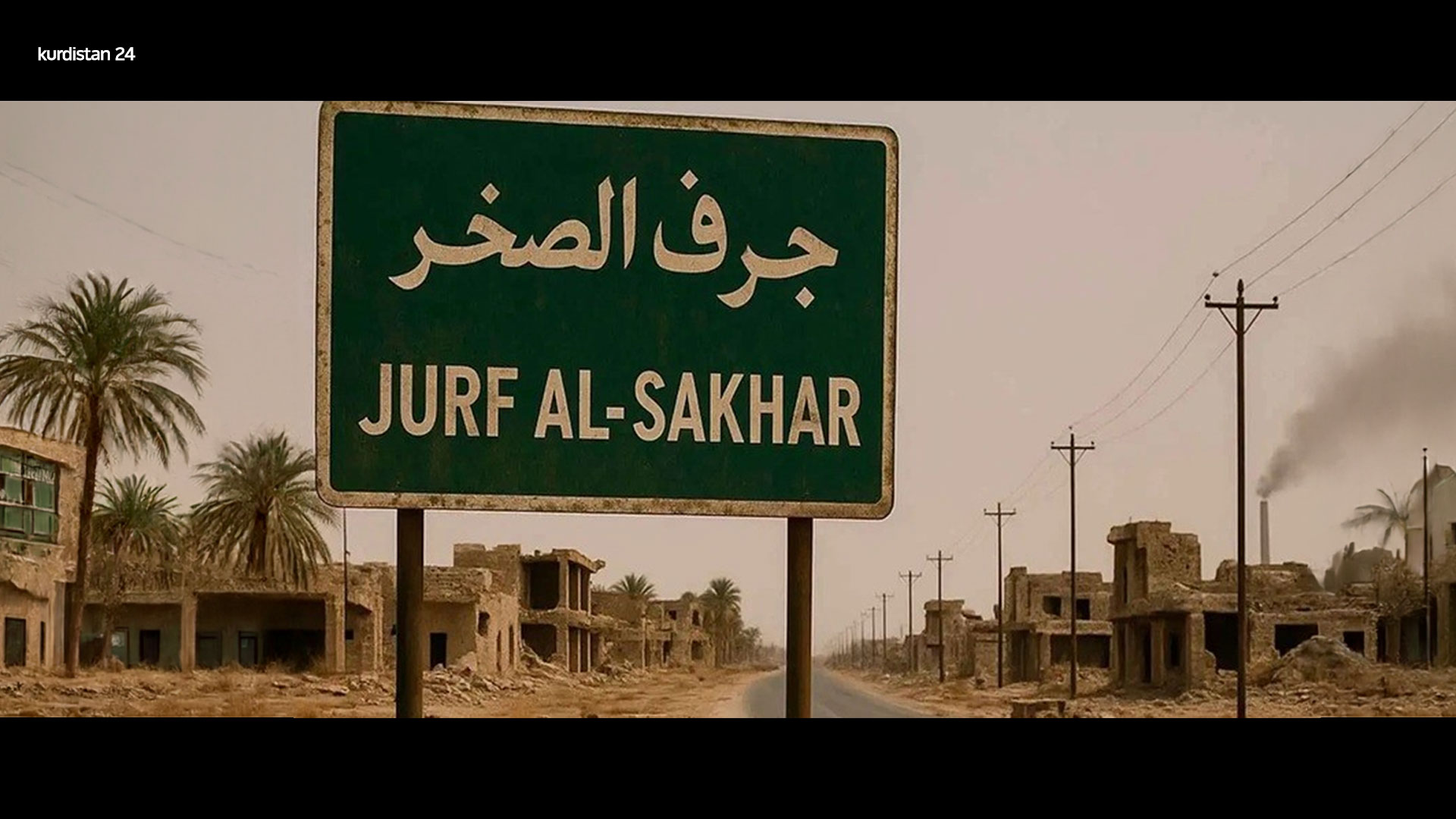
ERBIL (Kurdistan24) — Iran-backed Kataib Hezbollah continues to maintain a military presence in Jurf al-Sakhar, in Iraq's Babil province, despite an agreement with the Iraqi government that allowed federal security forces to enter the strategic town, according to a November 23 assessment by the Institute for the Study of War (ISW).
In its latest Iran Update, the Washington-based institute assessed that Baghdad had not restored government control over Jurf al-Sakhar, also known as (Jurf al-Nasir) following an agreement brokered by Iran's Islamic Revolutionary Guard Corps (IRGC), which enabled Iraqi security forces to deploy in parts of the area.
The assessment cited informed sources who told Iraqi media on November 22 that approximately one-third of Kataib Hezbollah's brigades had withdrawn, indicating that most of the group's brigades remained in the town.
ISW also cited Iraqi media reports, based on unspecified field information, saying that Kataib Hezbollah fighters continued to control Jurf al-Sakhar's main entrance and inspect and monitor Iraqi Federal Police and Army units deployed there.
A Popular Mobilization Forces (PMF) commander separately confirmed the group's continued military presence in a video statement shared with Kurdistan24, indicating that the number of PMF brigades deployed in the area had increased.
"This is the situation you can see. We are here in Jurf al-Sakhar. What is happening is the handover of positions to our young men and brothers to strengthen their positions and those of the Popular Mobilization Forces. Previously, there were three PMF brigades here; now there are five," the commander told Kurdistan24.
The ISW assessment also highlighted the absence of a specified deadline for Kataib Hezbollah's complete withdrawal.
An informed source cited by Iraqi media said the remaining units would leave according to an unspecified timetable, while Iraqi Security Media Cell head Saad Maan reportedly estimated that the full security handover could take several weeks.
The findings raise questions about the extent of the government's control over the area, despite the deployment of federal forces and Baghdad's stated intention to restore state authority.
The deployment followed negotiations between Baghdad and Kataib Hezbollah, reportedly facilitated by IRGC Quds Force Commander Esmail Qaani, and was intended to avoid a direct confrontation between the government and the powerful militia.
Iraqi security forces, including Army, Federal Police and PMF units, entered the town under the arrangement. However, the continued presence of Kataib Hezbollah fighters suggests that the deployment has not yet translated into a complete transfer of security control to federal authorities.
Jurf al-Sakhar, located approximately 60 kilometers southwest of Baghdad, has remained under Kataib Hezbollah's control since the group and allied forces recaptured it from the Islamic State (ISIS) in 2014.
The group subsequently renamed the town Jurf al-Nasr and prevented the federal government from re-establishing full access and authority there for more than a decade.
The town has also featured in recent allegations of oil smuggling, prompting a government investigation and adding to tensions between Baghdad and armed factions operating in the area.
The Jurf al-Sakhar arrangement therefore represents a test of whether the Iraqi government can translate negotiated agreements and the deployment of state security forces into effective control over territory long dominated by powerful armed factions.