Kurdish Voices Across Borders Call for Unity, Reject Baghdad Measures
Sulaimani residents, veteran Peshmerga and Kurdish activists from Western, Northern and Eastern Kurdistan reject Baghdad's measures, demanding unity and constitutional rights for Kurdistan Region.
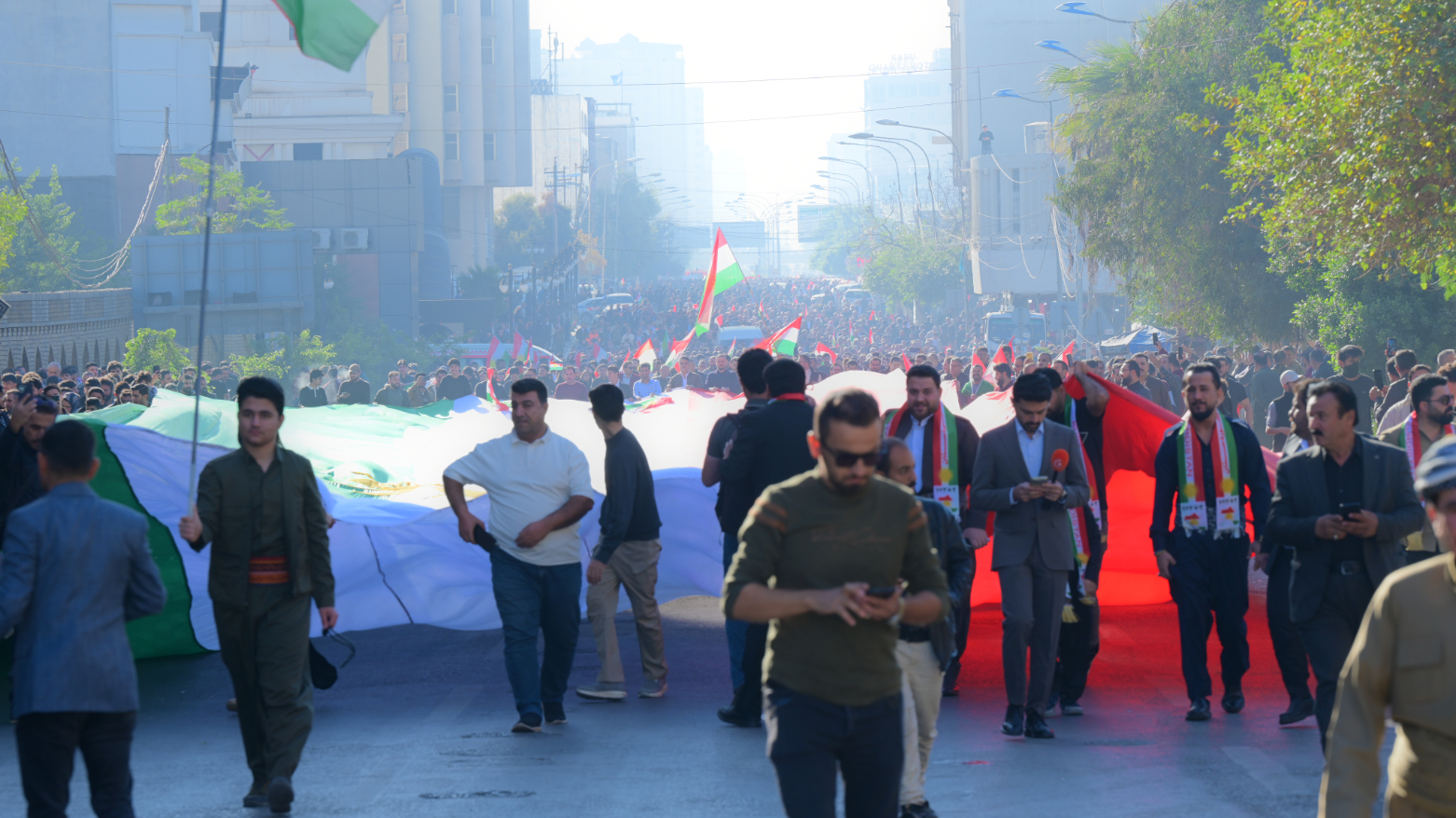
ERBIL (Kurdistan24) - From the streets of Sulaimani to Kurdish communities in Northern Kurdistan (southeastern Türkiye), Western Kurdistan (northeastern Syria), and Eastern Kurdistan (northwest of Iran) residents, veteran Peshmerga fighters and political activists have voiced opposition to Baghdad's recent decisions concerning the Kurdistan Region, recalling decades of persecution while calling for Kurdish unity, constitutional rights and dialogue.
The reactions gathered by Kurdistan24 followed federal measures announced on Nov. 24 concerning border crossings, oilfields and federal authority, and a subsequent Federal Supreme Court ruling.
The Kurdistan Regional Government (KRG) has rejected the measures as unconstitutional, warning that they threaten the Region's powers under Iraq's federal system.
In Sulaimani, one resident described the Kurdistan Region not simply as an administrative entity but as the outcome of generations of suffering and resistance.
"This Region was built with blood, tears, Anfal, chemical attacks, and all those uprisings," the resident told Kurdistan24. "It cannot easily be surrendered to Baghdad; this Region is every Kurd's hope."
Sulaimani Voices
Another resident accused Baghdad of approaching relations with Erbil through a centralized model of government rather than respecting the federal arrangement established under Iraq's 2005 Constitution.
"They are in favor of centralism. They deal with the Regional Government based on centralism," the resident said, arguing that the KRG should insist on its existing rights rather than accept any reduction in its authority.
A third interviewee questioned why federal authorities had focused on certain constitutional provisions while Article 140, concerning disputed territories, remained unimplemented.
"Why have Baghdad and the Federal Court stayed silent on it, yet on other things they speak up and demand their implementation?" the resident asked.
The interviews also revealed concerns extending beyond constitutional powers.
Bahar Munzir, a prominent women's rights and civil society activist, focused on the consequences of political confrontation for ordinary people, particularly those already struggling with poverty and hardship.
"I am for peace in any country," she said, warning that renewed instability affects people who are already facing difficult living conditions.
"We must live in peace," Munzir added, questioning why political disputes should disrupt the relative security that families have managed to maintain despite economic hardship.
Her appeal reflected a concern repeatedly expressed by Kurdish political figures: that disputes over constitutional authority should not come at the expense of public security and everyday life.
Veterans' Memories
For veteran Peshmerga fighters, however, the latest dispute has revived memories of earlier confrontations with successive Iraqi governments.
A retired Peshmerga who said he served with the Communist Party for more than 20 years and was wounded twice rejected any suggestion that the Kurdistan Region's status could be undone through a government announcement.
"Kurdistan is a constitutional entity. Not by decree was it created; with martyrs' blood and the struggle of Kurdistan's people, this entity was built," he said.
Other veterans invoked the Anfal campaign, chemical attacks and the destruction of Kurdish villages to explain their opposition to Baghdad's decisions.
One veteran pointed to scars from a bullet wound and declared that he would continue defending Kurdistan and its people. Another recalled successive Iraqi leaders, including Abd al-Karim Qasim, Ahmed Hassan al-Bakr and Saddam Hussein, arguing that previous attempts to suppress Kurdish political aspirations had failed.
Their remarks reflected convictions shaped by decades of armed struggle, displacement and personal sacrifice. Some spoke in uncompromising terms about defending the Region, while others called for public demonstrations against the federal measures.
Beyond Borders
Expressions of solidarity have also emerged beyond the Kurdistan Region, with Kurdish political activists and public figures in Northern Kurdistan, southeastern Türkiye, urging political parties to overcome their differences.
One activist called for unity among the Kurdistan Region's political camps, arguing that a common political position would strengthen the Region's ability to protect its achievements.
Another said Kurds across the north, south, west, east and diaspora should act "like one body, like one mind."
From Western Kurdistan, northeastern Syria, political figures likewise emphasized the Kurdistan Region's constitutional status within federal Iraq, while placing particular importance on negotiations.
"All disputes must be resolved this way, not through threats, not through unilateral decisions," one female political representative said, stressing that the Region's status had emerged from many years of struggle.
Another political figure warned against the return of a centralized Iraqi state and urged Kurdish parties to speak with one voice.
A further speaker criticized Baghdad's measures concerning oil and border crossings but emphasized that military escalation would benefit neither side and that constitutional dialogue remained necessary.
In Kobani on Thursday, residents marched in solidarity with the Kurdistan Region, chanting "Long Live Kurdish Unity" before gathering at Peace Square.
Gilo Isa, speaking on behalf of residents, called on Baghdad to respect the Kurdistan Region's federal status and settle disagreements through negotiations rather than threats.
These expressions of solidarity coincided with a major peaceful demonstration near Erbil Citadel, where tens of thousands carried Kurdistan flags and demanded protection of the Region's constitutional rights.
Participants included students, teachers, workers, retirees and other citizens, reflecting concerns extending across different sections of society.
Additionally, there has been calls for demonstration in Sine (Sanandaj) in Eastern Kurdistan, northwest of Iran, in a show of solidarity with the Kurdistan Region, under the slogan: “The South is not alone; Sine stands in support. Our unity knows no borders.”
Meanwhile, a national dialogue involving Iraq's four presidencies and other relevant parties is scheduled for Dec. 1, offering a political avenue for addressing the dispute.
For many of those interviewed, the issue remains both personal and constitutional: whether the sacrifices of earlier generations will continue to be reflected in the Kurdistan Region's political status, and whether its dispute with Baghdad can be settled without further instability.