Iraqi Government Affirms Kurdistan Region's Constitutional Status
Iraqi government spokesman Haider al-Aboudi says respecting the Kurdistan Region's constitutional status is a legal commitment ahead of Dec. 1 talks.
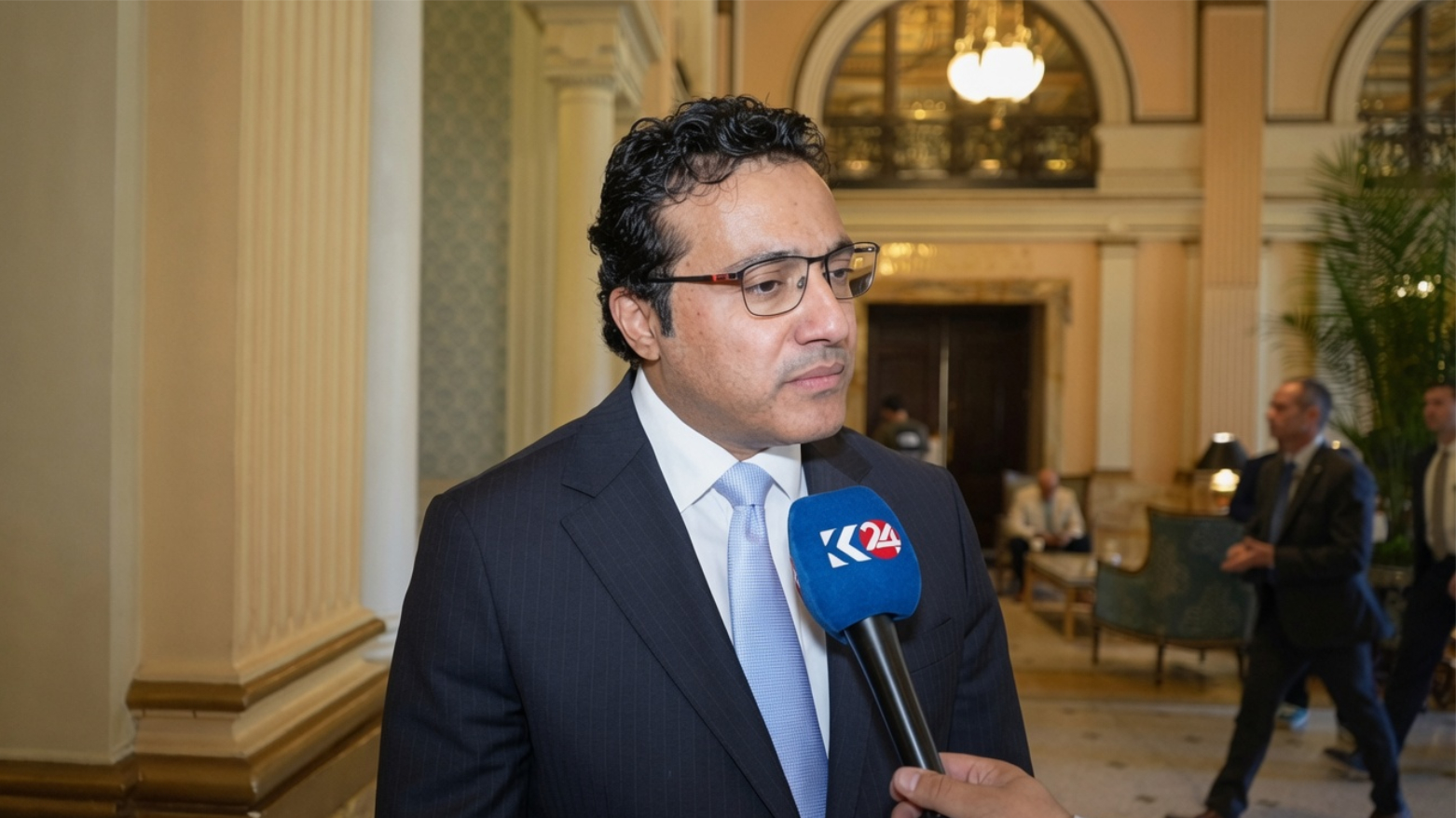
ERBIL (Kurdistan24) - Iraqi government spokesman Haider al-Aboudi said on Friday that respecting the constitutional status of the Kurdistan Region within the federal system is a fixed legal commitment, as Baghdad looks ahead to a national dialogue scheduled for Dec. 1.
In a statement, Aboudi said the government, acting in a national spirit grounded in the Constitution, is awaiting the talks. He also stressed that Kurds are an original part of Iraq's national fabric and that all Iraqis are equal in rights and duties.
The remarks come as Baghdad and Erbil contest the scope of federal authority and the constitutional powers of the Kurdistan Region.
The disagreements intensified after federal directives issued on Tuesday concerning control over border crossings and oilfields in the Region, as well as the authorization of oil exports through the federal Ministry of Oil.
Baghdad's position has been reinforced by a Federal Supreme Court ruling on federal authority over border security, customs, and oil operations, while the Kurdistan Regional Government (KRG) has rejected both the measures and the court's interpretation, arguing that they infringe on the Region's constitutional standing.
The dialogue Aboudi referred to grew out of a meeting of Iraq's four presidencies on Nov. 25, which approved a proposal by Supreme Judicial Council President Faiq Zidan for national talks under his supervision on Dec. 1.
The initiative is intended to bring together senior state officials and relevant political representatives to seek solutions within Iraq's legal and constitutional framework.
Support for the process has since come from within Iraq's political class. On Thursday, Nov. 26, Ammar al-Hakim, leader of the National Wisdom Movement, welcomed Zidan's initiative and described dialogue, adherence to the Constitution, and the national interest as the fundamental means of settling disputes while preserving Iraq's unity.
Al-Hakim also emphasized understanding, consensus, and national partnership as essential to stability, though he did not set out a detailed settlement or identify specific constitutional provisions.
In Erbil, Kurdistan Region Prime Minister Masrour Barzani told foreign diplomats and United Nations representatives on Thursday that the Region would not relinquish its constitutional rights.
He called for the Constitution to be implemented in full rather than selectively and reiterated his government's readiness to negotiate.
Prime Minister Barzani said both the Kurdistan Democratic Party (KDP) and the Patriotic Union of Kurdistan (PUK) were prepared to take part in the talks, and he urged Kurdish political forces to keep a united position on the Region's constitutional rights.
He also pointed to the long-delayed implementation of Article 140, which addresses the status of disputed territories, including Kirkuk.
The dispute has also drawn public demonstrations. On Thursday, large crowds gathered near Erbil's historic Citadel carrying Kurdistan flags and calling for protection of the Region's federal status.
Separately, KRG spokesperson Peshawa Hawramani argued that Article 121 recognizes the Peshmerga as the Region's defense force and that military movements in the Region must respect that constitutional responsibility.