
Tara Shwan
Writer
Venezuela’s Crisis: Power, Foreign Pressure, and the Controversy Over U.S. Action
Tara Shwan analyzes the U.S. strategy as a deliberate use of law as a political weapon. By indicting Maduro as a criminal, the U.S. aimed to delegitimize his government internationally.
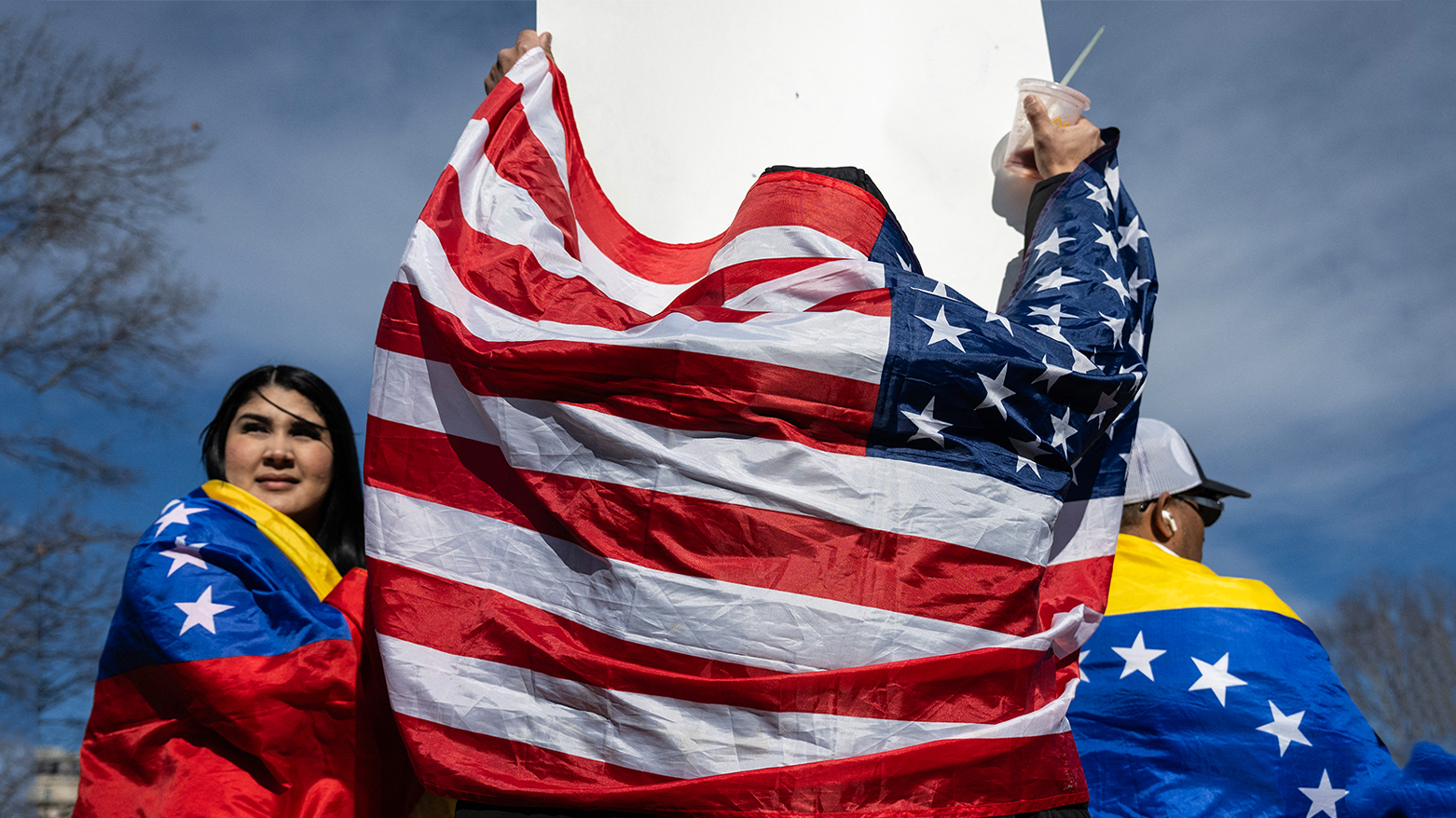
A major source of tension in Venezuela’s long running crisis has been the role of the United States and repeated claims that Washington sought to remove, or even arrest, Venezuela’s president. These claims did not arise suddenly. They developed over years of sanctions, criminal indictments, and aggressive rhetoric that blurred the line between legal pressure and direct intervention.
Beginning in the late 2010s, the U.S. government accused senior Venezuelan officials, including President Nicolás Maduro, of corruption and drug trafficking. In 2020, the U.S. Department of Justice announced criminal charges against Maduro and other high ranking figures, offering large rewards for information leading to their arrest. While these charges were symbolic, since the U.S. had no practical way to arrest a sitting foreign president inside his own country, they marked an escalation in U.S. policy and framed Venezuela’s leadership as a criminal organization rather than a legitimate government.
The reasoning cited by the Trump administration for contemplating the detention of Venezuela’s president and his wife centered on the U.S. criminal indictments announced in 2020, which accused Maduro and senior officials of narcotics trafficking, corruption, and conspiring with armed groups designated by Washington as terrorist organizations. U.S. officials argued that these actions posed a direct threat to U.S. national security and regional stability, and they framed Maduro not as a protected head of state but as the leader of a criminal network who had forfeited legitimacy. This position was reinforced by the administration’s refusal to recognize him as Venezuela’s lawful president, its use of sweeping sanctions, and its strategy of applying maximum pressure in the belief that legal isolation and the threat of prosecution could accelerate regime collapse or force a transition of power, even though no lawful mechanism existed to carry out such an arrest inside Venezuela.
At the same time, U.S. officials repeatedly stated that Maduro was no longer Venezuela’s legitimate leader, recognizing opposition figures instead. From Venezuela’s perspective, this amounted to foreign interference and an attempt to engineer regime change. The Maduro government used these actions to justify internal crackdowns, claiming the country was under constant threat of invasion, coups, or kidnapping attempts supported by foreign powers.
Over the years, reports, rumors, and political statements circulated suggesting that the United States had considered or attempted direct actions against Venezuela’s leadership. These included failed coup plots, mercenary incursions, and alleged intelligence operations. While some of these incidents involved Venezuelan dissidents or private actors, the Venezuelan government consistently blamed the U.S., even when Washington denied direct involvement.
What is crucial to understand is that under international law, the United States does not have the legal authority to unilaterally seize or arrest a sitting president of another sovereign country. Heads of state are generally protected by head-of-state immunity, and any such action, if carried out without consent or international authorization, would be viewed by much of the world as illegal and potentially an act of aggression. For this reason, analysts note that U.S. criminal charges against Maduro were designed more as political and diplomatic pressure than as realistic plans for arrest.
Nevertheless, the idea that the U.S. was actively seeking to “take” Venezuela’s president had powerful consequences. Inside Venezuela, it strengthened the government’s narrative that the country was under siege, allowing it to rally supporters and justify harsh security measures. Internationally, it deepened divisions: some governments supported U.S. pressure as a way to force democratic change, while others warned that such tactics undermined international law and set dangerous precedents.
For ordinary Venezuelans, these geopolitical struggles brought little relief. Sanctions, isolation, and constant political instability worsened economic hardship and uncertainty. Whether or not the U.S. ever intended to physically detain Venezuela’s president, the perception that it might do so became part of the crisis itself, fueling fear, polarization, and mistrust on all sides.
In the end, the controversy over U.S. action against Venezuela’s president highlights a central truth of the Venezuelan crisis: it is not only a domestic struggle for power, but also a confrontation shaped by foreign pressure, legal disputes, and competing interpretations of sovereignty. The consequences of that confrontation continue to affect Venezuela’s politics, its people, and its place in the world.
By Tara Shwan,
Executive Director,
American-Kurdish Economic Institute, AKEI
The views expressed in this article are those of the author and do not necessarily reflect the views of Kurdistan24.