Liu Jun
Author
Four Propositions: A Guide to Action for Peace and Stability in the Middle East
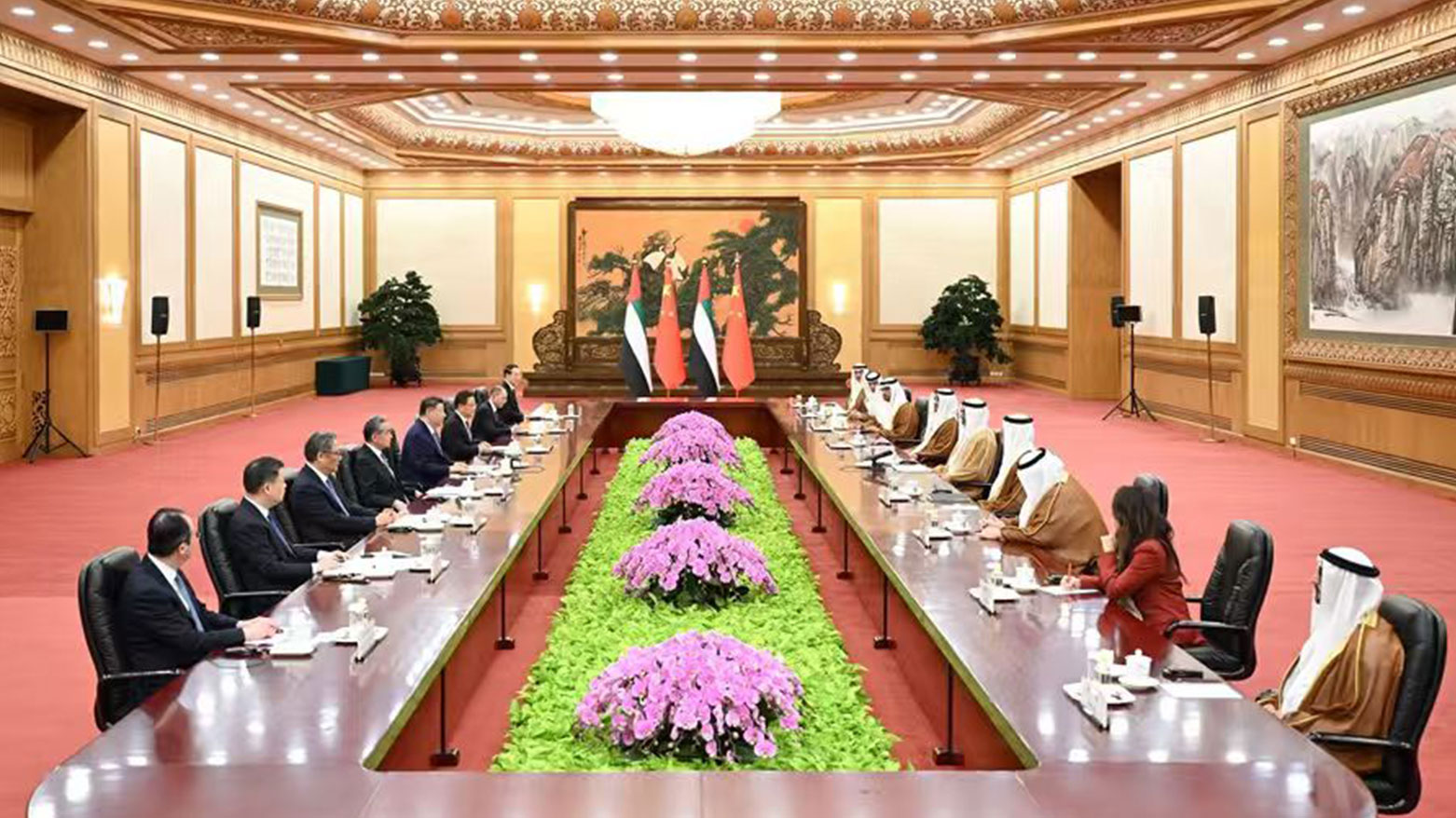
The situation in the Middle East remains turbulent, with the latest round of conflict escalating and bringing immense suffering to countries and peoples in the region. The war has caused heavy civilian casualties, severely damaged infrastructure, and dealt a major blow to development, while also threatening energy routes and global supply chains. History has shown that war cannot deliver real security; it only deepens divisions and prolongs instability. Standing at a crossroads between war and peace, the people of the Middle East are calling for peace more strongly than ever.
In the face of such a complex and grave situation, China, as a permanent member of the United Nations Security Council and a responsible major country, has been actively promoting peace and facilitating talks through various means. Foreign Minister Wang Yi has maintained close communication with his counterparts in the region, and the Chinese Special Envoy on Middle East affairs has engaged in shuttle diplomacy. China, together with Pakistan, has put forward a Five-Point Initiative for restoring peace and stability in the Gulf and the Middle East, calling for an immediate cessation of hostilities, the early launch of peace talks, the protection of nonmilitary targets, the safeguarding of shipping lanes, and the upholding of the authority of the U.N. Charter. These efforts reflect China’s objective and impartial position, and demonstrate its sense of responsibility as a major country.
Recently, President Xi Jinping made Four Propositions on safeguarding and promoting peace and stability in the Middle East.
First, stay committed to the principle of peaceful co-existence. The Gulf states in the Middle East are close neighbors that cannot move away. It’s important to support the Gulf states in improving their ties, work to build a common, comprehensive, cooperative and sustainable security architecture of the Middle East and the Gulf region, and consolidate the foundation for peaceful co-existence.
Second, stay committed to the principle of national sovereignty. Sovereignty serves as a foundation for all countries, especially developing countries, to survive and thrive, and it must not be violated. The sovereignty, security and territorial integrity of the Gulf states should be earnestly respected, and the safety of their personnel, facilities and institutions vigorously safeguarded.
Third, stay committed to the principle of international rule of law. We should safeguard the authority of international rule of law, reject selective application, and prevent the world from returning to the law of the jungle. It is important to firmly uphold the international system with the U.N. at its core, the international order based on international law, and the basic norms governing international relations underpinned by purposes and principles of the U.N. Charter.
Fourth, stay committed to a balanced approach to development and security. Security is a prerequisite for development, and development serves as a safeguard of security. All sides should work to create a sound environment for and bring positive energy to the development of the Gulf states. China stands ready to share with the Gulf countries the opportunities through Chinese modernization, and work with them to nurture a fertile ground for regional development and security.
The Four Propositions are China’s action-oriented guidance put forward based on the current situation and with a view toward long-term development, aimed at promoting the Middle East’s transition from turmoil to stability. They are in line with important concepts put forward by President Xi Jinping, including the vision of building a community with a shared future for mankind and the Global Security Initiative (GSI). The GSI advocates a vision of common, comprehensive, cooperative and sustainable security, takes respect for the sovereignty and territorial integrity of all countries as a basic premise, upholds the purposes and principles of the U.N. Charter as an important guideline, regards resolving disputes through dialogue and consultation as the only viable path, and emphasizes coordinating both traditional and non-traditional security issues to address the root causes of conflicts. Under the current circumstances, the Four Propositions are a concrete application of the GSI in the Middle East, providing practical support for de-escalating the situation and demonstrating China’s systematic approach to promoting lasting peace and long-term stability in the region.
Living in the Kurdistan Region of Iraq, we deeply share the feelings of the local people toward the suffering and impact that war and instability have brought to this land. Over the years, the people of the KRI have made remarkable efforts, under complex and challenging circumstances, to explore a path toward stability and development and to build a better home.
China has always been a sincere friend of Iraq, including the Kurdistan Region. On the basis of mutual respect, we stand ready to further deepen cooperation with the KRI in areas such as economy and trade, people-to-people exchanges and education, so as to promote common development. At the same time, China will strengthen coordination with all parties, including the KRI, to implement the Four Propositions put forward by President Xi Jinping and jointly foster a more stable and sustainable security environment in the region.
Without peace and stability in the Middle East, the world cannot enjoy lasting stability. China stands ready to work with the international community to continue building synergy for peace, and help the Middle East emerge from the shadow of conflict at an early date, and move toward a future of lasting peace and sustained development.
The views expressed in this article are those of the author and do not necessarily reflect the views of Kurdistan24.